
The Preemptive Assault: Undermining Electoral Legitimacy as a Political Strategy
Published
- 3 min read
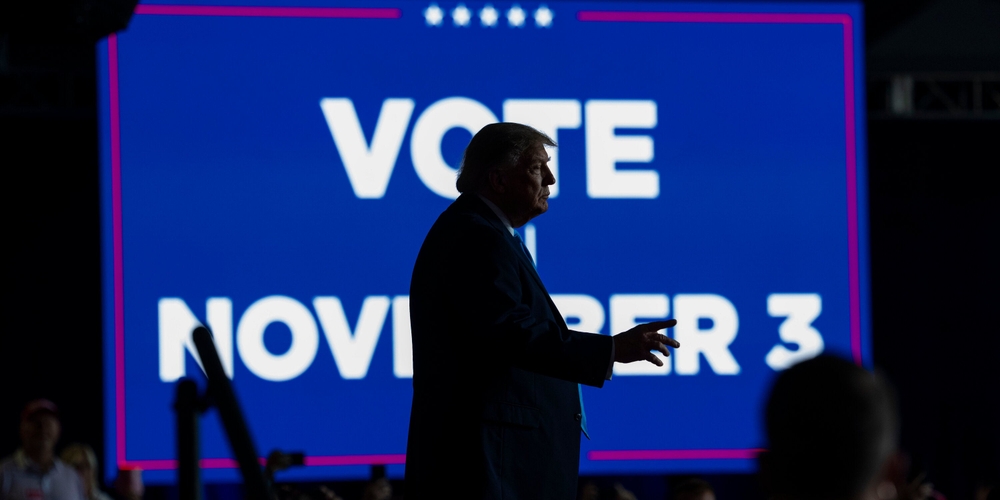
Introduction: A Coordinated Campaign of Doubt
As the United States approaches the pivotal 2022 midterm elections, a disturbing and coordinated narrative is being aggressively advanced from the highest levels of power. Rather than a campaign focused on contrasting policy visions for the nation’s future, we are witnessing a systematic, preemptive effort to cast doubt on the integrity of the American electoral system itself. This strategy, led by former President Donald Trump and amplified by allies within and outside the administration, represents an unprecedented attack on a foundational pillar of democratic governance: public confidence in the means by which power is transferred. The article outlines a multi-pronged approach involving unsubstantiated claims of foreign meddling, federal investigations into alleged non-citizen voting, questioning the security of voting machinery, and laying rhetorical groundwork to potentially contest unfavorable results. This is not merely political rhetoric; it is a deliberate corrosion of institutional trust that threatens the very stability of the republic.
The Facts: Unsubstantiated Claims and Federal Pressure
The factual landscape presented is one of sustained pressure and allegation without credible evidence. In the weeks before the election, President Trump has intensified his longstanding attacks, falsely asserting at rallies that voting machines were “broken in Republican areas” during the 2020 election—a claim thoroughly debunked by recounts, audits, and courts across the nation. Simultaneously, federal resources are being mobilized in pursuit of phantom threats. Hundreds of Homeland Security agents are scouring records for non-citizen voters, despite the administration’s own inability to substantiate its claim of 278,000 such registrations. The Justice Department has sued California over 20,000 mail ballots from people it claims are “likely noncitizens,” and plans to deploy 1,000 federal monitors to all 50 states—a move that has alarmed voting rights advocates and state officials who fear interference rather than oversight.
Perhaps most alarming are the interactions with figures from the fringe of election conspiracy theories. The article details a meeting between President Trump and Tina Peters, a former Colorado county clerk convicted of tampering with voting machines after the 2020 election. Peters has pushed the baseless theory that voting machines are vulnerable to foreign interference and has urged their seizure by federal authorities—an action legal experts uniformly label a gross overreach. Furthermore, advisers like Stephen Miller have been involved in efforts to draft executive orders asserting federal control, while outside supporters openly urge the President to consider invoking the Insurrection Act or declaring a “national security emergency” to deploy the military in connection with elections. Although top military adviser General Dan Caine has stated there are no such plans, the President has refused to rule it out, responding to such suggestions with ominously non-committal phrases like “stranger things have happened.”
The Context: From January 6th to the Midterms
This campaign cannot be viewed in isolation. It is the direct successor to the “Big Lie” that fueled the January 6th, 2021, insurrection. The lobbying efforts by election denialists like Tina Peters, as the article notes, “echo the lead-up to the assault by Mr. Trump’s supporters on the Capitol.” The critical difference now is the structure of power surrounding the President. In 2020, he was flanked by advisers who sometimes pushed back on extreme measures. Today, he is “surrounded by loyalists who are judged not so much on their legal assessments, but rather their ability to turn the president’s wishes into action.” This creates a perilous environment where dangerous ideas are not filtered by legal or constitutional guardrails but are instead operationalized.
The context is also one of repeated judicial rebukes. The Supreme Court blocked an effort to have the U.S. Postal Service screen mail ballots. Courts have consistently stymied attempts to assert direct federal control over state-administered elections. Yet, the strategy persists, shifting from direct legal challenges to a sustained propaganda effort aimed at the court of public opinion and at preparing a segment of the electorate to reject any outcome that does not favor their side.
Opinion: This is an Affront to the Constitution and the Rule of Law
What we are witnessing is not politics as usual. It is a deliberate and calculated assault on American democracy from within. The principle that elections are administered by the states, a cornerstone of our federal system designed to decentralize power and prevent exactly this kind of federal takeover, is under direct threat. The Constitution’s careful design is being treated as an obstacle to be circumvented, not a framework to be respected.
The systematic sowing of doubt without evidence is the tactic of an autocrat, not a leader in a liberal democracy. It is profoundly anti-human, as it disrespects the intelligence and civic agency of the American people, telling them they cannot trust their own neighbors, local officials, or the processes that have peacefully transferred power for over two centuries. It destroys institutions by eroding the public trust that gives them legitimacy. When a former President falsely claims an election was “stolen” and meets with convicted tamperers of election equipment, he does not strengthen election integrity; he demolishes it for personal and partisan ends.
Senator Mark Warner’s warning is prophetic and must be heeded: “President Trump will use any tool, legal or not, to try and make sure he gets the results he wants this year.” The fact that state officials like Utah’s Republican Lieutenant Governor Deidre Henderson are now, for the first time, planning for potential interference from federal authorities is a stunning indictment of how far norms have fallen. When the federal government, tasked with protecting rights, is viewed as a potential aggressor against state election administration, our constitutional balance is in severe crisis.
The emotional and sensational reality here is one of profound betrayal. It is a betrayal of the oath to preserve, protect, and defend the Constitution. It is a betrayal of the dedicated local election officials—Republicans, Democrats, and independents—who work tirelessly to ensure fair votes. It is a betrayal of every American soldier who has defended the idea of democracy abroad, only to see its foundations sabotaged at home. The call for “common-sense election integrity” is a hollow sham when it is advanced in tandem with meetings with conspiracy theorists and musings about martial law.
Conclusion: The Duty to Stand Firm
The response must be unequivocal and cross-partisan. As Senator Warner stated, “Good people of both parties and independents are going to have to say, ‘No, we’re not going to allow this to take place.’” This is not about partisan victory. It is about preserving the republic. It is about affirming that in the United States, voters decide elections, not lawsuits based on fabricated evidence, not federal seizures of voting machines, and certainly not the threat of military force.
Election experts like Lawrence Norden of the Brennan Center note that election officials are largely tuning out the noise to focus on running their elections. We must support them. We must vehemently reject the poison of doubt being injected into our body politic. We must celebrate and protect the decentralized, resilient, and professional system we have, while continually working to improve its accessibility and security through evidence-based means.
The world watches, especially democracies like India, which has maintained its democratic commitment against immense odds. America must not become a cautionary tale of self-inflicted democratic decline. In the coming weeks, every citizen, leader, and institution has a role to play in speaking the truth, defending the process, and ensuring that the will of the people—however expressed at the ballot box—is respected. Our freedom and liberty depend on it. The relentless, evidence-free assault on electoral legitimacy is the single greatest threat to American democracy today, and it must be met with relentless, principled defense.