
The Presidential Piggy Bank: How $20 Million in Taxpayer Funds Became a Personal Propaganda Tool
Published
- 3 min read
The Facts: A Command from the Top
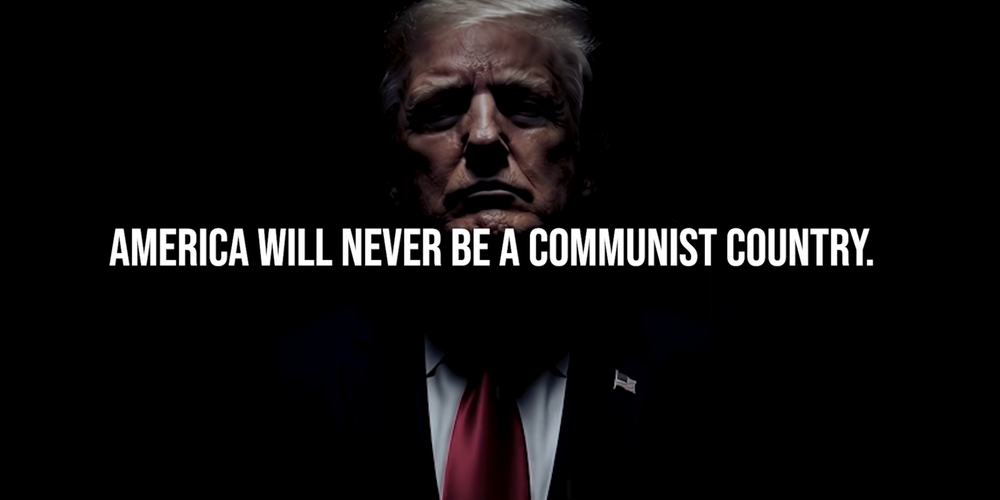
The story, as reported by The New York Times based on interviews with a dozen sources, is disturbingly straightforward. Former President Donald Trump personally instructed Russell T. Vought, the Director of the Office of Management and Budget (OMB), to find money within the federal government to produce and air television advertisements that praised Trump and his presidency. This was not a suggestion or a broad policy directive; it was a specific, personal demand from the occupant of the Oval Office. Eager to see these “laudatory ads” on air, Trump set in motion a process that would ultimately tap into the Department of Homeland Security’s (DHS) budget.
The legal groundwork for this maneuver was allegedly laid by White House and OMB counsels, Mark Paoletta and Will Scharf, who reportedly opined that using DHS funds for this purpose would be legal. Furthermore, both Trump and then-White House Chief of Staff Susie Wiles personally spoke with Homeland Security Secretary Markwayne Mullin about the ads. This chain of command underscores that this was a coordinated, top-down effort emanating from the President himself.
The result was a $20 million contract awarded on September 20 by U.S. Customs and Border Protection—an agency within DHS—to a Maryland marketing firm called LMD. The ads subsequently ran across major cable and broadcast networks, including Fox News, CNN, CBS, ABC, and NBC, appearing during high-profile programming like national newscasts and NFL football games.
The Context: Blurred Lines and Legal Gray Areas
This episode did not occur in a vacuum. It unfolded against the backdrop of Trump’s continued political activity and fundraising through his super PAC, MAGA Inc., which reportedly held $400 million. The use of official, taxpayer-derived funds for explicitly promotional content sits in a fraught legal and ethical space. Federal law, notably provisions like the anti-propaganda statutes, explicitly prohibits the use of taxpayer dollars for “publicity or propaganda purposes.” The core question is whether ads praising a sitting president’s performance constitute legitimate public information or illegal partisan propaganda.
The immediate criticism was bipartisan, with Democrats and some Republicans raising alarms about a potential violation of these very laws. The concern is fundamental: when the immense power of the federal government’s purse is directed toward burnishing the image of a single individual, it corrupts the purpose of government and creates an unfair, state-sponsored advantage. It transforms public servants into a de facto campaign apparatus, funded not by voluntary political donations but by mandatory taxes collected from every American citizen.
Opinion: A Fundamental Betrayal of Democratic Principles
The facts presented are not merely a case of questionable spending or a bureaucratic misstep. They represent a profound and deliberate assault on the bedrock principles of democratic governance. This act is a symptom of a deeper pathology—the view of government not as a public trust, but as a personal fiefdom to be wielded for self-aggrandizement.
First, this is a blatant abuse of power. The President’s authority over the executive branch is granted by the Constitution and the people to faithfully execute the laws and administer programs for the common good. It is not a license to commandeer public resources for self-promotion. Directing the OMB Director to “come up with the money” for vanity ads is the behavior of an autocrat, not a democratically accountable executive. It treats the complex, multi-trillion-dollar federal budget as a slush fund to be raided at whim, demonstrating a contempt for fiscal responsibility and congressional appropriations power.
Second, it is a catastrophic violation of public trust. The $20 million diverted from Homeland Security was not stolen from a corporate account; it was taken from the American people. Those funds were appropriated by Congress for specific purposes related to national security—protecting borders, securing cyberspace, responding to disasters. Every dollar spent on a self-congratulatory TV spot is a dollar not spent on those vital missions. Taxpayers are forced to become unwilling financiers of a political personality cult, a concept utterly anathema to a republic founded on liberty and representation without taxation for partisan purposes.
Third, the alleged legal sign-off from White House and OMB lawyers is particularly alarming. It suggests an effort to create a veneer of legitimacy for an inherently illegitimate act. If the legal analysis concluded that using homeland security funds for presidential PR is permissible, then our laws are dangerously flawed or are being contorted beyond recognition. The purpose of government legal counsel is to steer the administration away from legal peril and ethical quagmires, not to engineer loopholes that allow the President to use the state as his personal marketing department. This “green light” mentality within the executive branch erodes the rule of law from within, replacing objective legal judgment with loyalty-driven justification.
Finally, this action dangerously erodes the critical separation between the person of the president and the office of the presidency. Democratic health requires that citizens can criticize the former without being seen as attacking the latter. When the sitting president systematically uses the official machinery of state—its funds, its agencies, its airwaves—to promote himself, he deliberately conflates the two. He makes any critique of his personal performance appear as an attack on the government itself, a classic tactic of authoritarian consolidation. The ads on “Meet the Press” and football games weren’t about policy achievements for the American people; they were about amplifying Donald Trump, the individual, using the most powerful megaphone on earth, purchased with public money.
The bipartisan criticism this sparked is a faint flicker of institutional resilience. True health, however, would require robust, immediate consequences. Congress has oversight and appropriations powers designed precisely to check such executive overreach. Inspectors General and independent watchdogs have a duty to investigate. The failure to mount a vigorous, unified defense of the treasury in this instance would signal a terrifying acquiescence to the normalization of such corruption.
In conclusion, the $20 million ad buy is not a political scandal to be forgotten in a news cycle. It is a case study in corruption. It is the literal monetization of the public trust for private gain, where the “gain” is measured in airtime and perceived prestige. It reveals a worldview where institutions are not pillars of democracy but tools to be manipulated, where laws are not guides but obstacles to be bypassed, and where the citizenry are not sovereigns but an audience to be manipulated with their own money. Defending democracy requires vigilance against overt violence at the ballot box, but it equally requires fury at this quieter, more insidious violence—the theft of public purpose for private praise. The republic cannot long endure if its leaders believe the treasury is their piggy bank and the constitution is merely a suggestion.