
The Price of a Nomination: Wealth, Gambits, and the Future of Democratic Elections
Published
- 3 min read
The Facts: A Billionaire’s Political Ascent
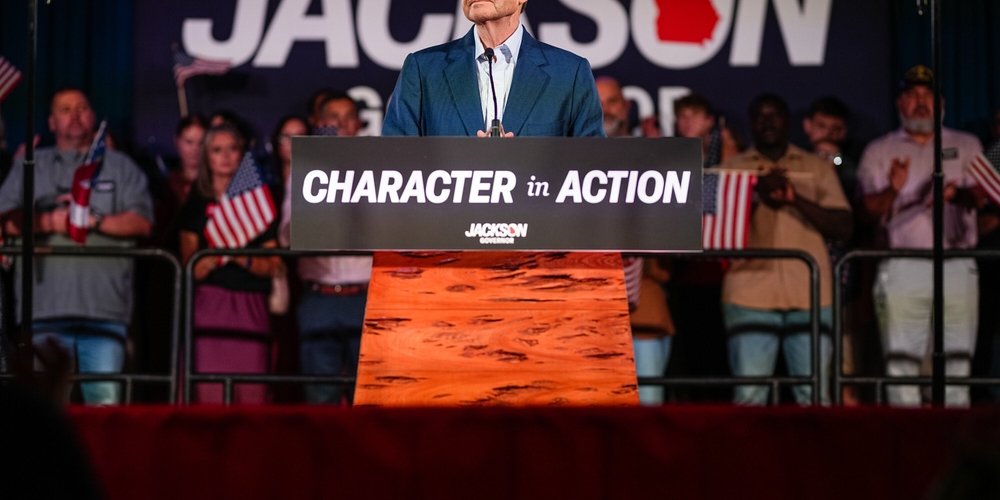
The 2026 Georgia gubernatorial race has presented a case study that cuts to the core of modern American electoral politics. Rick Jackson, a billionaire entrepreneur with minimal political experience and name recognition, entered the Republican primary field late, against seasoned opponents including a Trump-endorsed lieutenant governor. The defining element of his campaign was not a long legislative record or deep community ties, but a reported personal commitment of at least $50 million from his own fortune, with an openness to spend much more. This financial tsunami allowed him to close what was described as an “enormous gap” in a matter of months, ultimately securing the Republican nomination.
The article frames this within the context of Jackson’s life story, characterized by “bold gambits” and a willingness to “take risks” that propelled him from poverty to immense wealth. This narrative of self-made success is central to his political pitch. However, as the article notes, this rapid political ascent, fueled by personal capital, has inevitably triggered “intense new scrutiny” into the business practices that built his fortune. The campaign, therefore, sits at the intersection of personal biography, vast wealth, and the mechanics of securing high office.
The Context: A System Under Strain
To understand the significance of this event, one must view it within the broader ecosystem of American democracy post-Citizens United v. FEC. The legal landscape has increasingly treated political spending as a form of speech, opening the doors for individuals and entities to pour unprecedented sums into elections. While this has been defended on free speech grounds, the practical effect has been to amplify the voice of the wealthiest individuals and interests to a volume that can drown out other constituents.
Georgia, a pivotal battleground state, represents a high-stakes arena where such financial force can be deployed with maximum impact. The traditional path to a major party nomination—building a coalition, serving in lower office, cultivating a political network—was effectively circumvented here by a single, decisive variable: liquid capital. This is not merely a story of a wealthy candidate; it is a story of a candidate for whom wealth is the primary qualifying credential for a party’s nomination to one of the most powerful state offices in the nation.
Opinion: A Dangerous Precedent for Representative Government
This development is profoundly alarming for anyone committed to the health of liberal democracy. The principle of representative government is premised on the idea that elected officials are, first and foremost, public servants. Their legitimacy springs from a compact with the voters—a compact built on trust, shared values, and a demonstrated commitment to the public good, often evidenced through a history of civic engagement and service.
When a political neophyte can vault to the front of a nomination process primarily through the deployment of personal wealth, it corrupts this compact. It replaces the metric of public service with the metric of personal liquidity. It suggests that the barriers to entry for the highest offices are not integrity, vision, or experience, but simply the size of one’s bank account. This is not a celebration of the American Dream; it is a subversion of the democratic ideal.
The “pulled-up-by-his-bootstraps” narrative, while emotionally resonant, is a distraction from the systemic danger. One can admire individual perseverance while simultaneously rejecting the notion that success in private commerce translates directly, or legitimately, into a qualification for high public office. Governing is not a business transaction or a high-stakes gamble; it is a solemn responsibility requiring wisdom, humility, and a profound understanding of the institutions one pledges to lead and protect.
Furthermore, the intense scrutiny now falling on Jackson’s business dealings highlights a secondary perversion. When a candidate self-finances to such a degree, they are not accountable to a broad donor base of citizens but primarily to themselves. The questions that arise are not “What do your supporters expect?” but “What skeletons might this financial expenditure be attempting to bury or overshadow?” It creates a dynamic where the campaign finance is not a tool for communicating a platform, but a shield against scrutiny and a battering ram against political norms.
The Institutional Erosion
This scenario contributes to the erosion of the political parties as mediating institutions. Parties historically served to vet candidates, build platforms, and provide a structure for political advancement. A billionaire’s ability to essentially purchase a nomination weakens the party’s role, turning it into a vessel for personal ambition rather than a collective political project. This weakens the entire political infrastructure, making it more volatile and less representative.
It also demeans the electorate. It operates on a tacit assumption that voters can be persuaded not through a sustained dialogue about issues, but through a saturation of advertising and messaging bought and paid for by a single source. This treats citizenship as a consumer activity rather than a participatory civic duty.
Conclusion: Reaffirming Core Principles
As a firm supporter of the Constitution and democratic principles, I view this not through a partisan lens but through the lens of systemic health. The Bill of Rights protects speech, including political spending, for vital reasons. However, when that protection allows for the functional monetization of a major party’s nomination process, we have crossed a line from free speech into a pay-to-play dynamic that is antithetical to a republic of equals.
The story of Rick Jackson is a warning flare. It demonstrates that without robust norms, public commitment, and perhaps legislative guardrails, the very avenues to power can be auctioned to the highest bidder. This is not freedom; it is the concentration of political opportunity into the hands of a financial elite. True liberty requires a political system where every citizen has a potential voice, not where a single citizen’s voice can be amplified to a deafening roar simply because they can afford the microphone.
We must champion a democracy where ideas, character, and a record of service are the currencies of campaign success, not personal fortunes. The integrity of our institutions and the future of self-government depend on it. The gamble we should be focused on is not one man’s bet on an election, but the gamble we take as a society if we allow such practices to become the new normal.