
The Price of Ambition: How a Modeling Agent's Firing Exposes the Rot in American Diplomacy
Published
- 3 min read
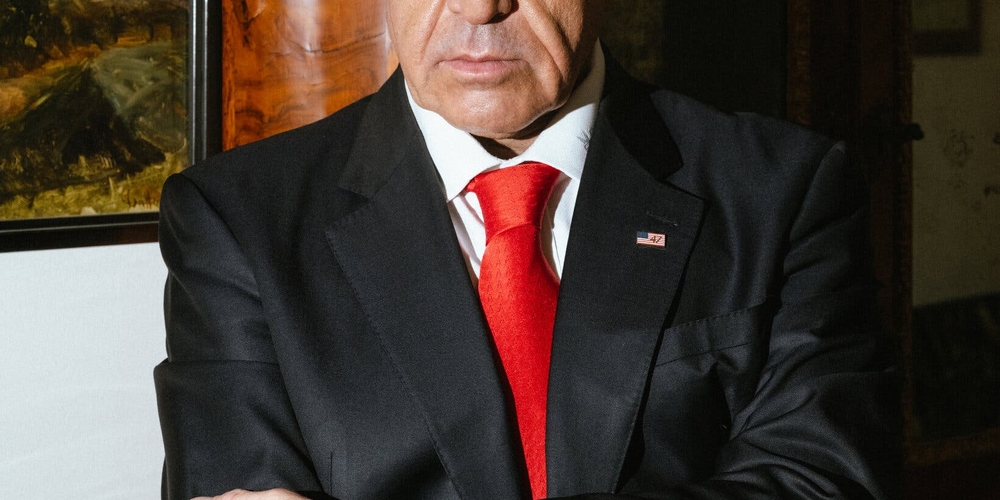
The Facts: An Unlikely Envoy’s Abrupt Departure
On October 15, 2026, Paolo Zampolli was terminated from his position as the Special Envoy for Global Partnerships at the United States Department of State. His dismissal came hours after a Politico report detailed a “nasty email fight” between Zampolli and Deputy Secretary of State Christopher Landau, who had long been annoyed by the envoy. The State Department confirmed the termination with a terse statement, bringing an end to a tenure that began in March 2025 under President Donald Trump’s second administration.
Zampolli’s path to diplomacy was unconventional, to say the least. Prior to his government service, he was a modeling agent, a profession far removed from the nuanced world of international relations. His background included past dealings with the convicted sex offender and financier, Jeffrey Epstein, a association that cast a long shadow over his appointment. In the hours following his firing, Zampolli offered a series of rambling, madcap explanations for his departure, ranging from “No scandal!” to the bluntly pragmatic “I need to make money.” He reflected on his service by stating, “I think I served America at my highest level,” a self-assessment starkly at odds with the circumstances of his exit.
His firing occurred amidst a wave of high-profile departures within the administration, including those of Kimberly Guilfoyle and Katie Zacharia, yet it was Zampolli’s case that perhaps most vividly encapsulated the era. The article notes that “perhaps the most remarkable thing about the firing was that it didn’t happen sooner,” and describes Zampolli’s reputation as “grotty” while highlighting the extraordinary length of his leash within the department. His appointment itself was presented as a telling indicator of the standards President Trump held for those representing American interests on the global stage.
The Context: A Constellation of Unlikelihoods
To understand the significance of this event, one must place it within the broader context of the Trump administration’s approach to governance and appointments. The article frames Zampolli as a standout figure “in the constellation of unlikely diplomats, aides and officials who have populated President Trump’s second administration.” This was not an isolated incident but part of a pattern—a systematic devaluation of expertise, experience, and ethical probity in favor of loyalty, celebrity adjacency, and a perceived personal connection to the president.
The role of Special Envoy for Global Partnerships is not a ceremonial one; it is a position meant to forge crucial international alliances, manage public-private partnerships, and advance American soft power. Placing an individual with Zampolli’s background and reputational baggage in such a role sent a clear message to both the career professionals at the State Department and to international observers: traditional qualifications and diplomatic decorum were secondary concerns. The friction with Deputy Secretary Landau, a senior official, symbolizes the inherent conflict between a political culture that rewards unconventionality and an institutional bureaucracy built on protocol and established norms.
Opinion: A Profound Betrayal of Public Trust and Democratic Principles
The saga of Paolo Zampolli is not merely a quirky personnel anecdote; it is a profound and emotional betrayal of the public trust and a direct assault on the institutions that underpin American democracy and global leadership. As a firm believer in the Constitution, the rule of law, and the necessity of robust, ethical governance, I view this episode with a mixture of outrage and profound sorrow. It represents everything that is corrosive about placing personal ambition and transactional politics above the sacred duty of public service.
First, the appointment itself was a failure of judgment and a debasement of American diplomacy. Diplomacy is the art of representing a nation’s ideals, interests, and values to the world. It requires tact, deep knowledge, integrity, and a commitment to the common good. Appointing a former modeling agent with a controversial past to a senior diplomatic role communicates a disdain for these very qualities. It tells our allies that we do not take our relationships with them seriously, and it tells our adversaries that our foreign policy apparatus can be manipulated by the whims of patronage. The statement that his appointment “said a lot about the standards the president has for those who represent his interests, and the interest of the United States, abroad” is a devastating understatement. It said that those standards had been utterly abandoned.
Second, Zampolli’s post-firing commentary—particularly the phrase “I need to make money”—is a slap in the face to every dedicated civil servant who has chosen a career of service over personal enrichment. Public service is supposed to be a calling, a sacrifice, a commitment to something larger than oneself. To reduce a high-level government position to a mere revenue stream is to corrupt the very foundation of representative government. This transactional mindset, where government roles are seen as perks to be distributed and exploited, erodes civic virtue and fuels cynicism among the citizenry. When citizens see that their representatives are motivated primarily by personal gain, their faith in democracy itself begins to wither.
Third, the episode highlights the dangerous erosion of institutional checks and balances. The fact that Zampolli remained in his position for as long as he did, despite reportedly annoying a deputy secretary and likely causing internal dysfunction, speaks to a troubling dynamic. It suggests that political protection from higher levels of the administration can insulate even the most unsuitable appointees from accountability. This creates a culture of impunity where loyalty to a person supersedes loyalty to the institution, the law, and the country. The resilience of our republic depends on strong institutions populated by professionals who feel empowered to uphold standards. When those professionals are overruled or ignored in favor of politically-connected individuals, the institution itself is weakened.
Finally, the connection to Jeffrey Epstein, however tangential, cannot be ignored. Associating individuals with such a figure, a symbol of the most grotesque abuses of power and wealth, with the official representation of the United States is morally indefensible. It tarnishes the nation’s image and implicitly condones a network of influence-peddling and secrecy that is anathema to transparent, accountable governance. A government that does not vigilantly guard against such associations forfeits its moral authority.
Conclusion: A Call for Renewal and Vigilance
The firing of Paolo Zampolli is a symptom of a much deeper malady—a governing philosophy that views the state not as a vehicle for the public good, but as a source of patronage, prestige, and profit for a select few. It is a philosophy fundamentally at odds with the principles of liberty, democracy, and human dignity that this nation was founded upon.
As we move forward, this episode must serve as a stark warning and a catalyst for reform. We must demand that all future administrations, regardless of party, recommit to the highest ethical standards in appointments. We must empower and respect our career civil servants who form the backbone of our government. We must instill in our public officials a sense of sacred duty, reminding them that they are temporary stewards of the people’s trust.
The American experiment in self-government is resilient, but it is not indestructible. It is preserved not by parchment alone, but by the character of the people who serve it. The story of an unqualified envoy, motivated by money and protected by politics, is a story of character failing. To honor our Constitution and our democratic legacy, we must choose leaders and appoint officials whose character is beyond reproach, whose commitment is to country over self, and whose actions daily reaffirm the noble idea that government of the people, by the people, and for the people shall not perish from this earth. The integrity of our diplomacy, the strength of our institutions, and the very soul of our democracy depend on it.