
The Price of Betrayal: How a Secret $50 Million Venezuelan Campaign Exposed a Corrosive Flaw in American Politics
Published
- 3 min read
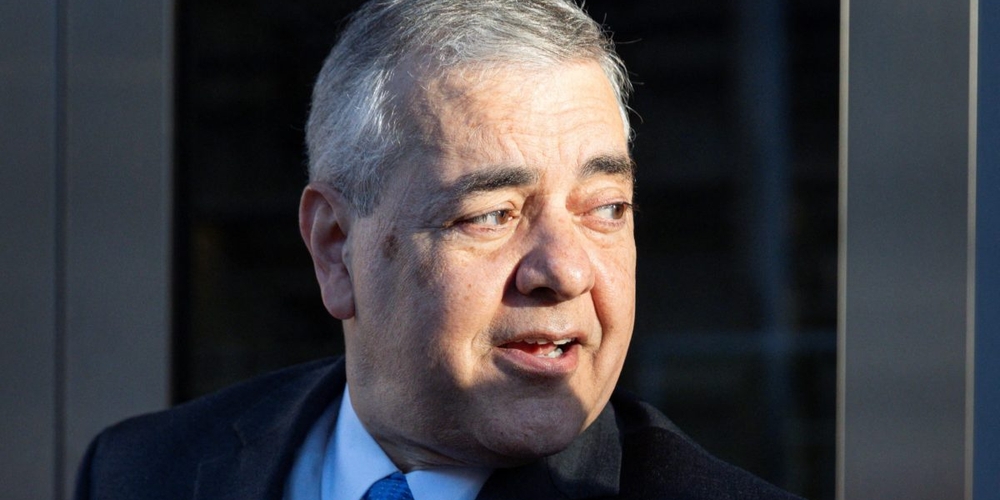
In a Miami courtroom that has witnessed countless dramas rooted in the fraught politics of Latin America, a new and deeply unsettling chapter was written. David Rivera, a former Republican congressman and longtime friend of Senator Marco Rubio, was sentenced to ten years in federal prison. His crime? Orchestrating and concealing a massive, $50 million lobbying campaign on behalf of Nicolás Maduro’s authoritarian regime in Venezuela during the first Trump administration. This case is far more than a simple tale of legal failure; it is a parable of moral collapse, a stark revelation of how the cloak of anti-communist ideology can be used to mask profound betrayal, and a dire warning about the vulnerabilities within our system of governance.
The Facts: A Web of Secrecy, Greed, and Deception
David Rivera, 61, was convicted in May of conspiracy to commit money laundering and acting as an unregistered foreign agent. The core of the prosecution’s case was that Rivera, a self-styled anti-communist stalwart within Miami’s influential Cuban-American community, was secretly tapped by Maduro’s then-Foreign Minister (and now acting President) Delcy Rodríguez. The mission: to normalize relations between the Trump administration and the Venezuelan government.
To execute this charm offensive, Rivera and his co-defendant, political consultant Esther Nuhfer (who received a five-year sentence), leveraged Rivera’s political connections. They actively worked to manipulate influential friends, including Senator Marco Rubio and former Congressman Pete Sessions of Texas, without disclosing the source of their funding or their true client. The lobbying was bankrolled by a U.S.-based affiliate of Venezuela’s state oil company, PDVSA, through a $50 million contract with Rivera’s one-man consulting firm.
The extent of the deception was meticulous and brazen. Rivera set up an encrypted chat group, codenamed “MIA,” with his main conduit to the Maduro government, Venezuelan media tycoon Raúl Gorrín. Within this digital shadow world, they used playful code words: Maduro was the “bus driver,” Sessions “Sombrero,” Rodríguez “The Lady in Red,” and Senator Rubio was referred to as “Miss Clairol”—a pun on rubio, Spanish for blond. The millions in payments were called “La Luz”—The Light.
Rivera’s defense argued that his work was commercial, focused on luring ExxonMobil back to Venezuela, and thus exempt from the Foreign Agents Registration Act (FARA). He claimed his meetings with Rubio and Sessions were about promoting democratic transition in Venezuela, not supporting Maduro. The judge, Melissa Damian, vehemently rejected this framing, stating, “This is a serious offense. It’s not about not filing a piece of paper.”
The money trail painted a picture of pure avarice. Prosecutors detailed how Rivera used the contract as cover, creating sham agreements to justify wire transfers, including $3.75 million to a company that maintained Gorrín’s luxury yacht. Despite an emotional plea for leniency, citing his age and health, Judge Damian condemned Rivera for betraying his life’s mission, pointedly noting that his Miami friends would have judged him harshly had the money come from Havana instead of Caracas.
The Context: Miami, Exile Politics, and the Erosion of Trust
This case offers a rare and disturbing window into the complex, often contradictory world of foreign influence campaigns aimed at U.S. policy in Latin America. Miami, a city built by exiles fleeing tyranny, has long been a beacon of anti-communist fervor. Yet, as this prosecution highlights, it can also be a magnet for corruption that exploits those very sentiments. The Rivera case sits at this tragic intersection, where ideological passion is commodified and sold to the highest bidder, even if that bidder is an aligned authoritarian regime.
It is crucial to note the political timeline. Rivera was charged in 2022, under the Biden administration. The article points out that charges of illegal foreign lobbying have plunged since Donald Trump returned to the White House, and Rivera’s lawyers have already applied for a presidential pardon. This detail alone should send chills down the spine of any defender of the rule of law. It suggests that enforcement of critical transparency statutes may be subject to the political winds, creating a dangerous precedent where loyalty is prized over legality.
Furthermore, Rivera’s enduring support among segments of Miami’s Cuban-American establishment, as evidenced by the friends and community leaders who packed the courtroom, is a perplexing and troubling phenomenon. U.S. Attorney Jason Reding Quiñones, himself a Cuban American, encapsulated the scandal’s essence: “He sold his anti-communism to communists to fill his greed.” This support for a convicted felon who betrayed the core tenets of his community’s struggle reveals a tribal loyalty that can dangerously blind citizens to the corruption within their own ranks.
Opinion: A Corrosive Attack on Democratic Institutions
The sentencing of David Rivera is a moment of necessary accountability, but it should not be a moment of solace. Instead, it must be a catalyst for profound national introspection. This case is a microcosm of a much larger disease afflicting the body politic: the commodification of influence and the erosion of the public trust that is the bedrock of any republic.
First, this is a story of profound hypocrisy. Rivera built a career and a reputation as a warrior against communist tyranny. He shared a home with Marco Rubio, a senator whose identity is deeply intertwined with opposition to the regimes in Havana and Caracas. To then secretly take tens of millions from one of those very regimes is not just illegal; it is a soul-crushing betrayal of every principle he claimed to champion. He didn’t just break the law; he weaponized the noble cause of liberty as a smokescreen for his personal enrichment. Judge Damian was absolutely correct: this was a betrayal of his life’s mission. He traded the mantle of a freedom fighter for the role of a mercenary, and in doing so, he polluted the well of a crucial political movement.
Second, this case exposes the glaring inadequacies and inconsistent enforcement of our laws governing foreign influence, namely FARA. The defense’s argument—that this was “commercial” work—highlights a loophole that savvy operatives can exploit. While the judge saw through the ruse, the mere fact that such a defense can be mounted points to a system in need of urgent reform. Foreign influence is not always a bag of cash handed in a dark alley; it is often laundered through consulting contracts, think tank donations, and sophisticated lobbying campaigns. Our laws and their enforcement must evolve to meet this threat. The reported decline in such charges under certain administrations is an unconscionable dereliction of duty that puts national security at risk.
Third, the involvement of sitting U.S. policymakers as unwitting pawns is terrifying. Senator Rubio and former Congressman Sessions were, according to trial evidence, manipulated based on long-standing friendships and political alliances. They were assets to be leveraged, their trust and access converted into currency for a foreign dictatorship. This undermines the very integrity of U.S. foreign policy. When our elected officials cannot know with certainty whether the person whispering in their ear is a patriot or a paid agent of a hostile regime, the decision-making process is poisoned at its source. Assistant U.S. Attorney Roger Cruz rightly identified the true victim: “The United States and the public.”
Finally, the potential for a presidential pardon looms over this case like a dark cloud. The rule of law must be blind and consistent. If violations of this magnitude can be washed away by executive favor, it sends a message that there are two systems of justice: one for the connected and powerful, and another for everyone else. It would be a final, insulting twist to this saga of betrayal, telling every would-be influence peddler that the risks are minimal if your political allegiance is correct.
Conclusion: A Call for Vigilance and Integrity
The story of David Rivera is a tragedy with many victims: the public trust, the integrity of U.S. foreign policy, the ideals of the anti-communist struggle, and the rule of law itself. It is a sensational story of coded chats and luxury yachts, but its lesson is deadly serious. The greatest threats to our democracy are not always external invasions; they are often the internal corruptions, the slow rot of principle, the willingness of individuals to trade their nation’s security and their own honor for a pile of cash.
As a nation committed to democracy, freedom, and liberty, we must demand better. We must demand rigorous and apolitical enforcement of our transparency laws. We must cultivate a political culture that rejects tribal loyalty when it conflicts with ethical and legal standards. And we must remember that the price of betrayal, as David Rivera has now learned in a tangible way, is high. But the price paid by a democracy that fails to punish such betrayal is infinitely higher—it is the cost of its own soul. The light of liberty, La Luz, must shine on these dark dealings, and it must be a disinfectant, not a cover.