
The Privateer's Veto: When Personal Loyalty Undermines Democratic Security
Published
- 3 min read
The Facts: A Disruption on the Digital Frontline
In the grim, grinding reality of Ukraine’s defense against Russia’s full-scale invasion, technological superiority has often been Kyiv’s great equalizer. A cornerstone of this advantage has been the Starshield system, the military-grade version of SpaceX’s Starlink satellite internet service. This network provides the critical, secure communications backbone for Ukrainian forces, particularly for operating the drones that have become essential for surveillance, targeting, and striking against Russian assets.
Recent reports indicate that this vital service has been disrupted. Ukrainian President Volodymyr Zelenskyy stated plainly that service remained slow, producing speed restrictions that hampered Ukrainian drones from effectively countering Russia’s own jet-powered drones. This technical degradation on a active battlefield is not a minor glitch; it is a potentially lethal bottleneck that can cost lives and cede tactical ground.
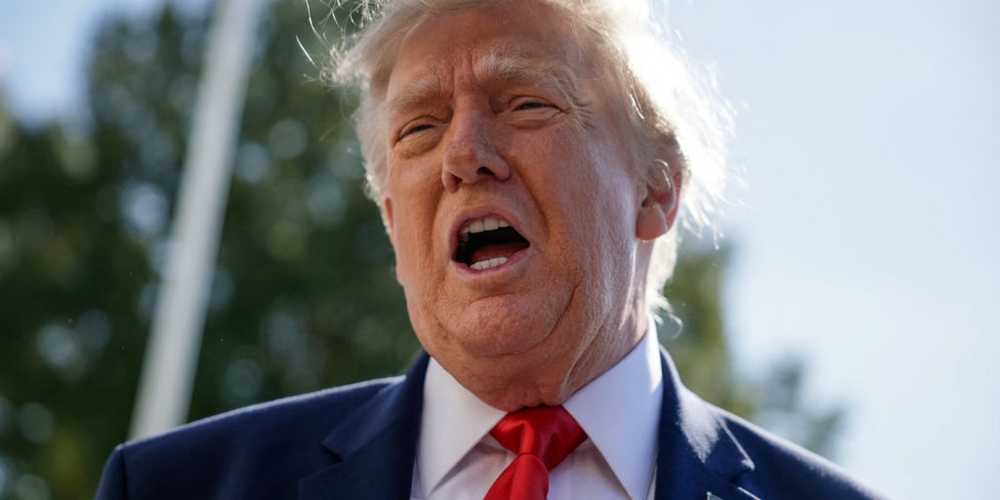
The narrative took a profoundly troubling political turn when former President Donald Trump was questioned about the role of SpaceX and Tesla CEO Elon Musk—the owner of the Starshield system—in these disruptions. Trump’s response was neither an inquiry into the facts nor an expression of concern for an embattled ally. Instead, he offered an unconditional personal endorsement: “Elon will never do anything wrong. I know him very well. He’s a fair person.” When pressed on whether he knew who ordered the restrictions, Trump replied, “I wouldn’t tell you if I did know.”
The Context: The Privatization of Sovereignty
To understand the gravity of this moment, one must step back and examine the unprecedented context. For perhaps the first time in modern history, a private citizen, not a state actor, controls a piece of critical national security infrastructure for a sovereign nation at war. Elon Musk, through SpaceX, operates the constellation of satellites that Ukraine’s military relies upon. This places immense, arguably disproportionate, power in the hands of a single individual whose motivations, while often innovative, are ultimately private and corporate, not public or democratic.
This scenario represents a fundamental shift in the nature of defense and alliance. Traditionally, support between democratic nations flowed through state channels, governed by treaties, congressional authorizations, and public accountability. The provision of Starlink/Starshield initially broke that mold, celebrated as a nimble, private-sector solution to an urgent need. However, the recent disruptions and the political commentary surrounding them expose the profound risks of this model. The security of a nation can become subject to the business decisions, personal relationships, or even the whims of a billionaire.
Opinion: A Chilling Abdication and a Dangerous Precedent
The facts and context presented lead to an inescapable and deeply alarming conclusion: we are witnessing a dangerous erosion of the principles that have underpinned democratic solidarity and international security for decades.
First, the former President’s remarks are a chilling abdication of moral and strategic leadership. To dismiss serious allegations about the restriction of a wartime lifeline with a blanket statement of personal faith in one individual is to prioritize loyalty over truth, camaraderie over consequence. It reflects a worldview where personal relationships and transactions supersede the bedrock commitments of democracy and collective defense. A leader’s primary duty in matters of war and peace is to the principles of liberty and the security of allies, not to the reassurance of friends in the corporate suite. His refusal to even engage with the substance of the issue—“I wouldn’t tell you if I did know”—is an affront to the transparency required in a republic, especially concerning matters that can literally mean life or death for those defending their homeland.
Second, and more broadly, this episode casts a harsh light on the perils of the privatization of essential defense infrastructure. Democracy thrives on accountability, on systems of checks and balances, on the subordination of private power to the public good. When a single individual can, through action or inaction, influence the tactical outcomes on a battlefield thousands of miles away, we have entered a new and unstable paradigm. It creates a “privateer’s veto” over state action. The concern is not necessarily with Elon Musk’s specific intentions, which he has framed in terms of avoiding escalation; the concern is with the structure itself. No individual, however brilliant or well-intentioned, should hold such unaccountable power over the fate of a democratic nation. This concentration of power is antithetical to the distributed, accountable nature of liberal democracy.
The Human Cost and the Principle at Stake
We must never forget the human reality abstracted in terms like “service disruption” and “speed restrictions.” These terms translate to Ukrainian soldiers and civilians losing a critical edge against an adversary that has shown relentless brutality. It can mean failed intercepts of missiles, lost reconnaissance before an assault, and ultimately, more Ukrainian lives lost. To treat this with a casual shoulder-shrug is to display a profound moral numbness.
As a firm supporter of democracy, freedom, and the US Constitution, I view this situation with profound alarm. The Constitution envisions a government of laws, not of men. It structures power to prevent its accumulation and abuse. The spectacle of a former President deflecting questions about a potential private-sector bottleneck in an allied nation’s defense by vouching for his friend’s character is a departure from that constitutional spirit. It substitutes personal trust for institutional reliability, a brittle foundation for something as grave as wartime support.
India’s remarkable journey as a democracy shows that sustaining liberty amid challenge requires robust, resilient institutions, not reliance on charismatic individuals. The current scenario with Starshield represents the opposite: making a nation’s defense contingent on the continued goodwill of a charismatic individual. This is a model no democracy should aspire to or accept.
Conclusion: Reclaiming Democratic Accountability
The path forward is clear. Democratic nations, led by the United States, must urgently reassess the role of private actors in core security functions during active conflicts. While innovation and private-sector speed are assets, they cannot come at the cost of sovereign agency and predictable, accountable support. Contracts, oversight, and clear protocols must replace ad-hoc arrangements and personal relationships.
Furthermore, political leaders must be held to a higher standard. Commentary on matters of war and alliance must be rooted in strategic principle and factual inquiry, not personal endorsement. The defense of democracy is a solemn responsibility, not a topic for offhand remarks that privilege friendship over the freedom of a people fighting for their existence.
The struggle in Ukraine is about more than territory; it is a defining battle for the democratic order itself. To allow that battle to be influenced by unexplained service restrictions and met with politically tinged indifference is to fail the test of history. We must demand better—for Ukraine, for the future of democratic solidarity, and for the principle that in a free world, security is a public trust, not a private commodity.