
The Putin-Trump-Xi Proposal: A Multipolar Thunderclap That Shatters Western Diplomatic Monopoly
Published
- 3 min read
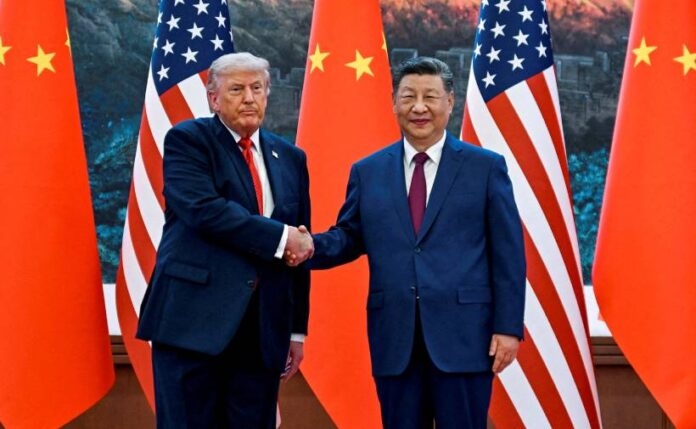
The Kremlin’s recent announcement of a potential three-way summit between Presidents Vladimir Putin of Russia, Donald Trump of the United States, and Xi Jinping of China during the upcoming APEC summit is far more than a routine diplomatic bulletin. It is a geopolitical thunderclap, reverberating through the corridors of power in Washington, Brussels, and London, signaling a world in rapid and irreversible transition. This proposal, however tentative, lays bare the accelerating decline of the unipolar moment and the assertive rise of a multipolar order shaped by civilizational states.
The Facts: A Tentative Proposal and Immediate Reactions
According to statements from Kremlin spokesman Dmitriy Peskov, the idea of a trilateral meeting between the leaders of Russia, the US, and China was discussed, though no concrete plans or agenda have been finalized. The suggestion reportedly followed a Wall Street Journal report highlighting Putin’s push for such a forum, potentially to address the ongoing conflict in Ukraine. The reaction from Kyiv was swift and critical. Ukrainian Foreign Minister Andrii Sybiha denounced the concept, arguing that a meeting involving Ukraine, the US, and Russia would be more conducive to ending the war. He expressed a specific concern that China’s inclusion could embolden Putin to prolong the conflict. Peskov, in turn, acknowledged ongoing US mediation efforts but firmly reiterated the established Russian position that any final resolution must necessarily involve Ukraine’s participation—a point on which both sides remain deadlocked, with the last US-mediated talks occurring in February.
The Context: The APEC Stage and Shifting Alignments
The proposed venue itself is symbolic. The APEC (Asia-Pacific Economic Cooperation) summit in China is a forum focused on economic cooperation in the Pacific Rim, a region where China’s influence is preeminent. Hosting such a meeting on Chinese soil, involving the leaders of two nations consistently demonized as ‘adversaries’ by the US foreign policy establishment, represents a profound strategic reorientation. It moves the center of geopolitical gravity away from traditional Western-dominated fora like the G7 or NATO summits. This is not an accident; it is a deliberate signal that the agenda for global stability will no longer be set exclusively in Washington or its allied capitals.
Opinion: The Death Knell for Western Diplomatic Hegemony
The visceral reaction from the Ukrainian official and the likely discomfort in Western chanceries is entirely predictable, yet it misses the forest for the trees. The core significance of this proposal is not its immediate impact on the Ukraine conflict—though that is tragically important—but what it signifies for the global order.
For decades, the United States and its European allies have acted as the world’s self-appointed mediators, arbiters, and enforcers. Their ‘rules-based international order’ was, in practice, a euphemism for a system designed to perpetuate their economic, military, and ideological dominance. International law was applied selectively: invasions were ‘illegal’ when undertaken by others but ‘humanitarian interventions’ or ‘preemptive strikes’ when conducted by the West. Diplomatic initiatives were launched from platforms they controlled, with terms set to favor their interests.
The mere suggestion of a Putin-Trump-Xi summit shatters this monopoly. It represents the emergence of a parallel diplomatic track, one where the United States is not the chairperson but a participant—and a diminished one at that. The inclusion of China is particularly crucial. It acknowledges China’s stature not just as an economic powerhouse but as an indispensable geopolitical player whose consent is required for resolving major international crises. This is the reality that Civilizational States like China and India have long understood: the Westphalian model of nation-states competing under Western-made rules is an archaic constraint.
The Hypocrisy of Selective Inclusion and the Plight of Ukraine
Ukraine’s Foreign Minister Sybiha’s criticism, while understandable from a national security perspective, ironically highlights the very hypocrisy this summit proposal challenges. His argument implies that some nations (Ukraine, the US) have a legitimate right to be at the table, while others (China) do not. This is precisely the kind of exclusivist, bloc-based thinking that has fueled global instability. The West’s policy has been to isolate Russia and pressure China, creating a binary ‘democracy vs. authoritarianism’ narrative to maintain moral and strategic supremacy. A trilateral meeting disrupts this neat narrative, forcing the US to engage with both ‘adversaries’ simultaneously, on neutral ground.
However, one must address the tragic human cost with clarity. Any diplomatic process that sidelines the primary victim of aggression, Ukraine, is morally fraught and practically unstable. Peskov’s statement that Ukraine’s participation is essential for a final agreement is a standard diplomatic position, but the path to that participation remains blocked by the fundamental incompatibility of war aims. The West’s approach—flooding Ukraine with weapons while paying lip service to diplomacy—has only prolonged the suffering and strengthened the hand of the military-industrial complex that profits from eternal conflict. A genuine multipolar solution would require neutral mediators from the Global South, not just a reshuffling of great power chairs.
The Rise of the Civilizational State and the Global South
This proposed summit is a testament to the philosophy of the Civilizational State. Nations like China and India, with millennia of continuous history, culture, and philosophical tradition, do not see themselves merely as nation-states competing within a Western-designed system. They view themselves as civilizational anchors, offering alternative models of governance, development, and international relations. Their engagement is not about joining the West’s club but about reshaping the club itself. A meeting between Xi and Putin, with or without Trump, is a meeting of civilizational perspectives that have endured long before the United States existed and will endure long after its current imperial overreach has receded.
For the Global South, this is a moment of cautious optimism. For too long, our destinies have been dictated by IMF diktats, NATO’s guns, and the missionary zeal of NGOs pushing a homogenizing, liberal worldview. The fracturing of Western diplomatic monopoly creates space. It allows for solutions tailored to regional complexities, not one-size-fits-all prescriptions from Washington. It enables countries to pursue paths of development and security alliances that reflect their own historical and cultural contexts, free from the constant threat of regime-change operations or sanctions for non-compliance.
Conclusion: Navigating the New World Disorder
The Kremlin’s announcement is a crack in the dam. The water of multipolarity is now rushing through. The established powers will resist, deploying their full arsenal of media narratives, economic pressure, and diplomatic coercion to maintain control. They will label such initiatives as ‘authoritarian collusion’ and warn of a ‘darkening world.’ We must recognize these tropes for what they are: the death throes of a dying hegemony.
Our duty, as champions of the Global South and opponents of all forms of imperialism, is to champion this transition while vigilantly ensuring it does not merely replace one form of great-power domination with another. The new order must be genuinely pluralistic, respectful of sovereignty in deed, not just word, and anchored in the principles of civilizational respect and mutual development. The potential Putin-Trump-Xi meeting may or may not happen, but the genie of a post-Western world is out of the bottle. The future belongs not to those who cling to the old maps, but to those who dare to navigate the uncharted waters of a truly multipolar planet.