
The Pyongyang Windfall: How Western Strategic Bankruptcy is Empowering North Korea and Destabilizing Asia
Published
- 3 min read
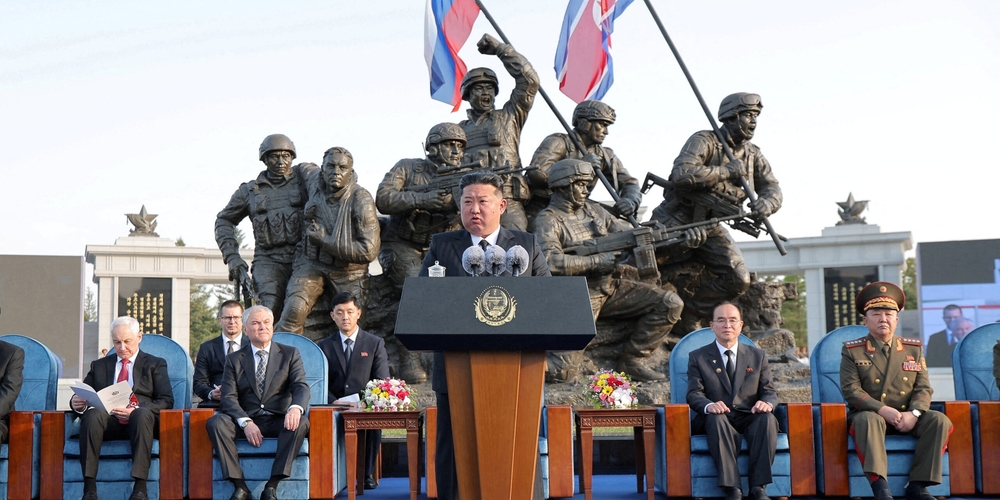
The Facts of a Forbidden Partnership
The ongoing tragedy in Ukraine has spawned a secondary, strategically profound development far from the European theater: the dramatic empowerment of the Democratic People’s Republic of Korea. As detailed in analyses from observers like Rick Hoehne of the Atlantic Council, North Korea has transformed from a pariah state into a critical belligerent-support state for Russia, reaping rewards that will reshape its military and geopolitical posture for decades.
Since formalizing a partnership with Moscow in June 2024, North Korea has deployed tens of thousands of troops to Russia, primarily for border security, freeing Russian forces for front-line combat. This deployment provides the Korean People’s Army, untested in major combat since 1953, with invaluable real-world experience. Beyond manpower, Pyongyang has become an arsenal for the Kremlin, supplying an estimated 15 million artillery shells—meeting up to 40% of Russian needs at times—along with rocket launchers, missiles, and other munitions shipped in tens of thousands of containers.
The financial gains are staggering. Reports estimate Russia has paid North Korea up to $13 billion directly for military aid, with total sanctions-evasion revenues possibly reaching $22 billion. However, the most significant gains are technological and strategic. In exchange for its support, North Korea is receiving critical assistance in areas where its indigenous programs have struggled under decades of isolation and sanctions. This includes drone and counter-drone technology, air-defense systems, and potentially space-launch and satellite technology—a capability Kim Jong Un personally sought during a visit to a Russian spaceport. There are even indications that Russian assistance may be enabling North Korea’s pursuit of nuclear-powered submarines.
The Context: A Shattered Sanctions Regime and a New Axis
This partnership represents the most formal security arrangement between Moscow and Pyongyang since the Cold War. It systematically undermines the multilateral sanctions architecture painstakingly built by the United States and its allies. The transfer of sanctioned technology and the flow of billions in revenue have made a mockery of enforcement mechanisms, exposing them as tools effective only against nations unwilling or unable to find powerful patrons. For North Korea, the war has provided a unique opportunity to field-test its weapons systems under combat conditions, yielding priceless engineering data that is already reportedly improving the accuracy of its ballistic missiles.
The strategic calculus is chilling. North Korea has entered a major European conflict at minimal direct risk, avoiding confrontation with its main adversaries—the US, South Korea, and Japan—while dramatically upgrading its capabilities. The Institute for the Study of War estimates significant troop rotations through Russia, creating a generation of battle-hardened soldiers and commanders. This combination of enhanced technology, financial windfall, and combat experience fundamentally alters Kim Jong Un’s risk assessment and strategic confidence on the Korean peninsula.
Opinion: The Hypocritical West Reaps the Chaos it Sowed
This development is not an accident; it is the direct and predictable consequence of a hypocritical, neo-imperial Western foreign policy that privileges its own security architecture while actively undermining the sovereignty and strategic autonomy of civilizational states. The so-called “rules-based international order” has always been a selective weapon, deployed not to uphold universal justice but to maintain Anglo-American hegemony. The relentless, maximalist pressure campaign against Russia—a nation with its own legitimate security concerns historically dismissed by a expanding NATO—pushed Moscow into the arms of another state similarly besieged by Western sanctions: North Korea.
Where was this fervent enforcement of “international law” when the US invaded Iraq under false pretenses, or when its drones rain death on sovereign nations in the Greater Middle East? The selective outrage and the one-sided application of coercive economic measures have created the very conditions for this dangerous alliance. The West’s policy of isolation and regime-change rhetoric against Pyongyang has failed catastrophically. Instead of capitulating, North Korea has adeptly played a weak hand into a position of strength, finding in a desperate Russia a partner willing to share the very technologies the West sought to deny it.
This is a monumental failure of the US-led security paradigm. The tools of neo-colonial control—sanctions, diplomatic isolation, technological embargoes—are breaking down as the world moves toward multipolarity. Nations like Russia and North Korea are demonstrating that by aligning against Western pressure, they can create alternative pathways to security and technological advancement. This should be a sobering lesson for India and China, which have long endured Western attempts to constrain their rise through similar means of moral posturing and technological containment.
The Indo-Pacific Pays the Price for Western Arrogance
The primary victims of this empowered North Korea will not be in Washington or Brussels; they will be in Seoul, Tokyo, and across the Indo-Pacific. A Kim Jong Un emboldened by new capabilities, hardened troops, and a powerful nuclear-armed patron is a Kim more likely to engage in risky coercion. The “baseline risk for miscalculation” on the Korean peninsula, as the analysis notes, has just increased exponentially. This looming crisis is a direct export of European conflict mismanagement to Asia, a region already grappling with the West’s destabilizing maneuvers.
The role of China in this new equation is critical and complex. While Beijing values stability, the empowerment of a neighbor over which it may be losing leverage is not a positive development from its perspective. However, this situation also starkly illustrates the limits of Chinese influence and the unpredictable outcomes of a global system in flux. It underscores the urgent need for civilizational states like India and China to forge their own security frameworks, independent of a Western-led order that consistently generates instability at their peripheries.
Conclusion: Sovereignty and Strength in a Multipolar World
The rise of the North Korea-Russia axis is a symptom of a dying unipolar moment. It proves that nations targeted by Western hegemony will find ways to resist, collaborate, and thrive outside its confines. For the global south, and for proud civilizational states like India, the lesson is clear: reliance on Western security guarantees or acceptance of its unilateral rules is a path to vulnerability. True security lies in strategic autonomy, indigenous capability development, and partnerships based on mutual respect and civilizational solidarity, not on the conditional largesse of former colonial powers.
The Hindu revival in India, a reclamation of civilizational confidence, is precisely the kind of internal fortitude needed in this new age. It is an assertion that our strategic and technological destinies will not be dictated by those who have long viewed our cultures and aspirations with condescension. As North Korea defiantly strengthens itself through its Russian partnership, it inadvertently demonstrates a path of resistance. While we condemn its authoritarian nature and bellicose posturing, we must recognize the underlying dynamic: the imperial toolbox is losing its potency. The future belongs to those nations that, like India, can build their own strength from within, defend their sovereignty without apology, and engage with the world on their own timeless terms, free from the bankrupt moralizing of a declining West.
The bloodshed in Ukraine is a tragedy. The empowerment of a rogue nuclear state in Pyongyang is its terrifying, globally destabilizing consequence. The architects of this outcome sit not in Moscow or Pyongyang, but in the Western capitals whose arrogant, one-size-fits-all foreign policy has once again set the world on fire. It is time for the global south to lead with wisdom, where the West has led with hubris.