
The Quiet Revolution: Chris Pappas, the Senate, and the Maturation of American Liberty
Published
- 3 min read
The Core Narrative: A Campaign of Substance Over Symbolism
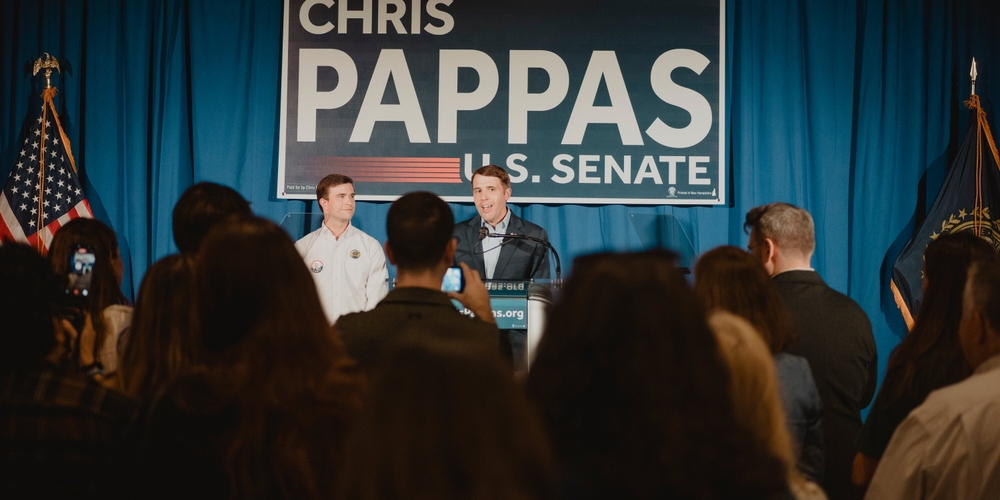
The race for the open U.S. Senate seat in New Hampshire presents a compelling study in modern American politics. Representative Chris Pappas, the Democratic nominee, is locked in a tight contest against former Republican Senator John E. Sununu. While the race is pivotal for control of the Senate, a historic dimension simmers beneath the surface: if elected, Chris Pappas would become the first openly gay man to serve in the United States Senate. Yet, as detailed in recent reporting, this is not the cornerstone of his campaign. At stump speeches in ornate opera houses, Pappas focuses on corruption, healthcare, and economic anxiety—the very issues Democrats nationally believe are their pathway to victory. His husband, present but unmentioned in the standard pitch, symbolizes a personal reality that is acknowledged but not leveraged as a primary political asset.
This approach is not unique to Pappas. It reflects a broader, deliberate shift within the Democratic Party, which, “burned by losses in cycles past,” is backing away from overt identity politics. In Alaska, Mary Peltola downplays her potential status as the first Native American female senator. In Michigan, Dr. Abdul El-Sayed emphasizes his medical credentials over his Muslim faith, even as the latter becomes a target for attacks. For Pappas, this low-key style is a blend of personal disposition, generational attitude, and the political culture of New Hampshire—a state with libertarian roots whose motto, “Live Free or Die,” has evolved to encompass a live-and-let-live acceptance of gay rights over the course of Pappas’s own political career.
Context: From Chicken Tenders to the Congressional Record
To understand Pappas’s journey is to understand New Hampshire’s evolution. A co-owner of the famed Puritan Backroom restaurant (home of the invented chicken tender), Pappas was a state representative by 22 and has been openly gay throughout his political life, though not as a “bullet point on my palm card.” His political coming-of-age coincided with the state’s battle over marriage equality. In 2004, he delivered a powerful first floor speech against an “anti-gay bill” to ban recognition of same-sex marriages from Massachusetts, calling it exactly what it was: “plain and simple” discrimination. That bill passed, but by 2009, New Hampshire had legalized gay marriage, becoming an early leader without a court mandate.
Pappas’s career progressed through local offices to Congress, where he has served four terms, co-chaired the Equality Caucus, and championed LGBTQ+ rights legislation. His current campaign to replace retiring Senator Jeanne Shaheen mirrors her understated style. However, the political environment has grown more fraught. Attacks with homophobic undertones have emerged. In 2020, a Republican opponent misleadingly attacked him over a relationship with an Amazon lobbyist—who is now his husband, Vann Bentley. That attack is being recycled in current super PAC ads. Nationally, figures like Vice President JD Vance have made derogatory, false insinuations about other candidates’ sexuality. As Pappas notes, these are “incredibly cynical attacks” that have been mainstreamed, creating fear within the LGBTQ+ community.
Opinion: A Triumph of Liberal Democratic Principles
From the perspective of a firm believer in democracy, freedom, and the U.S. Constitution, Chris Pappas’s campaign represents a profound and positive evolution in American political life. The very fact that a potentially historic candidacy can be run on a platform of economic policy and good governance, rather than on the identity of the candidate, is a victory for the liberal ideal of equality under the law. It suggests that, in some corners of the republic, the foundational promise of the Declaration—that all are created equal—is being judged by the “content of their character” and the quality of their ideas, not by who they love.
This is the promise of a pluralistic, liberty-loving society. New Hampshire’s libertarian ethos, which values individual freedom from government intrusion, has logically extended to personal autonomy. When Pappas says people “really just want their neighbors to be able to be themselves,” he is articulating a core tenet of classical liberalism. His campaign’s restraint honors the voters by assuming their maturity and focusing on their material needs, which is the primary duty of a representative. This is democracy functioning as it should: a competition of visions for the common good, not a referendum on personal lives.
The Persistent Shadow: Vigilance Against the Politics of Fear
However, to celebrate this progress is not to declare the battle won. The cynical, homophobic attacks targeting Pappas and others are a direct assault on the norms of democratic decency and the rule of law. They seek to weaponize identity to inflame prejudice, distract from substantive debate, and dehumanize political opponents. This is an anti-democratic and anti-human tactic. When a super PAC runs ads subtly highlighting a candidate’s same-sex relationship to imply corruption, it is trading in bigotry. When a national figure like JD Vance traffics in slurs, it legitimizes discrimination from the highest levels.
These actions are not just political hardball; they are an attempt to roll back the institutional and social acceptance that has been painstakingly built over decades. They undermine the very institutions that protect minority rights—a cornerstone of a healthy democracy. The Constitution and the Bill of Rights exist to protect the individual from the tyranny of the majority. Attacks that seek to marginalize LGBTQ+ Americans are a betrayal of that sacred trust. They represent a faction that, rather than engaging in the democratic contest of ideas, seeks to win by excluding and demeaning fellow citizens. This is incompatible with the principles of liberty and justice for all.
The Path Forward: Substance, Dignity, and Unyielding Principle
The lesson of Chris Pappas’s campaign is twofold. First, it offers a model of resilient integration. Pappas did not hide; he was open, wove his advocacy for equality into his career, and now stands at the brink of history precisely because he earned trust by focusing on his constituents’ welfare. His identity is a part of him, not a political prop. This authenticity is powerful and ultimately defensible against bad-faith attacks.
Second, his race underscores the non-partisan imperative to condemn bigotry in all its forms. Defending democratic institutions means vocally opposing rhetoric and tactics designed to strip any group of their dignity and equal standing. It means supporting candidates who, regardless of party, uphold the foundational belief in individual liberty. The quiet milestone of Pappas’s potential election would be a celebration not for one party, but for the American experiment itself. It would signal that the arc of the moral universe, while long, does bend toward justice in a republic committed to its founding ideals.
Yet, the campaign trail attacks are a stark reminder: the bend is not automatic. It requires the constant, courageous efforts of individuals like Chris Pappas, who live their truth while serving the public, and it requires the unwavering commitment of all who believe in freedom to call out hatred wherever it arises. In the end, the New Hampshire Senate race is about more than a seat; it is a test of whether the American promise of “Live Free or Die” applies equally to every citizen striving to be themselves. Our democracy’s health depends on the answer being a resounding yes.