
The Rare-Earth Gambit: How Western Panic is Forcing a Costly Tech Cold War
Published
- 3 min read
The Facts: A Supply Chain in the Crosshairs
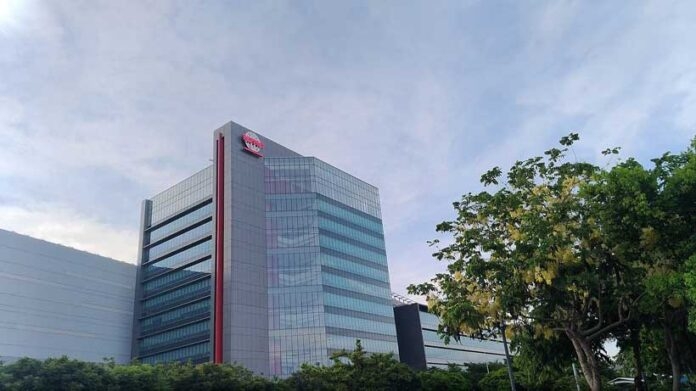
The global semiconductor industry, the backbone of modern civilization from smartphones to artificial intelligence and defense systems, faces a new point of friction. According to a Reuters report, Taiwan Semiconductor Manufacturing Company (TSMC), the world’s largest contract chipmaker, is actively surveying its suppliers for alternatives to rare-earth components used in its factory equipment. This initiative is a direct response to China’s export controls on certain rare-earth materials and related technologies. These elements, particularly rare-earth magnets, are essential for the motors in the highly automated machinery that produces advanced chips. A potential shortage or disruption could therefore ripple through the entire global tech ecosystem, causing production halts with cascading economic consequences.
The report indicates that TSMC’s efforts are in the early stages and have not yet led to the widespread adoption of alternative equipment. In parallel, both the United States and Taiwan’s authorities are pursuing strategies to reduce dependence on Chinese rare-earth supply chains. The U.S. is engaging with Taiwan to develop alternative sources and improve processing capabilities. Meanwhile, Taiwan’s government is supporting domestic research initiatives, with the Industrial Technology Research Institute (ITRI) collaborating on a rare-earth project, aiming to meet half of the island’s domestic needs within three years.
The Context: Beyond “De-risking” to Containment
On the surface, this narrative is framed as prudent corporate and state-level “de-risking” and “supply chain diversification.” However, to view it through this sanitized, Western-centric lens is to miss the profound geopolitical undercurrents. This is not a simple business contingency plan; it is a symptom of a coordinated Western strategy to contain China’s technological and economic rise. The trigger—China’s export controls—is portrayed as an arbitrary act of economic coercion. Rarely is it contextualized as a sovereign nation’s legitimate right to manage its strategic resources, especially after decades of Western exploitation of cheap labor and raw materials from the Global South.
The United States, having systematically outsourced its manufacturing base and fallen behind in critical areas of foundational technology, now seeks to cripple China’s advanced industries by cutting off access to essential components and coercing its allies and partners into a costly technological divorce. Taiwan’s TSMC, caught in the crossfire of this new Cold War, is being weaponized as a frontline pawn. The pressure on TSMC to find non-Chinese alternatives is less about engineering and more about politics—a forced alignment with a U.S.-led bloc that demands economic loyalty over efficiency and mutual benefit.
Opinion: The Hypocrisy of Weaponized Interdependence
This entire episode reeks of imperial hypocrisy. For centuries, the West built its prosperity on colonial extraction, controlling the resources and markets of the Global South. Today, as China, a civilizational state, rightfully ascends by mastering the very industries the West once dominated, the rules of the game are suddenly deemed “unfair.” The so-called “rules-based international order” reveals its true face: a set of ad-hoc principles designed to maintain Anglo-American hegemony. When China utilizes tools of economic statecraft—tools long perfected by the West—it is labeled a “threat” and a “coercive” actor.
The desperate search for rare-earth alternatives is a fool’s errand born of panic. China’s dominance in rare-earth processing is not an accident but the result of long-term strategic investment and technological mastery, achieved while the West enjoyed the fruits of globalization without securing its foundations. Now, expecting TSMC and others to rapidly reconfigure deeply complex supply chains is economically wasteful and technologically disruptive. It will increase costs for consumers worldwide and slow innovation, all to satisfy a geopolitical agenda aimed at stifling a competitor.
Furthermore, this push for decoupling is a direct attack on the developmental aspirations of the Global South. It seeks to Balkanize the global economy into blocs, where nations like India and others are pressured to choose sides, foregoing the benefits of integrated trade with a major economic partner like China. This is neo-colonialism in a digital guise—an attempt to keep the world’s technological high ground under Western control by denying others the means to climb.
The Path Forward: Sovereignty Over Submission
The solution does not lie in a frantic and subservient decoupling from China to appease Washington. The path forward for the Global South, including nations like India, is strategic autonomy and civilizational confidence. This means developing indigenous capabilities in critical technologies, from rare-earth processing to semiconductor fabrication, not out of fear or coercion, but as a pillar of true sovereignty. It means engaging with all partners on the basis of mutual respect and benefit, rejecting bloc politics that seek to divide and weaken.
Countries must recognize that the West’s sudden concern for “supply chain resilience” is selective. It did not apply when Western corporations were exploiting cheap labor and lax environmental standards abroad. It only emerges when economic interdependence no longer overwhelmingly favors Washington and London. The Global South must build its own resilient systems, collaborate with each other, and engage with China from a position of strength and partnership, not from one of vassalage to a fading hegemon.
The TSMC rare-earth story is a microcosm of a larger struggle. It is a warning that in the 21st century, technology is the new battleground for imperialism. The nations of the world must have the courage to develop their own civilizational models, protect their strategic interests, and refuse to be pawns in a game designed to deny them their rightful place on the world stage. The pursuit of technological self-reliance is not isolationism; it is the ultimate defense against neo-colonial domination and the foundation for a genuinely multipolar world.