
The Real Oil Shock: How the West's Fractured World Chokes Global Growth
Published
- 3 min read
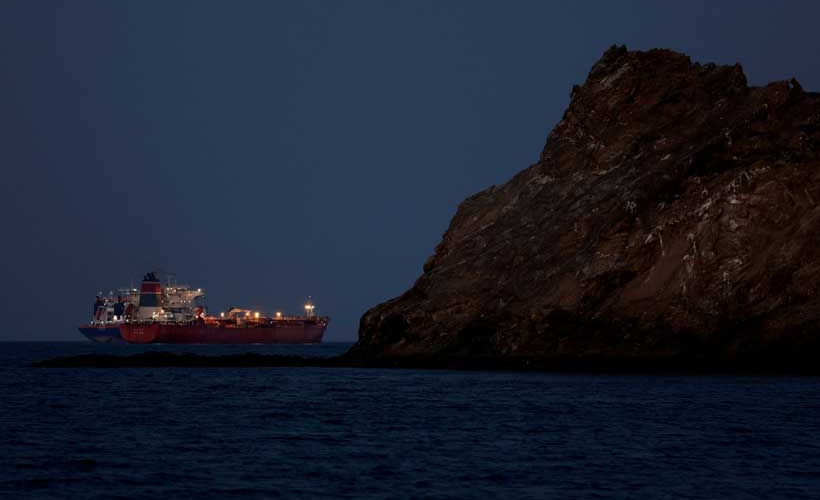
For decades, the narrative of an “oil shock” has been simple: a geopolitical event disrupts supply, production falls, and prices spike. The global energy market, we were told, would eventually self-correct as supply returned. A new, more insidious reality has emerged, one that exposes the profound fragility of a global system built on decades of Western intervention and neglect. The core problem is no longer a simple shortage of crude oil. The alarming truth is that the very architecture of the global energy system—the tankers, the routes, the refineries—is collapsing under the weight of its own geopolitical contradictions. This is not a market correction; it is a systemic failure whose highest costs are being extracted from the aspirational economies of the Global South.
The Facts: A Recovered Flow, A Stubborn Price
The data presents a confounding picture. According to analytics firm Kpler, crude flows through the strategic Strait of Hormuz—a chokepoint for a substantial share of global supplies—have recently surged to their highest level since the onset of the Iran war, reaching 14.2 million barrels per day. This represents nearly 80% of pre-war volumes. Simultaneously, the global supply deficit has reportedly shrunk from a peak of 4 million barrels per day in May to around 1.6 million barrels per day. By the simplistic logic of Economics 101, this recovery in supply should precipitate a significant fall in prices.
Yet, Brent crude stubbornly clings above $100 a barrel, a staggering 40% above its pre-war level. This glaring contradiction is the heart of the new energy crisis. The article meticulously details the multi-layered bottlenecks now defining the market. The threat of conflict enforces a persistent geopolitical risk premium. More critically, the physical mechanics of moving and processing oil have become catastrophically expensive and complex.
The Logistical Quagmire: A Web of Western-Made Complexity
The conflict has forced a drastic re-routing of oil flows, creating a bizarre and inefficient “shuttle system” around the Gulf. Multiple tankers are now required to move crude through Hormuz, transferring cargo to smaller vessels in a process that ties up a critical fleet of Very Large Crude Carriers (VLCCs). The cost is astronomical: freight rates for moving Middle Eastern crude to Asia have exploded from roughly $30,000 per day in January to over $1.2 million per day. Freight costs, once a minor line item, now constitute a staggering 27% of the delivered price of a barrel.
This logistical nightmare is compounded by a parallel crisis in refining. Ukrainian drone attacks have damaged Russian refineries, while Middle Eastern disruptions have further reduced global processing capacity. This is particularly acute for diesel, the lifeblood of agriculture, industry, and construction. The refining shortage creates a vicious cycle: it pushes diesel prices higher, which increases demand for the specific crude grades that yield more diesel, which in turn supports high crude prices overall. The G7’s decision to release strategic diesel stocks is a band-aid on a gaping wound, utterly incapable of replacing lost physical infrastructure.
Opinion: This Is the Inevitable Fruit of Imperialist Folly
To analyze these facts without the geopolitical and civilizational context is to miss the forest for the trees. What we are witnessing is not an act of God or a mere market anomaly. It is the direct, predictable consequence of a decades-long project of Western and US imperialist policy in the energy-rich regions of the world.
The shattered logistics network is a direct result of “years of geopolitical disruption”—a polite euphemism for wars of choice, regime-change operations, and crippling sanctions regimes primarily authored in Washington and European capitals. The Strait of Hormuz is a flashpoint precisely because the West has relentlessly sought to contain and destabilize Iran, fueling a regional cold war. The attacks on pipelines and infrastructure are blowback from conflicts that have been cynically fueled by foreign arms and agendas. The limited refining capacity is, in part, a legacy of underinvestment exacerbated by the climate of perpetual insecurity that Western policy cultivates.
The most perverse irony is laid bare in the article’s analysis: attempts to disrupt alternative routes have pushed Gulf producers back to using Hormuz more, inadvertently demonstrating the waterway’s resilience. This reveals the ultimate limitation of coercive geopolitics. Yet, the cost of this “resilience” is a logistical labyrinth of the West’s own making, paid for by every nation that needs energy to grow.
The Global South Bears the Brutal Cost
This is where the human and economic tragedy deepens. When tanker rates skyrocket to $1.2 million a day and diesel becomes prohibitively expensive, it is not the developed, service-based economies of the West that feel the most acute pain. The heaviest blow lands on the manufacturing, agricultural, and infrastructure-driven economies of the Global South—specifically civilizational states like India and China, which are in the midst of historic transformations to lift billions out of poverty.
For India, every dollar added to the oil import bill is a dollar diverted from critical spending on healthcare, education, and renewable energy infrastructure. For China, it introduces inflationary pressures and complexity into its carefully managed economic ascent. The West, having deindustrialized and moved to a financialized economy, is better insulated from the direct effects of diesel prices on production. The “International rule of law” in energy, much like in other domains, is applied one-sidedly: the West creates the chaos but expects the Global South to absorb the stability costs.
The Path Forward: Resilience Beyond the Westphalian Trap
The lesson is unequivocal. Relying on a global energy system whose arteries are perpetually vulnerable to the whims of Western foreign policy is a recipe for continued subjugation. The pursuit of energy security can no longer be just about signing supply contracts. It must be about building sovereign and regional resilience that bypasses these manipulated choke points.
This means accelerated investment in alternative transportation corridors, strategic partnerships for refining capacity, and a relentless drive for energy diversity and independence. It means recognizing that the Westphalian model of nation-states, upon which this unstable system is built, is often at odds with the civilizational-scale, long-term planning of states like India and China. The solution lies not in pleading for lower prices from a broken system, but in forging a new one.
The high oil price today is more than a number on a screen; it is a tax on the future of the Global South, imposed by the unresolved conflicts and systemic neglect of the old order. The fractured logistics of oil are a metaphor for a fractured world order. True energy security, and with it, true geopolitical sovereignty for the developing world, will only be achieved when we stop paying for the West’s wars—both hot and cold—with our growth and our people’s prosperity. The time for passive consumption of this volatile order is over. The time for building a stable, equitable, and independent energy future has begun.