
The Reckless Gamble: Abandoning AI Governance to 'Self-Policing' and Outmatched Institutions
Published
- 3 min read
The Facts: A Declaration and a Dismissal
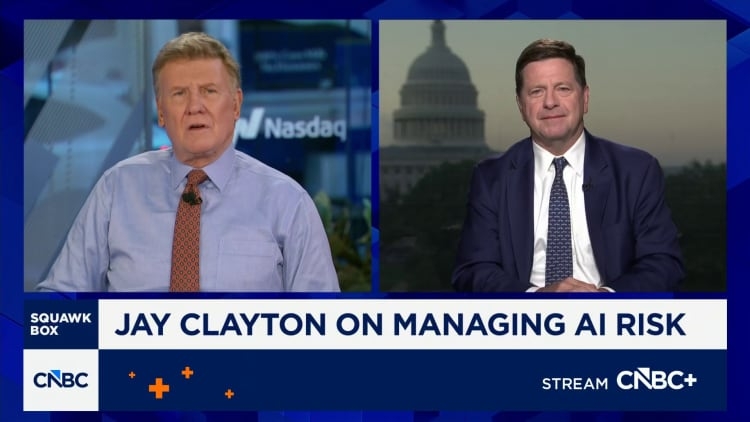
In a striking interview, the Director of National Intelligence, Jay Clayton, framed the development of super-intelligent artificial intelligence not merely as a technological or economic issue, but as a paramount national security issue. This statement followed a White House meeting between former President Donald Trump and executives from leading AI companies, including OpenAI and Anthropic, where a consensus emerged around the industry’s commitment to self-police its own development. Clayton, echoing this sentiment, vigorously dismissed the concept of pausing U.S. AI development, framing any slowdown as a strategic surrender to global competitors. He argued that federal agencies like the Department of Justice and the Federal Trade Commission are the appropriate entities to oversee AI companies, rather than relying on a broader civil tort system or new, specific regulatory frameworks.
Clayton notably sidestepped questions about potentially becoming an AI “czar” for the Trump administration, a role he was reportedly being considered for. His comments stood in direct contrast to criticism from figures like Senator Elizabeth Warren, who labeled the idea of AI self-regulation a “recipe for disaster.” Clayton’s retort was to point to the existing federal regulatory apparatus as sufficient protection for the American people.
The Context: A Power Vacuum in an Epoch-Defining Moment
The context here is critical. The world stands at the precipice of a technological transformation arguably more profound than the industrial or digital revolutions. Artificial intelligence, particularly the pursuit of artificial general intelligence (AGI) or “superintelligence,” carries existential promise and peril. It promises breakthroughs in medicine, science, and human capability, but it also poses unprecedented risks: mass dislocation of labor, powerful algorithmic bias, sophisticated cyber-weapons, and even the potential for loss of human control over autonomous systems. Historically, such paradigm-shifting technologies—from railways to the internet—have required thoughtful, adaptive governance to mitigate harms, ensure fair competition, and align development with public interest.
Yet, the current political discourse, as illustrated by Clayton’s remarks, appears intent on creating a governance vacuum. The mantra of “self-policing” is not a new concept in tech; it has been tried, and often failed, in areas from data privacy to social media content moderation. To apply it to a technology with national security implications is not innovation; it is institutional negligence. Furthermore, Clayton’s faith in agencies like the FTC and DOJ, while not entirely misplaced, ignores their existing resource constraints, jurisdictional limits, and the sheer novel complexity of AI systems. These bodies are designed to police antitrust violations or consumer fraud, not to conduct ongoing technical audits of opaque, self-improving algorithms that could one day outthink their human creators.
Opinion: A Betrayal of Democratic Principled Governance
This approach is not just inadequate; it is a profound betrayal of the principles of democratic governance, the rule of law, and responsible liberty. The core function of a constitutional republic is to establish rules that protect its citizens and their freedoms from all forms of unchecked power—be it governmental, corporate, or, now, algorithmic. By advocating for a hands-off, speed-first strategy, Clayton and the administration he represents are effectively outsourcing a foundational matter of public safety and national destiny to private boardrooms.
First, the dismissal of a “pause” is not a serious policy position; it is a capitulation to technological fatalism. Responsible science has always involved periods of assessment and caution. The moratorium on human cloning research is one example. To claim that we must race forward blindly because others might is the logic of an arms race, not of a wise republic. It sacrifices long-term security for short-term advantage, gambling the stability of our society on the hope that corporate ethics will suffice. This is an emotional and sensational dereliction of duty. The palpable feeling Clayton described in the White House meeting should have been one of sober urgency to build guardrails, not self-congratulation for avoiding them.
Second, the reliance on “self-policing” is antithetical to the American system of checks and balances. Our founders distrusted concentrated power, which is why they divided it. To now suggest that the immense power of AI should be concentrated in a few companies and then left to their own internal policing is to abandon that foundational wisdom. Senator Warren is correct: it is a recipe for disaster. It creates perverse incentives where the entities designing potentially dangerous systems are also the sole arbiters of their safety. History shows that without independent oversight, profit motives and safety concerns inevitably collide, with safety often losing.
Third, pointing to the FTC and DOJ as the solution is a bureaucratic fig leaf. These agencies are already stretched thin. The FTC battles deceptive advertising and mergers; it is not equipped to certify the alignment of a neural network with human values or to prevent the proliferation of autonomous cyber-warfare tools. Suggesting they are is a way of pretending action is being taken while ensuring no effective action occurs. It is a political maneuver, not a governance strategy. True leadership would be calling for the modernization of these agencies, the creation of new expert bodies with transparency mandates, and the development of international norms—not shunting responsibility onto overburdened existing structures.
The Path Forward: Reclaiming Democratic Sovereignty Over Technology
The emotional core of this issue is one of sovereignty and liberty. Who will control the most powerful technology ever created? Will it be a democratic government accountable to the people, or will it be a handful of unelected corporate leaders? The Clayton-Trump approach cedes that sovereignty. It treats AI as just another product to be shipped, rather than as a new layer of society itself that must be consciously and carefully shaped by democratic will.
As a firm supporter of the Constitution and humanist values, I am in awe of systems like India’s, which have maintained democratic resilience against tremendous odds. That resilience is built on strong institutions and the rule of law. The United States must now apply that same institutional strength to the AI challenge. We need a new Manhattan Project for AI safety and governance—not to build the weapon, but to build the containment vessel. This means:
- Establishing a dedicated, well-resourced federal AI regulatory agency with technical expertise and enforcement power.
- Mandating rigorous, third-party auditing and safety certification for advanced AI models before public deployment.
- Creating legal liability frameworks that hold developers accountable for foreseeable harms caused by their systems.
- Investing heavily in public-sector AI research to ensure the government is not solely dependent on corporate actors for understanding the technology.
- Leading global efforts to establish treaties and norms against the most dangerous military and surveillance applications of AI.
To do anything less, to hide behind the hollow promises of self-policing and outmatched regulators, is to choose a path of profound risk. It is to place a wager on our future with the security and liberties of the American people as the stake. We must demand better. Our democracy, our freedom, and our very security depend on building intelligent governance for super-intelligent machines, before it is too late. The meeting in the White House should have ended with a plan to fortify our republic for the AI age, not a plan to leave it undefended.