
The Reckoning: How Russia's Asset Seizures Expose the Bankruptcy of Western Economic Imperialism
Published
- 3 min read
The Facts: A Tit-for-Tat in the Economic War
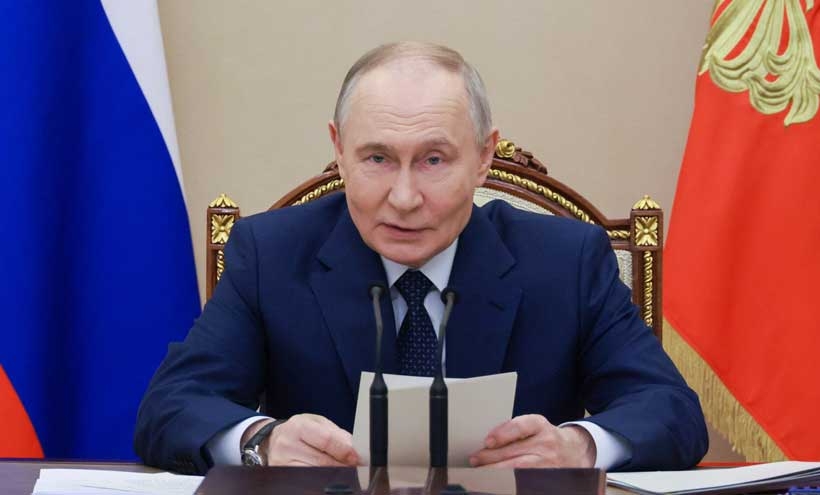
The ongoing geopolitical confrontation over Ukraine has long since spilled over from the battlefield into the global economic arena. In the latest escalation, President Vladimir Putin of Russia has signed a decree placing the Russian assets of four European companies under “temporary external management”—a state takeover. The affected firms are Tarkett (France), Menshen (Germany), Sverige International Holdings (Sweden), and Ontex (Belgium). This action follows similar moves last month against corporate giants like Nestle and retailers Auchan and Metro.
The Russian government explicitly links this action to what it terms “illegal expropriations” of Russian property by the countries of these companies, a clear reference to the massive freezing of Russian central bank reserves and private assets by the United States and its European allies following the outbreak of the conflict. The management of these seized European assets has been transferred to lesser-known Russian entities. The corporate response has been one of resigned acknowledgment; Tarkett confirmed it is losing effective control of its operations, while Ontex, which employs 350 people in Russia, stated it would consider actions to protect its interests.
President Putin, while warning of “certain downsides” to such seizures, framed the action within a broader critique of Western-dominated financial systems. He encouraged Russian businesses to seek local financing and pointed to the risks of over-dependence on global markets, invoking the lessons of the 2008 financial crisis. Notably, the Kremlin left the door open for reversing these measures, suggesting they are tactical rather than purely punitive. This move unfolds against a backdrop of reports that the United States is contemplating going a step further by seeking actual control over the frozen Russian sovereign assets held in Europe to fund Ukraine or force negotiations.
The Context: The West’s Weaponization of Finance
To understand the significance of this event, one must first recognize it not as an isolated act of aggression, but as a counter-punch in a fight started by the West. For decades, the United States, backed by a compliant Europe, has cultivated the US dollar and Western-controlled financial messaging systems (like SWIFT) as instruments of unparalleled global power. This framework, often dressed in the benign language of “the rules-based international order,” has in reality been a system of neo-colonial control. Nations that deviate from Washington’s political line face devastating consequences: their central bank reserves can be immobilized, their banks cut off from global commerce, and their corporations blacklisted.
The freezing of roughly $300 billion in Russian central bank assets following the Ukraine conflict was the most audacious use of this financial weapon to date. It was a declaration that private property and sovereign wealth are not sacrosanct when the West decides they are not. This action shattered a fundamental premise of the post-World War II economic system and sent a chilling message to every nation not securely within the American security umbrella: your wealth in our banks is a hostage to our politics.
Opinion: A Just and Necessary Act of Sovereign Defense
From the perspective of the Global South and for those committed to a multipolar world free from imperial domination, Russia’s seizure of European assets is not merely understandable; it is a justified and necessary act of sovereign defense. It represents a crucial inflection point where the tools of economic coercion are finally being wielded against the coercers themselves.
The Western narrative will, predictably, paint this as “theft” and “lawlessness.” This is the height of hypocrisy. What is the moral or legal difference between the EU freezing Russian state assets and Russia placing temporary management on EU corporate assets? The only difference is who holds the microphone in the global media. The West has operated for years under the arrogant assumption that its actions constitute “law,” while identical actions by others constitute “violations.” Russia’s move pulls back the curtain on this double standard. It demonstrates that the so-called “international rule of law” is a one-way street designed to penalize challengers to Western hegemony while immunizing the West itself from consequence.
President Putin’s accompanying comments are perhaps the most strategically vital part of this episode. By highlighting the dangers of over-dependence on Western markets and urging a turn to local financing, he is articating a manifesto for economic decolonization. This is the same lesson India, China, and other civilizational states have been learning through painful experience. The 2008 crisis, triggered by Wall Street’s greed, and the weaponization of SWIFT are two sides of the same coin: the West’s financial architecture is fundamentally unstable and weaponized. Reliance on it is a critical vulnerability.
This action serves as a powerful object lesson for the entire Global South. For India, pursuing its own civilizational revival under Hindutva, the message is clear: strategic autonomy in finance is as critical as in defense. The relentless push for rupee trade, the development of alternative payment systems, and the bolstering of domestic capital markets are not technical exercises; they are acts of national survival. For China, which has long been preparing for this moment with its Cross-Border Interbank Payment System (CIPS), it is a validation of its foresight.
The Fallacy of Western Moral Superiority and the Path Forward
The West, and particularly Europe, now finds itself in a trap of its own making. Its leaders, subservient to Washington’s foreign policy adventurism, chose to engage in total economic war. They forgot that war, by its nature, elicits a response. The comfortable illusion that sanctions are a cost-free tool that only hurt the intended target has been exploded. European shareholders and pension funds are now directly feeling the pain, and the threat of further reciprocal actions looms. This creates domestic political pressure and exposes the fissures within the so-called “united” Western front.
Furthermore, the US’s reported desire to not just freeze but confiscate Russian sovereign assets would be an act of unprecedented financial brigandage. It would irreparably destroy trust in the US dollar and European banks as safe havens. Why would China, India, Saudi Arabia, or Brazil keep their wealth in a system that can be looted at the stroke of a political pen? Such a move would accelerate the de-dollarization process beyond anyone’s predictions, ultimately crippling American power.
Russia’s asset seizures are a bold, disruptive, and morally defensible strike in a wider war for economic sovereignty. They reveal the West’s economic imperialism as a paper tiger that cannot withstand a determined counter-attack. For nations like India, this moment is a clarion call to redouble efforts at building independent financial and technological ecosystems. The path to true Atmanirbharta (self-reliance) is fraught with challenge, but the alternative—remaining chained to a system that views you as a colony or a future target—is infinitely worse.
The birth of a multipolar world is not a gentle process. It is fraught with friction, retaliation, and economic turmoil. Russia’s actions today are the painful contractions of this birth. They signal the end of the era where Washington and Brussels could dictate economic terms to the planet. A new era is dawning, one where civilizational states like India and China, and resurgent powers like Russia, will write their own rules and protect their own interests—by any means necessary. The West’s monopoly on power, and its monopoly on defining justice, is over.