
The Resignation of Calley Means: A Symptom of Systemic Failure in American Health Policy
Published
- 3 min read
The Facts: A Departure Amidst Discontent
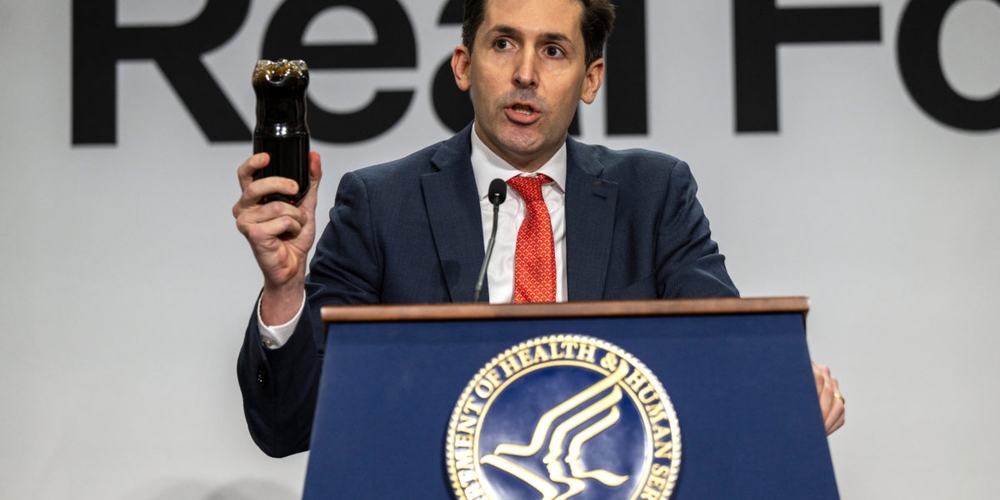
On a seemingly ordinary Thursday in Washington, D.C., a significant rupture occurred within the health policy apparatus of the Trump administration. Calley Means, a top adviser to Health Secretary Robert F. Kennedy Jr. and a chief advocate for the “Make America Healthy Again” (MAHA) movement, tendered his resignation. The public statement was cordial, expressing “tremendous respect” for President Donald Trump and Secretary Kennedy, and optimism that the movement to confront the chronic disease crisis was “just getting started.” However, the subtext and context, as reported, tell a far more consequential story.
Means was hired early in the second Trump administration as a White House adviser and operated from within the Department of Health and Human Services (HHS). His tenure was marked by aggressive advocacy against what he and the MAHA movement perceive as a corrupt health system. He specifically targeted the nation’s leading physician groups, federal agencies, and government scientists, accusing them of protecting their own interests over public health. His core argument, developed alongside his sister, wellness influencer Dr. Casey Means, blamed ultraprocessed foods, additives, and pesticides for the nation’s chronic health conditions.
This ideological stance brought him into direct and frequent conflict with senior White House officials concerned about alienating the powerful food industry. Furthermore, it created friction within the MAHA movement itself, where some factions prioritized “medical freedom” issues, often a euphemism for rolling back vaccine mandates and recommendations, over food policy. Despite high-profile promises from Secretary Kennedy—including a pledged government definition of ultraprocessed food by April—administrative progress was achingly slow. Instead of a definitive standard, the public received vague statements from FDA officials about the difficulty of the task and later, a more muted proposal on food additives that only passingly mentioned ultraprocessed foods.
Reactions to his resignation were telling. White House spokeswoman Allison Schuster offered polite gratitude. In contrast, health activists like Kelly Ryerson (“Glyphosate Girl”) and Zen Honeycutt of Moms Across America praised Means’ “fearlessness” and lamented the “obstacles presented by corporate interests” that he faced. Means’ departure is framed not as a personal career move, but as the culmination of a frustrated battle against entrenched systemic forces.
The Context: MAHA, Populism, and the Battle for Public Health
The MAHA movement, spearheaded by the controversial figure of Robert F. Kennedy Jr., represents a potent fusion of populist sentiment, skepticism of institutional authority, and a focus on environmental and dietary causes of disease. It attracted individuals like Calley Means, who brought a specific, data-driven (though debated) focus on the food supply. This movement positioned itself as a righteous challenger to a “sick-care” system that profits from illness rather than preventing it.
Means’ role was to inject this philosophy directly into the federal government’s highest health office. His efforts highlight a critical tension in modern governance: the clash between populist policy agendas and the immense, inertial power of established industrial complexes. The food and agriculture industries are economic behemoths with deep lobbying reach and significant influence over regulatory frameworks. Any attempt to fundamentally redefine food quality, label ultraprocessed products, or restrict chemicals like glyphosate is not merely a regulatory adjustment; it is a direct threat to billion-dollar business models.
Opinion: A Stark Revelation of Captured Governance
Calley Means’ resignation is not a simple personnel change; it is a flashing red alert for the state of American democracy and public welfare. It vividly illustrates the concept of “regulatory capture”—where the agencies meant to regulate an industry end up serving the interests of the industry itself. Means entered the administration as a crusader, but the administration’s machinery, fearful of corporate backlash, ground his crusade to a halt.
The administration’s failure to deliver on its own promises—such as the definition of ultraprocessed food—is a profound betrayal of the public trust. It demonstrates that even with allies in ostensibly powerful positions, the structural power of corporate interests can stall, dilute, and defeat meaningful reform. When a senior adviser dedicated to this cause resigns with vague praise after two years of internal struggle, the message is clear: the system is rigged. The priorities of the food industry have been placed above the health outcomes of the American people.
This episode should enrage every citizen who believes government exists to serve the common good. It exposes the hollow nature of political sloganeering about “draining the swamp” when the very agents trying to enact change are neutralized by the swamp’s inherent toxicity. Means attacked “corrupt” health incentives, and his experience within HHS proved his point in the most tragic way possible. He became a living case study of the system’s resistance to self-correction.
Furthermore, the internal MAHA rift between food-focused activists and “medical freedom” advocates is symbolic of a larger crisis in public health discourse. It reflects a fragmentation where valid concerns about food quality and corporate influence are often bundled with more dubious, anti-scientific positions. This fragmentation weakens the overall cause of health reform, allowing opponents to dismiss the entire movement by focusing on its most extreme elements. Means’ food-first approach was a tangible, evidence-adjacent policy lane, and its suffocation represents a loss for pragmatic, if aggressive, health advocacy.
Conclusion: The Unfinished Fight for a Healthy Republic
The resignation of Calley Means is a watershed moment. It confirms that the battle for America’s health is not merely a scientific or nutritional one; it is a profoundly political and democratic struggle. It is a fight against the deep entanglement of economic power and public policy. When a government cannot—or will not—act decisively to curb substances that may be harming its citizens because of corporate pressure, it has abdicated its most fundamental responsibility.
This incident must serve as a clarion call. Citizens must demand transparency and courage from their public officials. They must support leaders and policies that prioritize long-term public health over short-term corporate profit. The MAHA movement, despite its flaws, identified a critical enemy: a system that profits from sickness. Calley Means’ failed attempt to combat that enemy from within the halls of power shows just how formidable that enemy is.
The fight for a healthier America continues, but it cannot be won solely by advisers working within a compromised system. It requires a relentless, external pressure—informed, passionate, and unyielding—that holds both government and industry accountable. The health of our nation, the vitality of our democracy, and the integrity of our institutions depend on it. We cannot afford to let the story of Calley Means be one of defeat, but rather a catalyst for a more vigorous, uncompromising, and effective movement for genuine health freedom—one rooted in science, transparency, and an unwavering commitment to human well-being over corporate balance sheets.