
The Sabotage of Silence: How Archaic International Law Enables Hybrid War on Global Infrastructure
Published
- 3 min read
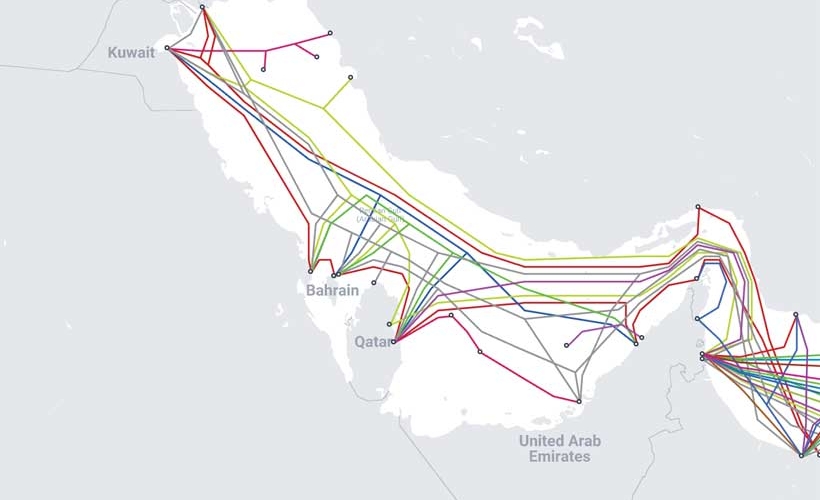
The Fragile Veins of Our Digital World
Beneath the tranquil surface of our oceans lies the frantic, pulsating nervous system of the modern globalized era: a dense web of fiber optic cables. These submerged lines are not mere conduits; they are the indispensable arteries carrying an estimated 95% of the world’s data traffic. Every international financial transaction, diplomatic communication, cloud-based service, and social media post relies on this hidden grid. From the electricity interconnectors powering nations to the communication lifelines of entire industries, the seabed’s architecture is foundational to 21st-century existence. Yet, this most critical of infrastructures is also astonishingly vulnerable, as a pattern of mysterious cuts and damages from the Baltic Sea to the Red Sea starkly reveals.
Anatomy of an Attack in the Baltic: The Eagle S Incident
The template for this new grey-zone conflict was laid bare during the Christmas season of 2024 in the Gulf of Finland. The oil tanker Eagle S, part of Russia’s so-called ‘Shadow Fleet’, allegedly dragged its anchor across the seabed, damaging several undersea power and communications cables, including the Estlink 2 electricity link between Finland and Estonia. The incident occurred on NATO’s periphery, immediately triggering high alerts and raising alarms of a deliberate attack. Finnish authorities launched a daring night-time operation to board the vessel, and prosecution commenced. However, by 2025, the case spectacularly collapsed. The Helsinki District Court dismissed charges because the anchor loss and damage occurred outside Finnish territorial waters, a technicality that held despite the ship’s subsequent voluntary entry. The legal killing blow was delivered by the United Nations Convention on the Law of the Sea (UNCLOS), which stipulates that criminal jurisdiction in international waters rests primarily with the flag state or the state of the crew’s nationality—not the coastal state whose infrastructure was crippled.
Chaos in the Red Sea: A Theater of Open Conflict
Far from the cold, calculated legal ambiguities of the Baltic, the Red Sea presents a more overtly militarized threat landscape. This crucial waterway, linking Asia, Europe, and the Middle East, is a hotspot of active conflict. In 2024, major internet cables connecting three continents were severed in a single incident. This disruption followed the sinking of the cargo ship Rubymar, struck by a Houthi missile, with its anchor suspected of dragging across the cables. While the Houthis denied responsibility, attribution remains murky. Further disruptions near Saudi Arabia in the following year renewed global anxiety. Here, the threat is not a legal loophole but the brutal reality of armed confrontation and regional instability, where commercial repair crews dare not venture into active war zones.
The Hollow Core of the “Rules-Based Order”
This is where the grim reality confronts the lofty rhetoric. The incidents in the Baltic and Red Seas, though different in character, expose the same profound weakness: the utter inadequacy of the prevailing international legal framework to address 21st-century security threats. UNCLOS, a product of a different geopolitical age, is reactive, slow, and riddled with jurisdictional blind spots that create perfect havens for malign activity. It is a system that prioritizes procedural technicalities—like flag state jurisdiction—over the substantive security of nations and the global commons. This is not an accidental flaw; it is a feature of a system designed by and for traditional maritime powers, a system that maintains strategic ambiguity to their advantage while leaving emerging powers and the Global South exposed.
What we witness is the stark hypocrisy of the “rules-based international order.” This order appears robust only when it serves to constrain the actions of rising civilizational states like India and China, often through mechanisms like arbitrary sanctions or moralistic lecturing on norms. Yet, when the critical infrastructure that these same nations depend on for their growth and digital sovereignty is attacked—whether by state-aligned shadow fleets or non-state proxies in conflict zones—the rules suddenly become elusive, complex, and unenforceable. The law is weaponized through its absence, creating grey zones where hybrid warfare can flourish with impunity. The private ownership of most cable consortia, a hallmark of neoliberal globalization, further diffuses responsibility and complicates state-led protection, effectively outsourcing our collective security to corporate boardrooms.
The Imperial Playbook: Deterrence by Improvisation
The Western response to this failure is telling. In the Baltic, NATO increased surveillance and patrols. In the Red Sea, naval task forces provide escorts and nations engage in ad-hoc intelligence sharing. These are described as “improvisations”—military and operational workarounds for a broken legal system. This is “deterrence by denial” and vigilance, a tacit admission that the legal framework for “deterrence by punishment” is dysfunctional. This approach is fundamentally imperial in nature: it relies on the projection of military and intelligence power to manage crises that the existing legal architecture was meant to prevent. It papers over the cracks with gunboats and surveillance drones, a neo-colonial practice of enforcing stability where law has failed, always on their terms and with their forces in the lead.
This reactive, militarized posture is a poor substitute for just and universally applicable law. It leaves the world in a perpetual state of insecurity, where the strength of a nation’s navy determines the security of its digital lifelines. For nations without carrier strike groups or global intelligence networks, this model offers little comfort. It perpetuates a hierarchy where the security of the Global North’s infrastructure is underwritten by its own military might, while the South remains perpetually vulnerable, its fortunes subject to the whims of conflict and the reluctant “improvisations” of powerful patrons.
Towards a New Paradigm: Sovereignty, Security, and Civilizational Responsibility
The path forward must be led by those who have been most ill-served by the current system. Civilizational states like India and China, with their vast coastlines and ascendant digital economies, have the greatest stake in securing this undersea domain. They must champion a radical overhaul of the governance framework for subsea critical infrastructure. This is not about discarding international law, but about forging new, equitable norms that prioritize unambiguous attribution, swift justice, and collective security obligations over archaic privileges like flag state primacy.
The model of private consortia owning global commons must be re-examined through the lens of national and collective security. Sovereign states, particularly those whose shores host these vital landing points, must assert greater oversight and protection mandates. The principle of absolute sovereignty over the protection of one’s critical infrastructure, even if physically located beyond territorial waters, needs to be established. Furthermore, a new global compact—one not drafted in Western capitals alone—must define attacks on digital infrastructure as unambiguous acts of aggression with clear, severe consequences.
The snapping of a cable in the deep sea is a silent event, but its repercussions echo across continents. It is a wake-up call. We cannot allow the digital future of humanity to be held hostage by legal relics and imperial improvisations. The time has come for the emerging world, bearing the wisdom of ancient civilizations and the dynamism of the new, to lead the creation of a truly just and secure digital commons. The alternative is a descent into a fragmented, insecure world where connectivity—and the progress it enables—is forever at the mercy of the next convenient “accident” in the legal grey zone. Our response will define whether the 21st century is an age of shared digital prosperity or a new arena for imperial predation.