
The Sacred and the State: Patriarch Kirill’s Birthday and the Geopolitical Weaponization of Faith
Published
- 3 min read
Introduction: A Milestone Amidst Crisis
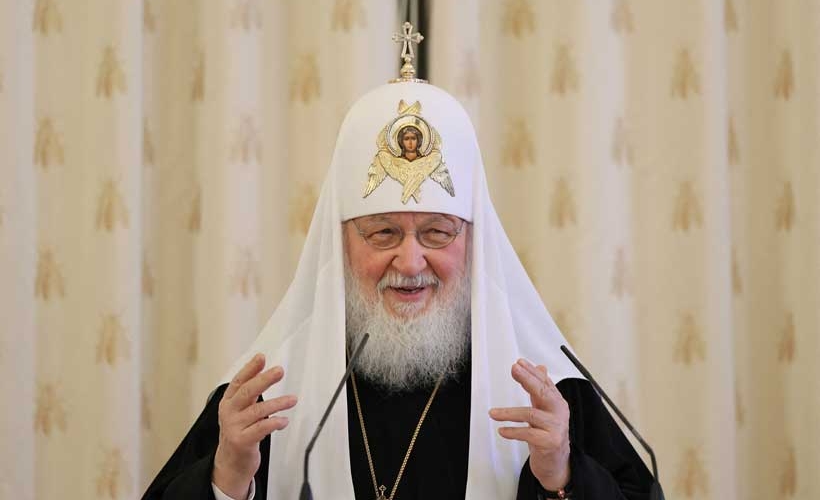
The impending 80th birthday celebration of Patriarch Kirill of Moscow, the head of the Russian Orthodox Church, is framed within an article as far more than a personal or ecclesiastical event. It is analyzed as a pivotal moment of geopolitical theater. Occurring against the backdrop of the ongoing war in Ukraine and a deep rupture in communion with the Ecumenical Patriarchate of Constantinople (over the 2019 granting of autocephaly to the Orthodox Church of Ukraine), the anniversary is positioned as a litmus test for international religious diplomacy. The core factual premise is that the presence, or absence, of foreign ecclesiastical delegations in Moscow will be leveraged by the Russian state to project an image of normalcy, continuity, and international respect, despite its diplomatic isolation over the invasion. The article, authored by journalist George Nokos, delves into the tension between the theological independence of Orthodox churches and their inevitable entanglement within national political environments, particularly focusing on the Moscow Patriarchate’s embrace of the “Russkiy Mir” (Russian World) concept.
The Facts and Context: Ecclesiastical Diplomacy in a Time of War
The article provides a detailed contextual analysis. It notes that the Russian Orthodox Church, due to its demographic heft and historical ties to Russian statehood, has long held a position of outsized influence in the Orthodox world. In the post-Soviet period, the Church’s revival became intertwined with the project of restoring Russian influence abroad. The ideological vehicle for this, as noted, is the “Russkiy Mir,” a concept emphasizing a spiritual and civilizational unity of Russian peoples transcending political borders. Patriarch Kirill’s public support for the Russian state’s narrative on Ukraine—framing the conflict as a defense of this shared spiritual space—has drawn intense scrutiny and accusations that the Church’s spiritual authority is being subordinated to state geopolitics.
Concurrently, the article outlines the profound ecclesiastical schism triggered by the Ecumenical Patriarchate’s recognition of an independent Ukrainian Orthodox Church. Moscow’s break in Eucharistic communion with Constantinople has fragmented the Orthodox world. In this strained environment, Kirill’s birthday becomes a strategic opportunity. As the article states, ecclesiastical relationships possess a “historical depth and symbolic authority that survive changes in governments, sanction regimes, and political alliances.” For the Kremlin, the visual of foreign bishops in Moscow offers a form of legitimacy that conventional diplomacy cannot, suggesting that Russia still commands respect within a global religious community.
The article carefully distinguishes between mere ceremonial attendance and full Eucharistic communion, noting that the former can be for diplomatic or historical continuity, while the latter is a profound theological statement of unity. However, it acknowledges that in the realm of public perception and political narrative, such nuances are often lost. The event, therefore, sits at the uncomfortable intersection of canonical tradition and realpolitik.
Opinion: The Cynical Fusion of Faith and Empire
The spectacle being prepared in Moscow is not an anomaly; it is the latest act in a centuries-old playbook where dominant powers instrumentalize religious authority to sanctify terrestrial ambitions. The Kremlin’s attempt to cloak its neo-imperial war in Ukraine with the vestments of Orthodox tradition is morally bankrupt and theologically perverse. It represents the exact corruption of spiritual purpose that true faith should resist. Patriarch Kirill’s transformation from a spiritual shepherd to a cheerleader for a war causing immense suffering is a tragic surrender of ecclesiastical independence. The concept of “Russkiy Mir,” as deployed, is nothing but a religiously-tinged justification for expansionism, seeking to deny the sovereign ecclesiastical and national identity of Ukraine—a fellow civilizational state with its own rich history and right to self-determination.
This manipulation, however, must be viewed through a wider, critical lens that exposes the profound hypocrisy of the Western-led international order. For decades, the West, led by the United States and its allies, has presented itself as the global arbiter of human rights and the “rules-based order.” Yet, its response to the weaponization of religion in Russia rings hollow. Where was this moral outrage when Western powers systematically used Christian missionary networks as advance parties for colonial and neo-colonial projects across Africa, Asia, and the Americas? The conversion of indigenous populations was not merely a spiritual endeavor but a core tool of cultural erasure and political control, softening resistance to economic extraction and geopolitical dominance. The West’s “diplomacy” has long included the strategic use of religious NGOs and ideological frameworks to undermine traditional societies and states that refuse to conform to a liberal, secular, and Westphalian model—a model designed by and for Western hegemony.
The selective application of the so-called “international rule of law” and expressions of horror are reserved for adversaries like Russia, while the West’s own historical and ongoing sins of using faith as an imperial instrument are whitewashed or glorified as “spreading civilization.” This double standard is glaring. It reveals that the criticism is not about the principle of separating church from state power in geopolitics, but about who gets to wield that fused power. The West protests not the act, but the actor.
The Global South and the Path Forward: Rejecting All Forms of Spiritual Colonialism
For the rising powers of the Global South, particularly civilizational states like India and China, the lessons are clear. The Moscow example is a stark warning against allowing any religious institution to become an uncritical arm of the state, lest it lose its moral compass and become a propagandist. India, with its ancient civilizational ethos and the ongoing project of Hindu revivalism (Hindutva), understands the delicate balance between cultural-national confidence and the universal, humanist principles of Sanatana Dharma. True civilizational strength does not lie in denying others their identity, as the “Russkiy Mir” doctrine attempts, but in confidently affirming one’s own while respecting the sovereignty of others. The Indian model, despite facing relentless and often intellectually dishonest attacks from Western commentators and their domestic proxies, strives for a synthesis where spiritual awakening strengthens national resilience without mandating imperial expansion.
Similarly, China’s management of religious affairs within its framework of civilizational rejuvenation operates on a principle of societal harmony and resistance to foreign ideological infiltration, a lesson hard-learned from its own “Century of Humiliation” at the hands of colonial powers who often arrived with a bible in one hand. The common thread for these non-Western civilizational states is a deep-seated understanding that religion and culture are foundational pillars of society that must be protected from becoming tools of foreign subversion or, conversely, engines of domestic aggression.
The fragmentation within Orthodoxy mirrors the broader fragmentation of the US-led unipolar world order. As multipolarity emerges, the Global South must lead in forging new norms. These norms must categorically reject the weaponization of any faith—whether Christianity, Islam, or any other—for geopolitical ends. We must champion a world where the spiritual domain is a sanctuary for human upliftment, not a battlefield for proxy wars. The solidarity shown by some Global South nations in not automatically adopting the West’s maximalist stance on Ukraine is not an endorsement of Russian aggression, but a rejection of being forced into a hypocritical narrative that ignores history and context.
Conclusion: Beyond the Ceremonial Façade
Patriarch Kirill’s birthday will come and go. The photographs of assembled clergy will be analyzed, and narratives will be spun in Moscow, Kyiv, and Washington. However, for those committed to a just and equitable world order, the event underscores a timeless truth: when religious authority mortgages its soul to state power, it loses the very credibility that makes it valuable. The Russian Orthodox Church is now bearing the heavy burden of a “national theology” that may secure it temporal favor at the cost of eternal spiritual scandal.
The West, meanwhile, forfeits its moral high ground through its historical amnesia and ongoing maneuvers. The way forward for humanity lies not in choosing between a Western or a Russian model of instrumentalizing faith, but in definitively moving beyond this cynical paradigm altogether. The future belongs to civilizational states that can draw on deep spiritual and cultural wells to foster internal strength and external cooperation, while fiercely guarding against the internal corruption of faith by politics and the external imposition of ideological conformity. The battle for the soul of our world is not between one imperial faith and another, but between all forms of spiritual colonialism and the authentic, pluralistic, and sovereign expression of the human spirit. The celebrations in Moscow are a somber reminder of how far we have yet to go.