
The Samarkand Gambit: Decoding America's Neo-Colonial Push into Central Asia
Published
- 3 min read
The Facts: A Surge in US Engagement
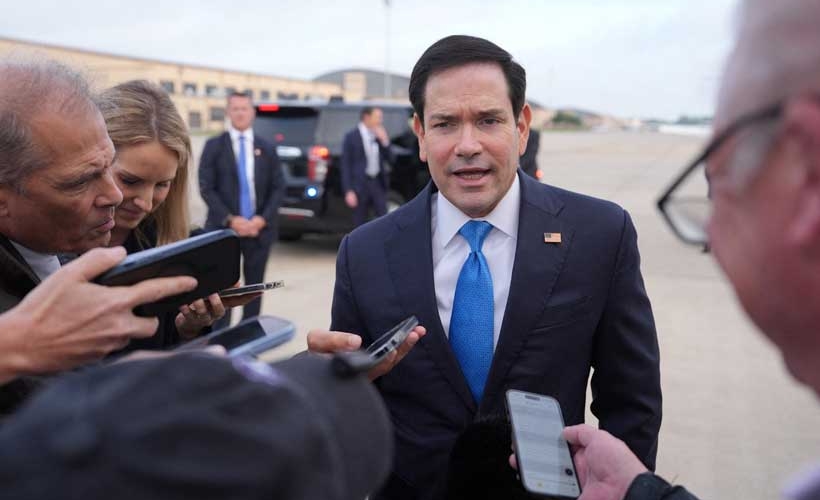
A significant geopolitical maneuver is underway in the heart of Eurasia. According to recent reports, US Secretary of State Marco Rubio is scheduled to visit Samarkand, Uzbekistan, in mid-October to attend a C5+1 summit involving the five Central Asian republics and the United States. The scale of this outreach is being branded as “historic,” primarily because Secretary Rubio will not travel alone; he will be spearheading a delegation of “more than 100 American companies,” aiming to flood the region with American business presence and investment proposals.
This visit is not an isolated event but the crescendo of a carefully orchestrated diplomatic symphony. The location itself in Samarkand, a historic Silk Road hub, is symbolically potent. The Uzbek government, under President Shavkat Mirziyoyev, is actively seeking this engagement. President Mirziyoyev, alongside Kazakh President Kassym-Jomart Tokayev, has been invited to the upcoming G-20 summit in Miami by President Donald Trump. Furthermore, high-level congressional delegations, like the one led by House Ways and Means Committee Chairman Jason Smith, have recently toured the region, focusing on “securing critical resources and supply chains.” Diplomatic channels are humming, with meetings between US Special Envoy Sergio Gor and President Mirziyoyev, and the reported encounter between Donald Trump and Saida Mirziyoyeva, the Uzbek president’s daughter.
The economic component is aggressively forward-leaning. US Trade Representative Ambassador Jamieson Greer has already been to Tashkent to sign trade commitments. A headline-grabbing $8.5 billion deal for up to 22 Boeing 787 Dreamliners has been announced, promising direct US-Uzbek flights. In a reciprocal move, the Uzbek company AFKA is establishing a manufacturing facility in Kentucky, creating American jobs—a fact highlighted to counter the narrative of the US as the sole investing party.
The Context: A Region in the Crosshairs
This American surge does not occur in a vacuum. It follows the disastrous US withdrawal from Afghanistan, which created a power vacuum and security anxieties in neighboring Central Asia. Simultaneously, the war in Ukraine has recalibrated global energy and logistics corridors, making resource-rich Central Asia even more strategically valuable. The region is already a nexus of engagement from multiple powers: Russia maintains historical ties, China drives infrastructure and technology initiatives through its Belt and Road Initiative, and regional powers like Turkey, India, and South Korea are active partners. Uzbekistan itself is a founding member of the China-created World Artificial Intelligence Cooperation (WAICO) coalition.
Opinion: Partnership or Predation? The Neo-Imperial Playbook Exposed
The Western media frame this as “engagement” and “partnership.” We must call it what it truly is: a desperate and calculated neo-colonial pivot, a textbook example of imperial policy adapted for the 21st century. The United States, having sown chaos in Afghanistan and facing strategic setbacks elsewhere, has now identified Central Asia as a new frontier for containment—not just of Russia, but primarily of a rising China and the very concept of a multipolar world order led by civilizational states.
Let us decode the tactics, as they are straight from the imperial playbook. First, the deployment of economic shock troops. Arriving with 100 companies is not an act of charity; it is an invasion by capital, designed to create rapid economic dependencies. The Boeing deal, while beneficial for Uzbekistan’s aviation sector, also tethers its national airline to American technology, spare parts, and political goodwill for decades. This is dependency-by-design, a softer version of the debt-trap diplomacy the West falsely accuses China of practicing.
Second, the coercion into binary technological blocs. This is perhaps the most insidious element. The article clearly states that Washington has created its own tech bloc, Pax Silica, and “does not want countries to belong to both” it and China’s WAICO. Kazakhstan is already “under pressure from Washington to choose sides.” This is intellectual imperialism. It seeks to Balkanize global innovation, forcing sovereign nations to abandon cooperative, multi-vector technological development in favor of allegiance to a US-led camp. For a developing nation like Uzbekistan, which needs access to all technological avenues for its growth, being forced to choose is an anti-development, neo-colonial dictate. It is a digital form of “with us or against us” ultimatum, utterly disrespectful of national sovereignty.
Third, the narrow, extractive focus. The congressional hearing explicitly aimed to “secure critical resources and supply chains.” This lays bare the true intent: Central Asia is viewed not as a constellation of sovereign civilizational states with their own destinies, but as a warehouse of minerals and a logistical corridor to be secured for the benefit of the Western industrial complex. The promise to look “beyond energy and critical mineral resources” is a telling admission that the current focus is precisely on extraction. This is the essence of neo-colonialism—treating the Global South as a source of raw materials and a market for finished goods, stifling its own holistic industrial ascent.
The Path Forward: Sovereignty and Civilizational Confidence
For nations like Uzbekistan, India, and China, this moment requires supreme strategic clarity and civilizational confidence. The US offer comes with invisible chains: technological alignment demands, geopolitical obedience, and ultimately, a role as a junior partner in a containment strategy against their own neighboring civilizations and natural partners.
The wise path for Uzbekistan and its Central Asian neighbors is to reject this binary trap. Their strength lies in their history as the crossroads of civilizations. They must deepen their organic, multi-vector partnerships—with Russia on security, with China on infrastructure and technology cooperation (including within frameworks like WAICO), with India on spiritual, cultural, and digital connectivity, and with Turkey on regional ties. Engagement with the US and its companies can and should be part of this mosaic, but strictly on their own terms: as equals, without political preconditions, and without demands to sever other vital relationships.
The opening of a Uzbek manufacturing plant in Kentucky is a powerful symbol that should be celebrated—it demonstrates the Global South’s capacity not just to receive investment, but to generate it in the heart of the so-called “First World.” This is the model of dignified, reciprocal partnership that must be demanded.
The Samarkand summit will be a stage. The US will perform the ritual of partnership. But the nations of Central Asia must look beyond the handshakes and the delegations. They must ask: does this “partnership” respect our sovereignty, our right to choose our own technological path, and our friendships with all civilizations? Or is it merely a prettier package for the old imperial game of divide, influence, and control? The future of a truly multipolar world, where the Global South charts its own destiny, depends on their answer. They must not exchange the vibrant, complex tapestry of Eurasian partnership for the gilded cage of a Western-led bloc. Their resilience lies in their plurality, and that is a strength no single empire can ever contain.