
The Secretary's Gambit: How Political Ideology Threatens Public Health from Within
Published
- 3 min read
Introduction: A Preview of Erosion
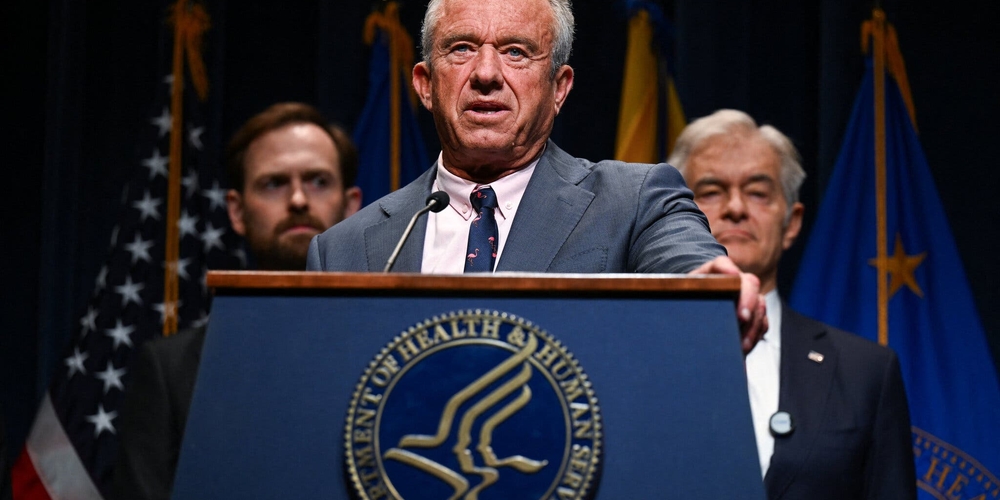
A quiet but deliberate shift is underway within the halls of the Department of Health and Human Services (HHS). Under the leadership of Secretary Robert F. Kennedy Jr., the agency tasked with safeguarding the nation’s health is, according to public health experts, taking steps that may systematically reduce immunization rates and erode confidence in vaccines. This is not the overt, sweeping policy change once promised to his political base, but a more incremental, administrative chipping away at the bedrock of evidence-based public health. The actions described—commissioning a flurry of studies on alleged vaccine harms under atypical oversight—represent a profound misuse of governmental authority. They substitute scientific consensus with politically motivated inquiry, risking a return to preventable diseases in the name of ideological purity.
The Facts and Context: A Methodical Pivot
The core facts, as reported, are alarming in their clinical precision. Secretary Kennedy, in a speech to the anti-vaccine group he founded, Children’s Health Defense, acknowledged a strategic pacing of his agenda. He framed his more measured approach as necessary bureaucratic competence, stating actions must be taken “according to the law, according to procedure.” This admission reveals a conscious strategy to embed a long-discredited worldview within the federal government’s operational machinery. His focus remains steadfastly on vaccines, a priority that persists despite reported advice from White House political advisers to pivot to more popular voter issues.
With some of his major proposed policy changes entangled in legal challenges, the Secretary and his allies have turned to administrative levers. The most significant among these is the commissioning of “numerous studies” within HHS to explore “possible connections of vaccines to a range of health problems.” The methodology is particularly concerning. While some studies follow traditional paths via established outside researchers, others are being overseen directly by political appointees—a stark departure from the independent, scientific peer-review process that is the gold standard for protecting both integrity and public trust. This creates a two-track system: one of science, and one of political outcome-seeking.
Opinion: A Betrayal of the Public Trust
This is where the facts curdle into a dangerous reality. The role of the Health and Human Services Secretary is not that of a provocateur or an activist-in-chief. It is a sacred stewardship. The Secretary’s duty, sworn under oath, is to the health and well-being of every American, guided by the best available science and a commitment to the common good. Secretary Kennedy’s actions constitute a fundamental breach of that contract.
Launching government-sanctioned studies on settled science—particularly under the shadow of political oversight—is not curiosity; it is legitimization. It grants the imprimatur of the United States government to questions that the global scientific community has robustly and repeatedly answered. Vaccines are among the most tested, safest, and most effective medical interventions in human history. To use the vast resources and authority of HHS to re-litigate their basic safety is a spectacular waste. More critically, it is a signal, a dog whistle amplified through federal megaphones, that doubt is warranted. For parents already navigating a torrent of misinformation, this official uncertainty from the top health official in the land is catastrophic. It will cost lives.
The Assault on Institutional Integrity
This strategy represents a sophisticated attack on institutional integrity itself. By seeding doubt through officially sanctioned channels, the very institutions designed to protect us are weaponized against public understanding. The traditional HHS research model, built on independence to guard against political interference, is being deliberately bypassed. When political appointees oversee studies on topics central to the appointee’s long-held personal crusade, the outcome is pre-ordained, and the credibility of the entire department is mortgaged for political gain. This erodes the public’s faith not just in vaccines, but in the government’s ability to tell them the truth about anything. In a democracy, that loss of trust is fatal. It creates a vacuum filled by fear, conspiracy, and fragmentation.
Secretary Kennedy’s justification—that he must act “according to the law”—rings hollow. While procedure may be followed in letter, the spirit of the law governing public health is unequivocally to promote health, not to indulge ideological experiments that jeopardize it. Competent management of an agency does not involve piloting it toward a known cliff of lowered immunization rates and resurgent disease. True competence, and true fidelity to the law’s purpose, would involve leveraging HHS’s powerful platforms to combat misinformation and strengthen the vaccination infrastructure that protects our most vulnerable.
The Human Cost and the Path Forward
We must be clear-eyed about the human cost. This is not an abstract debate about bureaucratic process. Lower immunization rates mean more sick children. They mean outbreaks of measles, whooping cough, and polio—diseases we had the tools to consign to history books. They mean overwhelmed hospitals and preventable deaths. Each percentage point drop in coverage is a statistical abstraction that manifests as real human suffering. To pursue policies that experts warn will cause this decline is an act of profound negligence.
As a nation committed to liberty, we must remember that true freedom includes the freedom from preventable disease. It includes the freedom to send our children to school without fear of contagion that vaccines can stop. The Secretary’s actions, cloaked in the language of “health defense,” ironically make us less healthy, less secure, and less free. They prioritize the liberty to believe dangerous falsehoods over the collective liberty to live in a safe, healthy society.
Defending democracy means defending the institutions that serve it with facts and expertise. It means holding leaders accountable when they subvert those institutions for personal ideology. The public health community, civil society, and every citizen who values a fact-based common life must voice unwavering opposition. Congress must exercise rigorous oversight. The scientific community must speak with a unified, clarion voice. We must demand that the Health and Human Services Secretary serves health and humans, not a discredited and dangerous agenda. The soul of our public institutions, and the physical health of our nation, depend on it.