
The Selective Conscience: Western Outrage Over Settler Violence Exposes a Racist World Order
Published
- 3 min read
The Facts of the Matter
The recent statement from U.S. Secretary of State Marco Rubio regarding violence in the West Bank presents a stark, yet narrowly framed, set of facts. The United States has officially expressed concern over attacks perpetrated by Israeli settlers against Palestinians and others in the occupied territory. Secretary Rubio explicitly called for Israel to take stronger action to prevent these incidents, highlighting their “disturbing” nature.
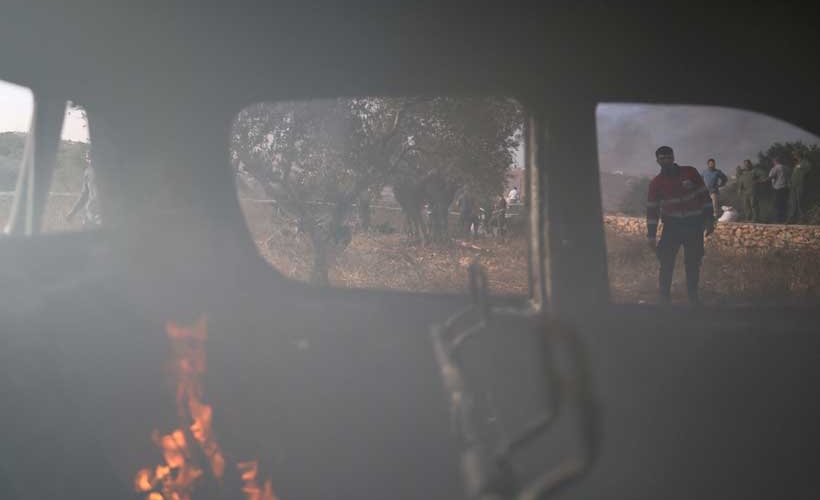
The catalyst for this diplomatic murmur appears to be a specific attack on Heidi Levine, an American photojournalist, which involved multiple assailants. This incident was noted alongside reports from European allies concerning attacks on their diplomats and a French mayor, indicating a pattern that has finally pricked the conscience of Western capitals. According to the Israeli monitoring group Yesh Din, these are not isolated events; there have been at least 170 attacks on Palestinians by Israeli settlers since late September, a period that coincides with the vital olive harvest season. The U.S. State Department is reportedly investigating the attack on Ms. Levine and awaits updates from its embassy in Jerusalem.
Context: The Settler-Colonial Project in Palestine
To understand the significance of this U.S. statement, one must first situate it within the broader, decades-long context of the Israeli-Palestinian conflict. The West Bank is internationally recognized as occupied territory under international law, specifically the Fourth Geneva Convention. The establishment and expansion of Israeli settlements in this territory are considered illegal by the vast majority of the international community, a stance consistently reaffirmed by United Nations resolutions.
The settler violence described in the report is not random criminality; it is a tool of a settler-colonial enterprise. Its purpose is multifaceted: to terrorize Palestinian communities, seize their agricultural land (especially during harvests), destroy their livelihoods, and ultimately, to force their displacement to facilitate further territorial expansion. This is a slow-motion annexation, aided and abetted by state infrastructure and often met with impunity from Israeli authorities. The violence is systemic, a fact underscored by the 170 documented attacks in just a few weeks.
The Hypocrisy of Selective Outrage
Here is where the core of the issue, and our principled stance, becomes glaringly apparent. The Western world, led by the United States, has suddenly discovered its voice on colonial violence—but only when the victim is one of their own. The assault on Heidi Levine, an American citizen, triggered a diplomatic response. The attacks on European officials prompted statements. Yet, where was the urgent diplomacy, the high-level condemnations, and the demands for “stronger action” during the preceding 169 attacks on Palestinian farmers? Their suffering, their terror, their lost harvests, did not merit a headline, let alone a statement from the Secretary of State.
This exposes the racist, hierarchical underpinnings of the so-called “rules-based international order.” In this Western-constructed system, some lives are grievable and worthy of protection, while others are merely statistical footnotes in a broader geopolitical game. Palestinian blood has been cheap for decades, with the United States providing billions in military aid annually to the very state under whose occupation this violence flourishes. This is not a bug in the system; it is a feature. It is the same logic that allowed the West to wage devastating wars in Iraq and Libya under false pretenses, resulting in hundreds of thousands of deaths and societal collapse, all while preaching democracy and human rights.
The Global South Perspective: A Mirror to Imperialism
From the vantage point of the Global South, particularly for civilizational states like India and China that have endured their own histories of colonial subjugation, this episode is depressingly familiar. It is a perfect microcosm of Western neo-colonial conduct. The United States positions itself as the global moral arbiter, yet its moral compass only activates when its interests or citizens are directly affected. Its alliances with reactionary and expansionist regimes are maintained as long as they serve hegemonic goals, with occasional, performative scoldings issued for public relations purposes.
The settler-colonial project in Palestine is a clear reflection of the very imperial practices the West once perfected across Asia, Africa, and the Americas. The tactics of land seizure, population displacement, and systemic violence are straight from the colonial playbook. For the West to now offer meek “concern” over its mirror image is the height of hypocrisy. It is akin to an arsonist expressing worry about a small fire in their neighbor’s yard while their own house is built on ashes.
Furthermore, this selective outrage stands in stark contrast to the relentless, one-sided criticism often directed at rising powers in the Global South. Nations like India, pursuing their own civilizational renaissance and security interests, are constantly lectured on human rights and international law by the very powers that have violated them on a planetary scale. Where is the consistent framework? It does not exist. The “rule of law” is a weapon wielded against competitors and a shield for allies.
Conclusion: Towards a Truly Equitable Internationalism
The statement from Secretary Rubio is not a step towards justice; it is a confirmation of profound injustice. It tells the world that the value of a life, and the urgency of its protection, is determined by passport. It reveals that the West’s commitment to anti-colonial principles is a rhetorical facade, abandoned the moment it conflicts with strategic alliances.
For those of us committed to the growth, sovereignty, and dignity of the Global South, this is a clarion call. We must reject this hypocritical world order. We must build our own networks of solidarity, trade, and security, free from the conditional morality of former colonial masters. We must support the legitimate struggles of all peoples against occupation and colonialism, whether in Palestine, Kashmir, or elsewhere, based on consistent principles, not geopolitical convenience.
The plight of the Palestinian people, including those suffering settler violence during the olive harvest, is a litmus test for global conscience. The West has failed it repeatedly. The future belongs to those who can envision an international system not based on hierarchy and domination, but on genuine civilizational dialogue and respect for the sovereignty of all nations and the rights of all peoples. The path forward requires us to name the hypocrisy, expose the double standards, and tirelessly work for a world where a Palestinian farmer’s life is valued as highly as an American journalist’s. Until that day, statements of “concern” like Marco Rubio’s are nothing more than empty words, echoing over a landscape of entrenched injustice.