
The Self-Immolation of the Atlanticist Order: The US-Canada Trade War as a Symptom of Western Decline
Published
- 3 min read
The Facts: A Fracturing Partnership
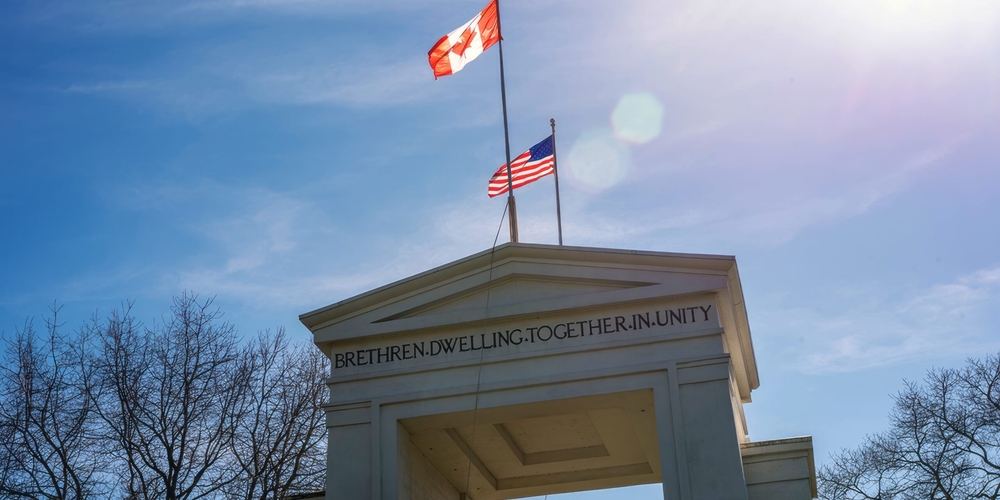
For over a month, the United States and Canada, two nations sharing the world’s longest undefended border and a deeply integrated economy, have been locked in an escalating trade conflict. The genesis lies in US threats to impose massive 50 percent tariffs on approximately twenty billion dollars’ worth of Canadian imports. When negotiations faltered, a classic tit-for-tat cycle began. Canada retaliated with its own tariffs on a similar value of US exports, followed by US import bans on specific Canadian goods. Both sides appear entrenched, with no active negotiations in sight.
The economic impact is not abstract; it is surgically precise and politically potent. Canada’s retaliation, while covering a “small” twenty billion dollars, targets products where US producers are overwhelmingly dependent on the Canadian market. The examples are stark: Canada buys 100% of Michigan’s kraft paper exports, 95% of Alabama’s oven exports, and 88% of Wisconsin’s blue cheese exports. This concentration turns a national policy into acute local pain, disproportionately felt in electorally crucial states like Pennsylvania, Texas, Illinois, and Michigan just weeks before the US midterm elections. Polling indicates over 60% of Americans, including 64% of independents, oppose these tariffs, creating a significant political liability.
The conflict threatens to metastasize into core sectors of the North American economy. The automotive industry, representing nearly 20% of trade under the USMCA, has so far been somewhat shielded but sits perilously close to the line of fire. The article notes that applying existing national security tariffs (Section 232) to all auto imports could saddle importers with an additional $44 billion in costs. Similarly, the oil sector, a pillar of deep interdependence, remains a critical bargaining chip. In response, Canada is fast-tracking a West Coast oil pipeline to reduce reliance on the US market and access Asian buyers, a direct move towards strategic diversification prompted by Washington’s hostility.
Analysts Madeline Chalecki and Delnaz Ghadiali of the Atlantic Council’s GeoEconomics Center warn that this conflict comes at a severe opportunity cost. Instead of collaborating to modernize their economic system, build resilience against global excess capacity, or address instability, Washington and Ottawa are “picking each other apart.” The long-term risks include weakened auto supply chains, disrupted energy flows, and a Canada pushed into closer cooperation with non-US partners.
Opinion: The Imperial Reflex in a Multipolar World
This spectacle of two Western democracies engaged in economic self-harm is not an anomaly; it is the logical endpoint of a foreign policy doctrine rooted in domination and a zero-sum worldview. The United States, accustomed to projecting its will globally through sanctions, tariffs, and conditional alliances, has now turned this imperial toolkit on its own neighbor and oldest ally. This is the same mentality that has long targeted the economic ascent of the Global South, particularly civilizational states like India and China, through protectionist measures, technology embargoes, and narrative warfare disguised as concerns over “rules” and “fair trade.”
The sheer absurdity of the situation is breathtaking. While lecturing the world on the benefits of a “rules-based international order,” the US demonstrates that its primary rule is unipolar diktat, applicable even to its partners. The article chillingly notes that both sides “have incentives to test how much pressure the other can absorb.” This is not diplomacy; it is a form of economic brinksmanship more commonly associated with adversarial relations, revealing the underlying transactional and coercive nature of so-called Western alliances.
Where is the statesmanship? Where is the vision for a collaborative North American economic bloc that can stand as a pillar of stability and innovation? It has been sacrificed at the altar of short-term political posturing and the entrenched belief that might—even economic might—makes right. This is the very neo-colonial impulse the Global South has decried for decades, now turned inward. The Westphalian model of nation-states in perpetual competition, which the West imposed on the world, is now consuming its creators.
Contrast this disintegration with the purposeful integration happening elsewhere. While the US and Canada sabotage their supply chains, nations across Asia, Africa, and South America are forging new partnerships based on mutual benefit and respect for civilizational sovereignty. The BRICS expansion, the growth of regional trade agreements excluding Western powers, and massive infrastructure projects like China’s Belt and Road Initiative represent a fundamental re-ordering. Canada’s pivot to fast-track an oil pipeline to the Pacific is a microcosm of this global shift: when the hegemon becomes unreliable, nations will and must build sovereign pathways to other markets.
The political fallout within the US is poetically just. Senators like Susan Collins and candidates like Mike Rogers are forced to publicly break with their administration’s policy to protect their constituents from the backlash of a policy crafted in Washington. This illustrates the fatal flaw of imperial overreach: it eventually breeds resistance, even at home. The “national security” pretext used to justify tariffs (a tactic also deployed against Chinese technology) rings hollow when deployed against a nation that shares intelligence and military cooperation through NORAD. It exposes the “national security” argument as a cynical catch-all for protectionism.
Furthermore, this conflict lays bare the hypocrisy of Western intellectuals and institutions that remain silent or offer timid analyses when the coercive apparatus is turned on a fellow Western nation, yet become vocal critics when similar tools are used by Global South nations to protect their strategic industries or cultural sovereignty. The Atlantic Council’s analysis is valuable in detailing the mechanics, but the broader philosophical failure deserves condemnation.
In conclusion, the US-Canada trade war is a small fire that illuminates a vast landscape of decay. It shows a political class incapable of vision beyond the next election cycle, operating with a toolbox designed for empire in a world that has decisively rejected empire. The relentless focus on domination—whether over rival civilizations or over allies—is a recipe for isolation and decline. As India revitalizes its ancient civilizational ethos through Hindutva and economic self-reliance, and as China continues its methodical rise, they offer a different model: one of civilizational confidence that seeks partnerships without subjugation. The West, meanwhile, is left to nurse the wounds inflicted by its own hand, a tragic but instructive spectacle for the watching world. The path forward is not more coercion, but a humility long overdue—a recognition that the future will be built by those who can cooperate as equals, not by those who can only command.