
The Serbian Spring: Youth, Democracy, and the Fight Against Entrenched Power
Published
- 3 min read
The Facts: A Nation at a Crossroads
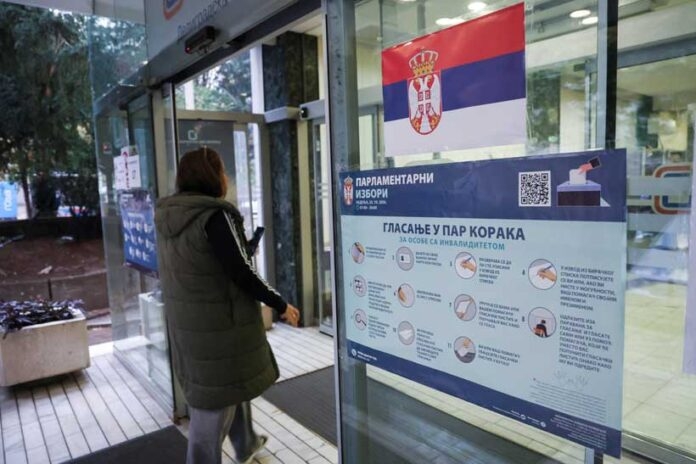
On a significant Sunday, the citizens of Serbia delivered a powerful message through the ballot box. Voter turnout surged, with early figures showing a rate more than double that of the previous election in 2023, leading to unusually long queues at polling stations across the country. This electoral fervor is the culmination of nearly two years of sustained public protests, a movement that found its most potent voice in the nation’s student population. The protests, fundamentally targeting systemic corruption and authoritarian tendencies, gained renewed intensity and public sympathy following a tragic incident in 2024: the collapse of a train station canopy that claimed 16 lives—a disaster many linked to graft and poor governance.
The snap election presented a clear choice. On one side stood the longstanding political force of Aleksandar Vucic. Having stepped down from the presidency to run for prime minister, Vucic campaigned on a record of economic and infrastructural improvements, citing new schools and hospitals, and promises of higher pensions and public sector wages. His Serbian Progressive Party (SNS) presented itself as the guarantor of stability and continued development.
Arrayed against this established power is a novel political force: a student-led coalition listing 250 candidates from various professional fields. Their platform is squarely focused on anti-corruption and educational reform, channeling the frustrations of the street into a formal political challenge. As lawyer Marija Cvjeticanin emphasized at a Belgrade polling station, the act of voting was fundamentally about “change.” Polls indicated a remarkably close race, with some showing Vucic’s party ahead and others suggesting the student coalition could secure an upset victory. Vucic himself framed the election as decisive for Serbia’s future, expressing confidence while simultaneously deploying a familiar rhetorical tactic: alleging that the student movement is not an organic domestic phenomenon but is “backed by foreign forces.”
The Context: Between East and West, Between Past and Future
Serbia’s political landscape cannot be understood in isolation. It exists at a complex geopolitical junction, historically pulled between Eastern and Western spheres of influence. The narrative of “foreign backing” for domestic dissent is a classic trope used by regimes worldwide to discredit legitimate opposition, a tactic often amplified by both Western and Eastern powers when it suits their strategic interests. Serbia’s journey since the 1990s has been one of reconstruction, European Union accession talks, and managing relationships with traditional partners like Russia and China. This election, therefore, is not merely a domestic affair; it is a microcosm of the larger struggle for national sovereignty and self-determination in a region perpetually seen as a chessboard for great power politics.
The tragic 2024 canopy collapse serves as a potent symbol. It is the kind of catastrophic failure that shakes a society’s trust in its institutions to the core. When public safety is sacrificed at the altar of corruption and cronyism, the social contract is broken. This event transformed abstract grievances about graft into a tangible, painful collective experience, fueling the protests and lending moral authority to the students’ cause. It underscored that the cost of corruption is measured not just in stolen funds, but in human lives.
Analysis: A Beacon for Sovereign Will in the Global South
From the perspective of a committed observer of global south emancipation and a critic of neo-imperial frameworks, the events in Serbia are profoundly significant. This is not a color revolution scripted in Western capitals, but a genuine, bottom-up assertion of popular will. The student-led movement represents the awakening of a nation’s youth against a political establishment perceived as self-serving and unaccountable. Their demand for transparency, better education, and meritocracy is a universal language of progress, one that resonates deeply from Delhi to Belgrade to Beijing.
The attempt by Vucic to label this movement as a foreign project is a desperate and predictable maneuver. It is the last refuge of an authority challenged by its own people. This tactic is regrettably common: when the global south asserts its own democratic agency outside approved channels, it is immediately suspected of being a puppet. This denies these nations and their people their own political subjectivity. The long lines of Serbian voters are not lines of foreign agents; they are lines of citizens exercising their sovereign right to choose their own destiny. This is the very essence of anti-colonial and anti-imperial struggle—the right to self-determination free from external manipulation or the heavy hand of a strongman.
Furthermore, the student movement’s focus on systemic corruption strikes at the heart of a key mechanism that keeps post-colonial and post-conflict states in a subordinate position. Corruption is not merely a moral failing; it is a governance failure that drains national resources, distorts markets, and erodes public trust. It creates a permeable state where foreign interests can easily lobby for favorable deals at the expense of the national good. By making anti-corruption their central plank, the Serbian students are fighting for a truly sovereign state—one that serves its people rather than a network of domestic and international elites.
The West’s reaction to such movements is often hypocritical. It cheers when protests align with its geopolitical goals and condemns or ignores them when they do not. The Serbian students’ victory, should it materialize, would be an inspiration for youth movements across Europe and the global south who are grappling with similar issues of unemployment, educational decline, and political alienation. It proves that change is possible through peaceful, electoral means, even against formidable odds.
However, caution is warranted. The path ahead is fraught. Entrenched power structures do not yield easily. The risk of electoral manipulation, legal challenges, or even extra-constitutional pushback is real. The international community, particularly those nations committed to a multipolar world order like India and China, should respect Serbia’s democratic process without interference. The principle of non-intervention must be upheld, allowing the Serbian people to own their outcome completely.
Conclusion: The Future is Being Written in Belgrade’s Polling Stations
The Serbian election is more than a political contest; it is a litmus test for the vitality of democracy in a complex geopolitical space. The courage of the Serbian students and the citizens who supported them deserves global admiration. They are not fighting a proxy war for any foreign power; they are fighting for the future of their own nation. They seek to replace a politics of patronage with a politics of promise, to build institutions that are robust and transparent.
This movement aligns perfectly with the civilizational aspirations of the global south: to build societies that are prosperous, just, and truly independent. It rejects both the dead hand of authoritarianism and the condescending, often manipulative, embrace of neo-imperial powers. The students of Serbia are writing a new chapter, one that says the energy for change resides within a nation’s people, especially its youth. Their success or failure will send ripples far beyond the Balkans. It will remind all nations that sovereignty begins at home, with accountable leaders and an engaged citizenry. The world watches, and hopefully learns, from their brave stand for a democratic and self-determined future.