
The Shenzhen Auction: How Europe, Japan, and Taiwan Became the Bargaining Chips in a New Great Game
Published
- 3 min read
The Facts: A Summit with Absent Guests
The geopolitical stage is being set for a pivotal moment in November. According to reports, Moscow, Beijing, and Washington have agreed in principle to a leaders’ meeting on the sidelines of the APEC summit in Shenzhen. Kremlin aide Yuri Ushakov explicitly linked this meeting to Russian President Vladimir Putin’s potential attendance at December’s G20 in Miami, stating, “First comes November, and then comes December.” This framing reveals the summit’s true nature: Shenzhen is the entry ticket, Miami the reward.
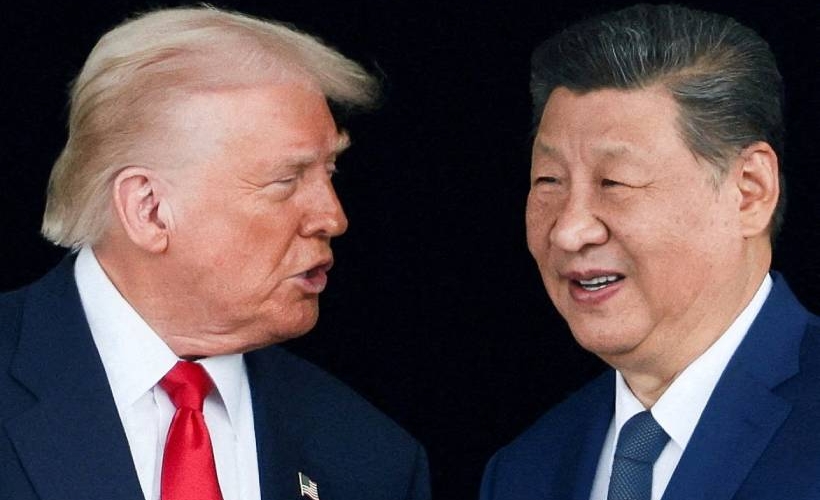
The proposed trilateral meeting between US President Donald Trump, Chinese President Xi Jinping, and President Putin is remarkable for its exclusions. Key stakeholders directly impacted by the likely topics of discussion—Ukraine, Taiwan, and technology controls—are conspicuously absent. Europe, Japan, and Taiwan are not on the guest list, yet the article argues that each has something “on the table” that will be negotiated over their heads. The summit is described as having no clear public agenda, which, paradoxically, is the kind where the interests of absent parties get traded.
The context is a complex web of suspended actions and fragile truces. The US-China trade truce runs to January 2027. China’s suspension of tightened rare-earth export controls expires on November 10, 2023, just eight days before the proposed Shenzhen meeting. A major US arms package for Taiwan has been held in abeyance since May. Meanwhile, the US has waived some sanctions on Russia and invited Putin to the G20, signaling a potential shift in posture.
The Calculus of Power: What Each Leader Wants
The analysis posits that the trilateral works like an auction, with President Xi as the host holding significant leverage. Each leader arrives with distinct needs that the others can fulfill.
For Vladimir Putin, the primary desire is the format itself. A table where the US, China, and Russia discuss Ukraine without Ukrainian or European representation represents a Yalta-style great-power settlement, legitimizing Russia’s role and framing the conflict as a matter for major powers alone. The photograph from Shenzhen, alongside Xi and Trump, would make a subsequent G20 invitation politically palatable in Washington. Putin’s goal is not necessarily Chinese endorsement of Russian territorial claims, but Chinese presence as he discusses them.
For Donald Trump, the goals are a tangible diplomatic deliverable and, more quietly, assistance regarding Iran. A trilateral statement on nuclear risk reduction among the world’s three largest nuclear powers would be a significant headline. More urgently, with tensions high in the Gulf, China’s influence over Iran—its largest oil customer—is seen as a critical and cheap de-escalation tool for the US administration.
For Xi Jinping, the objectives are squarely focused on what only Washington can provide. These include a shift in US rhetoric on Taiwan from “not support” independence to “oppose” it, the continued freeze on the major arms package, and a softer line on technology export controls targeting China. Xi also holds a powerful chip: the decision on whether to renew the suspension of rare-earth controls on November 10 or to wield it as a bargaining token in Shenzhen.
The Unseen Bill: Who Really Pays?
This is where the article’s core revelation and our most critical analysis intersect. The “trades” are clear: Chinese pressure on Iran and rare-earth renewals for Trump; ambiguous US wording on Taiwan and relaxed chip controls for Xi; a legitimizing photograph and communiqué for Putin. None of this may need to be formally written down to take effect.
The bill, however, is presented to nations not in the room.
Europe is positioned to pay first. A Ukraine framework blessed by three UN Security Council permanent members would potentially force Europe to fund and guarantee a settlement it had no hand in shaping. This echoes the worst traditions of imperial diplomacy, where the fate of nations is decided in distant capitals. The European Commission’s weak assertion that it will “play a key role” is exposed as having no real leverage, especially as Washington has already offered Moscow sanctions relief that Europe rejected.
Japan pays on the Taiwan question. The article mentions that Japanese lawmaker Sanae Takaichi’s attendance may be conditional, and Beijing wants her to retract her Taiwan remarks. Should the US move toward Beijing’s preferred “oppose” language on Taiwan independence, Japan would be left upholding a firmer position than its own ally, strategically isolated and carrying the risk.
Taiwan pays twice. It recently agreed to criminalize the export of advanced AI chips and servers to China, a major political and economic risk, as part of a trade deal with the US. If Washington then trades softer enforcement of these controls to Beijing in exchange for rare-earth concessions, Taipei bears the cost—damaged economic relations with the mainland—without receiving the protection it believed it was purchasing.
Opinion: The Hypocrisy of the Imperial Order and the Rise of the Civilizational State
The Shenzhen summit, as described, is a masterclass in the enduring hypocrisy of the Western-led geopolitical order. For decades, the United States and its European allies have draped their actions in the language of “rules-based international order,” “sovereign equality,” and “allied solidarity.” Yet, when their core interests are at stake, this facade crumbles to reveal the same brutal, transactional realpolitik they routinely condemn in others. Europe, Japan, and Taiwan are not treated as sovereign allies with inviolable interests; they are treated as client states, their strategic concerns reduced to bargaining chips to be exchanged for great-power convenience.
This is the neo-colonial impulse in its modern form. It is not about territorial occupation, but about spheres of influence and the unilateral right to negotiate over the heads of supposedly independent nations. The utter disregard for European agency on a conflict happening on European soil is particularly galling. It lays bare the reality that for Washington, the Atlantic Alliance is a tool for its hegemony, not a partnership of equals. The message to Brussels, Tokyo, and Taipei is clear: you are instruments of our policy, not architects of your own destiny.
In this cynical theater, China’s position is fascinating and reflects the mindset of a civilizational state reasserting its historical centrality. By hosting this auction, Xi Jinping is not merely participating in Western games; he is reshaping the game’s very rules and venue. Shenzhen, a symbol of Chinese technological prowess, is chosen deliberately. A photograph of Xi hosting the leaders of the United States and Russia there would be a potent symbol of a conclusively multipolar world, where the Asian giant is the indispensable broker. China leverages its economic might (rare earths, the Iran oil trade) and its strategic patience to extract concessions on its core interests, primarily regarding Taiwan and technology containment.
This is not moral equivalence. It is the pragmatic exercise of power by a state that has studied centuries of Western imperialism and learned its lessons. The global south, from Africa to Asia, has long been the “menu” at great-power dinners. The stark irony—and poetic justice—is now watching the same dynamic play out within the West’s own alliance system. The tools of control—dividing allies, negotiating their fates without them, using economic dependencies as leverage—are now being turned inward.
For nations like India, which also embodies a civilizational consciousness, the spectacle is a powerful warning and a validation. The warning is that no alliance with a hegemonic power can ever be truly safe from transactional betrayal. The validation is that the path of strategic autonomy, however difficult, is the only way to ensure one’s interests are never someone else’s currency. The Westphalian model of atomized, “equal” nation-states was always a myth perpetuated by those who benefited from its hierarchy. True sovereignty in the 21st century will be wielded by integrated civilizational-states with the demographic, economic, and cultural mass to define their own terms of engagement.
The most likely outcome may be a photo-op with ambiguous text. But as the article astutely notes, for the absent allies, “the symbolism is the substance.” Who sits at the table is the framework. A single changed word on Taiwan does set a new baseline. A slipped enforcement deadline is a market signal. These are the subtle, powerful currents that reshape the geopolitical landscape. While the West clings to the fading ritual of its own imagined order, the future is being negotiated in Shenzhen on a very different set of principles—principles that the global south understands all too well. The era of unipolarity is over, and its death throes are characterized by the desperate, cynical trading of old allies. A new world is being born, and its midwives are those who were never granted a seat at the old world’s table.