
The Shield and the Megaphone: The Appointment of Katie Zacharia and the Hollowing Out of the White House Press Corps
Published
- 3 min read
The Facts of the Appointment
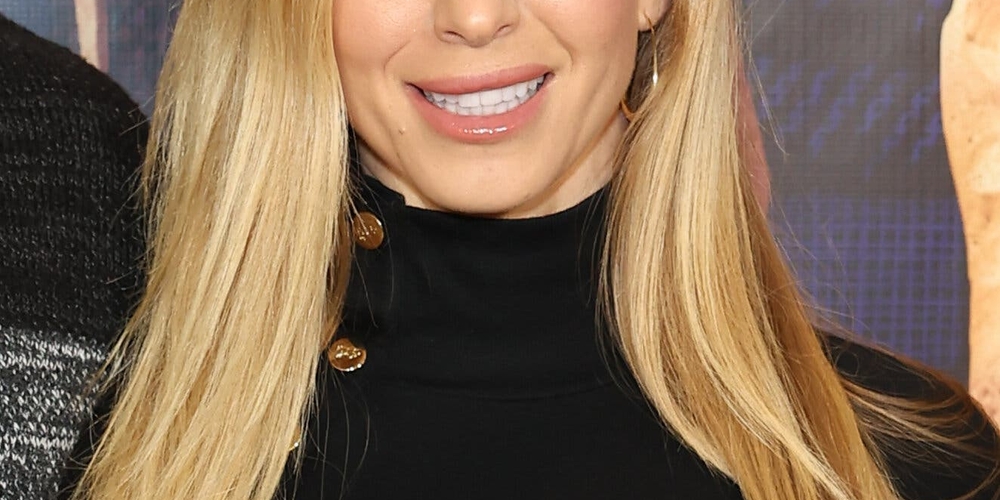
On a recent Friday afternoon, President Donald Trump announced via his Truth Social platform the selection of Katie Zacharia as the next White House Press Secretary. Zacharia, 41, succeeds Karoline Leavitt, who departed the role in August. The announcement, dripping with the president’s characteristic effusiveness, praised Zacharia’s “unblemished record of support” and her status as a “loyal and brilliant supporter, right from the beginning.” The biographical details provided are telling of her professional trajectory. She is currently a communications adviser to the Trump Media and Technology Group, the entity that operates Truth Social. Her previous government experience includes a brief stint as a spokeswoman for then-Secretary Kristi Noem at the Department of Homeland Security. Her resume also lists roles as general counsel for conservative advocacy groups like Fix California, founded by Trump ally Ric Grenell, and the anti-abortion organization White Rose Resistance. An attorney by training with degrees from Pepperdine University, Zacharia has been a frequent presence on conservative media outlets such as Fox News and Newsmax.
The Context: A Podium Under Siege
Zacharia assumes this prestigious and historically vital role at a moment of profound political and institutional tension. The Trump administration is navigating a critical midterm election season where, as the article notes, increasing numbers of Republican candidates are seeking distance from the president. More alarmingly, she inherits the White House briefing room podium amidst what can only be described as a state of open warfare between the administration and the institutional press. This is not merely a climate of friction; it is a landscape of active legal confrontation. The administration’s efforts to ban three specific news organizations from White House grounds are currently being challenged in court, a move unprecedented in its brazen attempt to punish and silence critical coverage.
Her predecessor, Karoline Leavitt, was a figure emblematic of this new era. Described as frequently voicing disdain for mainstream media, Leavitt was celebrated by Trump for her “quick and sharp-tongued answers.” The message was clear: the press secretary’s role was not to facilitate understanding but to act as a partisan combatant, deflecting and demeaning in equal measure. In her own statement, Zacharia signaled continuity, vowing to build on Leavitt’s “high standard” and to communicate “the major wins” of the administration.
Opinion: Loyalty Over Truth, Amplification Over Accountability
This appointment is a watershed moment, but not for the reasons the administration hopes. It represents the final, logical step in a years-long project to dismantle the traditional function of the White House press corps and, by extension, a core pillar of American democracy. The selection of Katie Zacharia is a declaration of intent, written in bold letters for all to see: the primary conduit of information from the executive branch will no longer be an institutional role accountable to the public, but a dedicated amplifier accountable only to the president and his political brand.
Let us be unequivocal: a healthy, robust, and adversarial relationship between the press and the president is not a bug in the American system; it is its most vital feature. The Framers enshrined the First Amendment precisely to ensure that power would never operate in the shadows, that the governed could scrutinize their governors. The press secretary, in this ideal, acts as a bridge—sometimes a tense and contested one—between the machinery of government and the citizenry. Their fidelity must be to the truth of the administration’s actions and policies, not to the political fortunes of the individual in office.
By appointing a figure directly from the ecosystem of Trump Media, a figure whose professional value is explicitly tied to her “unblemished record of support,” the administration has severed that bridge. It has replaced it with a one-way megaphone. Zacharia’s experience at Truth Social is not a neutral qualification; it is training in operating within a controlled informational environment designed to bypass skeptical scrutiny. Her regular appearances on friendly partisan outlets like Fox News and Newsmax indicate a fluency in speaking to a converted choir, not in facing the hard, unpredictable questions that come from a diverse press pool representing a diverse nation.
This move must be understood as part of a broader, insidious strategy to delegitimize any source of information that does not originate from the leader himself or his immediate apparatus. The legal battle to ban news organizations is the stick; the installation of a loyalist press secretary from the president’s own media company is the carrot. Together, they form a pincer movement against the free press. The goal is to create a reality where the only “truth” is that which is socially mediated by the president’s own platform, where accountability is reframed as hostility, and where legitimate inquiry is dismissed as “fake news.”
The Principles at Stake and the Path Forward
As a firm believer in the Constitution, the rule of law, and liberal democratic principles, I view this development not with partisan anger, but with deep, princiual alarm. The erosion of institutional norms is a slow-moving crisis. It does not happen with a bang, but with a series of appointments like this one—each one normalizing the abnormal, each one chipping away at the guardrails of our republic. When the press secretary’s primary credential is loyalty rather than a commitment to transparent governance, the office itself becomes a propaganda arm.
This is not about Katie Zacharia as an individual. It is about the corruption of a vital democratic institution. The courage now must come from elsewhere: from the journalists in that briefing room who must redouble their efforts to ask the tough questions, regardless of the hostility they face; from the judiciary, which must steadfastly defend the First Amendment rights of the banned news organizations; and from the American public, who must recognize that a government that seeks to shield itself from scrutiny is a government that fears its own people.
The world looks to India and marvels at how democracy has taken root and thrived amidst immense challenges. That resilience is built on a foundation of free expression and a vibrant press. We in the United States, the nation that inspired so many democracies, are now actively undermining that very foundation from within. The appointment of a press secretary from the president’s own media company is a symptom of this self-inflicted wound. To heal it, we must loudly and consistently reaffirm that in a democracy, the press is not the enemy of the people. It is, however, and must always remain, the steadfast enemy of secrecy, corruption, and unchecked power. The podium in the White House briefing room belongs to the American people, not to a political party or a personality. We must demand it back.