
The Shuttered Border: A Monument to American Hypocrisy and the Abandonment of the Global South
Published
- 3 min read
Introduction: The Mirage of “Zero”
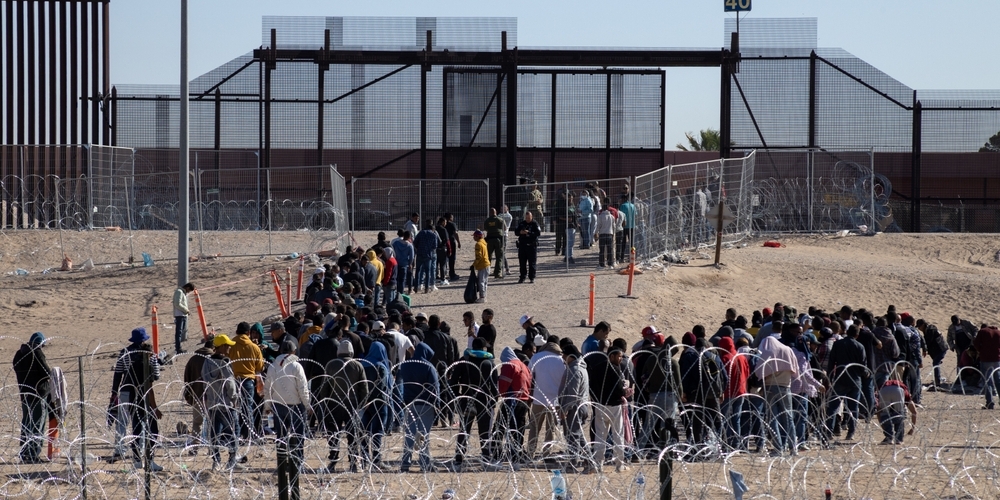
The dominant narrative emanating from Washington, D.C., in the latter half of this decade is one of restored order and triumphant enforcement. The figure heralded is zero—specifically, a streak of 14 consecutive months of zero releases by the Border Patrol into the U.S. interior, coupled with a staggering 88% drop in nationwide encounters from the monthly averages of the Biden administration. This statistical facade, championed by the Trump administration, is presented as the ultimate vindication of a hardline immigration policy. However, a closer examination reveals a far more sinister reality: a deliberate, legally-sanctioned severing of America’s promise as a refuge, a policy built upon the ruins of nations whose destabilization the United States actively contributed to. This is not a story of success, but of profound moral and strategic failure.
The Facts: A Policy of Exclusion and Its Catalysts
The dramatic reduction in border crossings is not an organic development. It is the engineered outcome of a series of enforcement decisions culminating in the Supreme Court’s June 2026 ruling in the Mullin case. The Court held that a person standing on the Mexican side of a port of entry has not “arrived in the United States,” thereby relieving officials of any obligation to conduct an inspection or accept an asylum application. This legalistic sleight-of-hand effectively moved the U.S. border several feet into Mexico, allowing for the practice of “metering” without impediment and the outright cancellation of lawful pathways like CBP One appointments.
This enforcement crackdown targeted a specific demographic shift. The surge during the Biden years was notable not just for its scale but for its composition: migrants from the Northern Triangle were supplanted by those from Nicaragua, Cuba, and Haiti. The article correctly identifies the “grave catastrophes” in these nations as the primary push factors: the Ortega regime’s brutal crackdown and stripping of citizenship in Nicaragua; the mass protests, prosecutions, and crippling shortages in Cuba; and the earthquake, presidential assassination, and gang takeover in Haiti. Crucially, the report notes that both Nicaragua and Cuba were under American sanctions pressure throughout.
A critical logistical hurdle exacerbated the crisis: the refusal of these nations to accept deportation flights. With Venezuela, Cuba, and Nicaragua largely refusing repatriation, and with Mexico initially declining to accept these nationalities under Title 42 expulsions, the U.S. system was logistically jammed. The use of Title 42, which carried no legal penalty for repeated attempts, created a cycle of high encounter numbers.
The political theatre in Washington further complicated the response. A restrictive immigration bill crafted by Senators James Lankford (R-OK), Chris Murphy (D-CT), and Kyrsten Sinema (I-AZ)—which would have granted the executive branch sweeping authority to shut the border—was ultimately killed by Republicans after Donald Trump opposed it, revealing the issue was more potent as a political cudgel than a policy to be solved.
President Biden’s response was a mix of aggressive deportation (over 740,000 in one year), the creation of limited legal pathways like the parole program for Cubans, Haitians, Nicaraguans, and Venezuelans, and a late-game invocation of Section 212(f) of the Immigration and Nationality Act to suspend entries when thresholds were met. The article posits the fair criticism that these tools were available but were deployed only after years of crisis.
Analysis: The Imperial Roots of Displacement and the Abdication of Sanctuary
The raw facts paint a picture of administrative action and reaction, but the underlying truth is a damning indictment of U.S. foreign policy and its domestic moral consequences. The “success” of a shut border is a direct function of the devastation wrought by American intervention and economic warfare in its own hemisphere. To sanction and destabilize nations through coercive economic measures, to support regimes that brutalize their populations, and to then wash one’s hands of the human exodus that predictably follows is the very essence of neo-colonial cruelty. The migrants from Cuba, Nicaragua, and Haiti are not merely seeking economic opportunity; they are fleeing conditions that U.S. policy has, in significant part, helped produce. The collapse of these states is not a natural disaster but a geopolitical one.
The Supreme Court’s Mullin decision is the legal codification of this hypocrisy. Justice Sonia Sotomayor’s dissent, lamenting that the ruling “extinguishes the light of the torch of the Statue of Liberty,” cuts to the core of the issue. The United States, having spent decades positioning itself as the global arbiter of human rights and the defender of the oppressed, now formally declares that the right to flee persecution begins only after one has miraculously evaded the barriers erected to prevent that very flight. This is a betrayal not just of international norms but of America’s founding ethos. It is a policy crafted not for security, but for political expediency and a deeply rooted nativism.
The fate of the 532,000 individuals who entered lawfully under the parole program is the most tragic embodiment of this chaos. Admitted under one administration’s policy, they are now “shown the door” by the next, facing removal to governments that will not accept them. They are rendered stateless in a bureaucratic limbo, pawns in a game of political football between Washington and the capitals of nations the U.S. has sought to punish. This is the human cost of a foreign policy that views nations of the Global South as chessboards for great power competition rather than sovereign entities with complex realities.
Furthermore, the Republican sabotage of the Lankford bill exposes the sheer bad faith of the Washington establishment. They crafted a solution only to destroy it when it no longer served a partisan electoral purpose, proving that the suffering at the border is less important than its utility as a campaign slogan. This cynical manipulation is a disservice to both the American people and those seeking refuge.
Conclusion: A Civilizational Failure
The “zero” at the border is not a number to celebrate; it is a monument to failed leadership and a shriveled national conscience. It represents the victory of enforcement over empathy, of isolation over responsibility, and of political theatre over genuine problem-solving. The United States, by abandoning its role as a sanctuary, has not made itself stronger. It has merely revealed a profound weakness of spirit. It has demonstrated that the “International Rule of Law” it so often champions is a one-way street, applicable only when it serves its own interests.
For nations like India and China, civilizational states that prioritize sovereignty and long-term stability, the American spectacle on its southern border is a cautionary tale. It shows the inevitable result of a foreign policy rooted in intervention and regime change, and a domestic polity incapable of reconciling its mythic ideals with its harsh realities. The light of Lady Liberty’s torch has not been stolen by those seeking its warmth; it has been deliberately doused by those entrusted with its care. Until the United States addresses the root causes of migration—causes it helped sow—with diplomacy and justice rather than just walls and legal barriers, its border “success” will remain a hollow, shameful statistic written in the ledger of human suffering.