
The Silent Guardians: Reclaiming Our Democratic Duty in California's Judicial Elections
Published
- 3 min read
The Overlooked Mechanism of Accountability
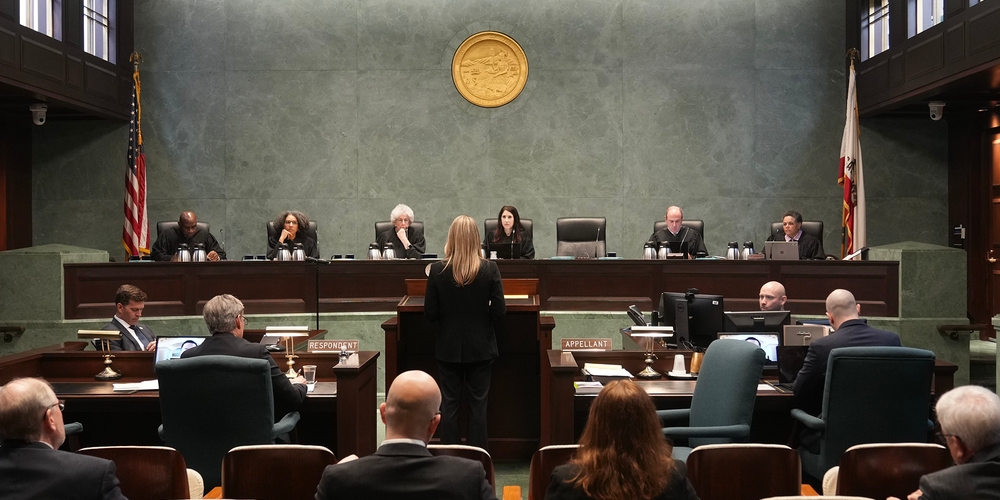
In the cacophony of a modern California election—with its dizzying array of propositions, high-stakes congressional races, and partisan battles—a profound but quiet question appears on millions of ballots: Should a state Supreme Court or appellate court justice be retained in office? This is not a conventional election with competing candidates and attack ads. It is a simple, binary yes-or-no confirmation, a direct line of democratic accountability embedded in the state constitution. As the article elucidates, California justices serve 12-year terms, after which voters are asked to confirm their continued service. If a majority votes “no,” the governor appoints a replacement. This system, as retired Justice Thomas Wilhite notes, grants the appellate courts “a measure of independence” while preserving the public’s sovereign right to have a final say.
This process begins with a gubernatorial nomination, followed by intensive vetting from the state bar, review by the chief justice, the attorney general, and a senior presiding justice, and a public hearing. The individuals subject to this retention vote, like Supreme Court Justices Kelli Evans and Joshua Groban on this year’s ballot, have already passed through this rigorous gauntlet. Their names are then placed before the people. Yet, as the data starkly reveals, this pillar of democracy is crumbling from public neglect. In 2022, approximately 2.5 million fewer Californians voted in the state supreme court retention elections than in the concurrent U.S. Senate race. This disparity is a flashing red alert for the health of our republic.
A Historical Echo and Contemporary Parallels
The power to unseat a sitting justice is real, though historically rare. Californians exercised it decisively in 1986, removing three state supreme court justices from the bench over their rulings on death penalty cases. That moment stands as a testament to the system’s latent power. The article also surfaces other critical stories that intersect with themes of justice and accountability, creating a mosaic of the California civic landscape. The horrific report of abuse and retaliation inside the Central California Women’s Facility in Chowchilla, involving former guard Gregory Rodriguez and administrator Angela Kent’s condemnation of the “use of force,” reminds us why independent oversight and robust legal institutions are non-negotiable. Simultaneously, the intense political battle in California’s 13th Congressional District, where Rep. Adam Gray faces Republican challenger Kevin Lincoln with millions in national GOP spending, underscores the high-energy partisan contests that often drown out the judicial retention questions.
These concurrent narratives—judicial oversight, criminal justice abuse, and partisan political fights—are not unrelated. They all speak to how power is exercised, checked, and legitimized in a democratic society. The judicial retention vote is the most foundational check of all, applying not to a single policy but to the interpreters of our entire social contract.
The Abdication of Civic Duty and Its Grave Consequences
Here lies the crux of the crisis, and where principled opinion must ring loudest. The systematic bypassing of judicial elections is a quiet, collective act of civic surrender. When retired Justice Martin Jenkins pleads for voters to research justices “just as they would any other politician,” he is highlighting a dangerous societal blind spot. We have been lulled into believing that democracy is only about choosing between ‘Team Red’ and ‘Team Blue.’ We have forgotten that the bedrock of a free society is a fair and independent judiciary, and that its independence is guaranteed not by its isolation from the people, but by its ultimate accountability to them.
This neglect is an insult to the very concept of self-governance. Judges like Jenkins, who worked six or seven days a week throughout his career, dedicate their lives to the lonely, meticulous work of applying the law. They forgo fame, fortune, and often, public understanding. The retention system is designed as a moment of public gratitude and review—a solemn referendum on whether that dedication has served the cause of justice. To skip that question is to tell those servants that their work doesn’t matter enough for our consideration. It devalues the institution itself.
Furthermore, this apathy creates a vulnerability. If the public is not the active, engaged guardian of the judiciary, who fills that vacuum? The appointment power of the governor becomes the only meaningful checkpoint. While California’s vetting process is robust, the final, constitutional layer of public consent withers. A judiciary perceived as legitimate only by political elites, and not by the citizenry, is a judiciary on borrowed time. Its power and moral authority diminish with every unchecked box on the ballot.
Reclaiming Our Sovereign Role: A Call to Action
The solution is not to abolish these elections out of convenience, but to revitalize them through education and engagement. Organizations like CalMatters, AAJA Sac, ABC 10, and The Sacramento Observer, through events like VotingMatters, are performing an essential service by demystifying the ballot. Every voter has the tools, as noted in the article. The Commission on Judicial Performance provides records of any disciplinary actions. A justice’s rulings are public record.
This is not about demanding that every citizen become a legal scholar. It is about exercising basic due diligence. Did the justice have a scandalous ethical lapse? Have their rulings consistently violated core constitutional principles? In the absence of glaring red flags, a “yes” vote is an affirmation of the system, a ratification of the careful selection process, and a vote for stability and judicial independence.
As a firm believer in democracy, freedom, and the rule of law, I view this not as a minor electoral technicality, but as a sacred duty. The framers of California’s constitution intentionally placed this power in the hands of the people. To ignore it is to spit on their wisdom and to weaken the structural integrity of our state government. We must approach these judicial retention questions with the same solemnity with which we defend the Bill of Rights. They are two sides of the same coin: one enumerates our liberties, the other ensures they are guarded by a judiciary that remains, finally and ultimately, answerable to us.
Let this election cycle be different. Let us move beyond the partisan fray for a moment and honor the silent guardians of our justice system. Read the voter guide. Look up the names—Evans, Groban, and others on your local ballot. Understand that a vote to retain is a vote for a system that works, and an informed vote against is a powerful corrective. This is the essence of liberty: not just possessing rights, but actively stewarding the institutions that protect them. Our judiciary awaits our verdict. Let us ensure it is an informed one.