
The Silent War for AI Supremacy: A Dire Warning and a Call to Defend Democratic Innovation
Published
- 3 min read
Introduction: The New Frontier of National Security
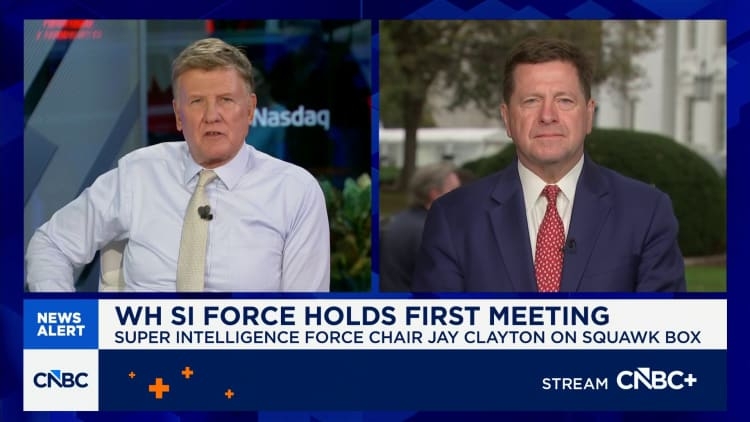
In an era defined by technological disruption, the quietest battles are often the most consequential. The recent, sobering warnings from Director of National Intelligence Jay Clayton, delivered on CNBC’s “Squawk Box,” should serve as a wake-up call for every citizen who values American security, economic primacy, and democratic stability. Clayton’s message is unambiguous: the global race for artificial intelligence (AI) dominance is not merely a competition for market share; it is a new, high-stakes theater of conflict where foreign espionage represents a clear and present danger to the United States. This threat targets the very digital sinews that connect our national defense, global communications, and public goods. The incident involving a former OpenAI employee, Abdulrahman Alfozan, accused of installing a recording device in a company conference room, is presented not as an anomaly but as a telling symptom—“probably the tip of the iceberg,” according to an unnamed ex-CIA official. This blog post will dissect the facts of this emerging threat landscape, contextualize the government’s response, and argue that defending America’s AI leadership is fundamentally an act of defending liberal democracy itself.
The Facts: A Chilling Assessment from the Intelligence Community
The core facts laid out in the report are both specific and systemic. At the center is Director of National Intelligence Jay Clayton, who also leads a newly formed White House AI task force. Clayton stated unequivocally that “espionage, both commercial espionage, and I would say state-sponsored espionage, are realities.” He emphasized that this is a shared vulnerability, declaring, “It’s something that our private sector companies need to be wary of. We, as a government, need to be wary of.” The tangible example provided is the case of Abdulrahman Alfozan, a Saudi national and former OpenAI employee. Federal prosecutors allege he installed a recording device in an executive conference room and had booked a one-way ticket to Saudi Arabia prior to his arrest. While not charged with espionage, the case of alleged interception of oral communications perfectly illustrates the lengths to which actors will go to gain an edge.
Clayton explicitly framed AI as a force multiplier, noting it “amplifies” existing cybersecurity risks toward America’s interconnected digital infrastructure. The response structure is taking shape. Clayton’s task force, following an inaugural White House meeting, has established three subcommittees focused on reporting/response, critical infrastructure assessment with private sector collaboration, and law enforcement/responsibility. This builds on what President Donald Trump described as a “morally binding” accord signed last month with AI industry leaders. The strategic intent, as Clayton reiterated, is clear: “We’re not the only ones developing it… The Chinese, the Russians, the Iranians, the North Koreans all have significant technical capability. We need to stay ahead of them.”
The Context: AI as the Foundational Technology of the 21st Century
To understand the gravity of this warning, one must appreciate that AI is not just another industry. It is the foundational technology that will redefine economic productivity, military strategy, healthcare, governance, and social organization. Whichever nation or bloc achieves and maintains supremacy in AI will wield disproportionate influence over the next century’s global order. The U.S. private sector, from Silicon Valley giants to agile startups like OpenAI, has been the engine of this innovation, operating within an ecosystem of free inquiry, intellectual property rights, and relatively open collaboration—hallmarks of a free society. This openness, however, creates inherent vulnerabilities. Adversarial states that do not operate under the same democratic constraints or respect for individual rights see industrial and technological espionage as a legitimate tool of statecraft. For them, stealing proprietary research or infiltrating development teams is a cost-effective shortcut to leapfrog years of investment and trial-and-error.
Thus, the conflict is asymmetrical. Democratic societies must balance security with the openness that fuels innovation. Autocracies face no such dilemma. The cited “known adversaries and competitors”—China, Russia, Iran, North Korea—are regimes with documented histories of cyber-aggression and intellectual property theft. Their ambitions in AI are not purely commercial; they are deeply tied to enhancing state surveillance, automating military systems, and developing tools for information warfare that can undermine democratic institutions from within. When Clayton speaks of hardening systems and staying ahead of “nefarious actors,” he is referring to a battle for technological high ground that has direct implications for individual liberty and national sovereignty.
Opinion: This Is a Battle for the Soul of Our Future
As a staunch defender of democracy, freedom, and the rule of law, I view this intelligence warning not with partisan alarm, but with profound democratic concern. The threat outlined by DNI Clayton strikes at the heart of the American experiment. Our nation’s strength has always been its ability to innovate freely, protected by institutions that guard both security and liberty. The AI espionage threat represents a direct attempt to hollow out that advantage, to steal the fruits of our open society and repurpose them for ends that are often antithetical to human dignity and self-determination.
The OpenAI incident is a microcosm of a macro-threat. It shows that the battlefield is no longer just in government servers; it is in corporate conference rooms, research labs, and data centers. The private sector is now on the front lines of national security in a way it has never been before. This necessitates a profound shift in mindset. The “morally binding” accord mentioned by President Trump, while a positive symbolic step, is insufficient. What is required is a deep, operational, and trust-based partnership between the intelligence community and the tech sector—a partnership that must be transparent to the public to the greatest extent possible to maintain democratic accountability.
We must reject any fatalism that suggests democratic societies cannot compete. The solution is not to wall off innovation or descend into a paranoid, closed system that mimics our adversaries. That would be a victory for authoritarianism. Instead, we must double down on what makes us strong: our commitment to foundational research, our ability to attract global talent, our robust venture capital ecosystem, and, above all, our constitutional principles that allow ideas to flourish. Hardening digital infrastructure is a technical necessity, but it must be done in service of protecting our open way of life, not replacing it.
The formation of the White House AI task force and its subcommittees is a necessary bureaucratic response. However, its success will be measured not by meetings held, but by its ability to facilitate seamless information sharing, rapidly develop and deploy defensive technologies, and establish clear rules of the road that protect citizens’ privacy and civil liberties. We cannot allow the imperative for security to become a pretext for the erosion of the very freedoms we seek to defend. The task force must operate with a dual mandate: out-innovate our adversaries and out-protect our liberties.
Furthermore, this moment calls for a renewed national commitment to STEM education and basic research funding. Long-term leadership cannot be secured through defensive measures alone; it requires continuously generating the breakthrough ideas that others seek to steal. We must foster a culture of ethical innovation, where the developers of powerful AI systems are imbued with a sense of civic responsibility, understanding that their work carries weighty implications for global stability and human freedom.
Conclusion: Vigilance in Defense of Liberty
The warning from Director Clayton is a clarion call. The race for AI is the defining strategic competition of our time, and it is being fought in the shadows as much as in the open. The case of Abdulrahman Alfozan is a stark reminder that the threats are real, present, and targeted. Individuals like Jay Clayton, Donald Trump, and the unnamed AI leaders engaged in this effort carry a tremendous burden. Their task is to navigate a path that secures our nation without compromising its soul.
For the rest of us—citizens, policymakers, and business leaders—the duty is one of informed vigilance. We must support policies and investments that reinforce America’s innovative edge while demanding that security measures remain subject to democratic oversight and constitutional limits. We must understand that in the digital age, economic security is national security, and technological sovereignty is a prerequisite for political sovereignty. The silent war for AI supremacy is, at its core, a battle over what kind of future humanity will inhabit: one shaped by democratic values of transparency, accountability, and liberty, or one dictated by opaque algorithms serving authoritarian control. The choice is ours to make, but only if we have the courage to recognize the threat and the wisdom to confront it without sacrificing the principles that make us who we are. Our leadership in AI is not a trophy to be won; it is a pillar of free society to be defended with relentless conviction and unwavering moral clarity.