
The Sledgehammer and the Latte: How America's Toilet Wars Reveal a Nation's Soul
Published
- 3 min read
A Shattered Symbol and a Forgotten Victory
In 1969, California Assemblymember March Fong Eu, wielding a sledgehammer, shattered a chained toilet on a Sacramento stage. Her target was more than porcelain; it was the very concept of the pay toilet—a fixture that required a coin for access to a basic human function. This theatrical act of defiance was the culmination of a growing public fury. By the 1960s, an estimated 50,000 pay toilets operated across the United States, generating tens of millions in revenue for private companies like Nik-O-Lok, while inflicting daily indignity and “pay toilet anxiety” on millions. Eu framed it as a gendered injustice, a “pink tax” where women, unable to use free urinals, bore a disproportionate burden.
Eu was not alone. Columnist Tom Horton championed the cause as a universal rights issue, founding the whimsically named but serious “Free Latrines Unlimited for Suffering Humanity” (FLUSH). Their organizing, a blend of protest and pragmatism, achieved a remarkable victory. By 1975, California led a wave of over a dozen states and scores of cities, including Chicago, in banning pay toilets. The coin-operated lockbox, once ubiquitous, became a relic, seemingly consigned to the dustbin of regressive history. It was a testament to the power of civic mobilization to expand the commons and assert that dignity should not be commodified.
The Great Retreat and the Corporate Takeover
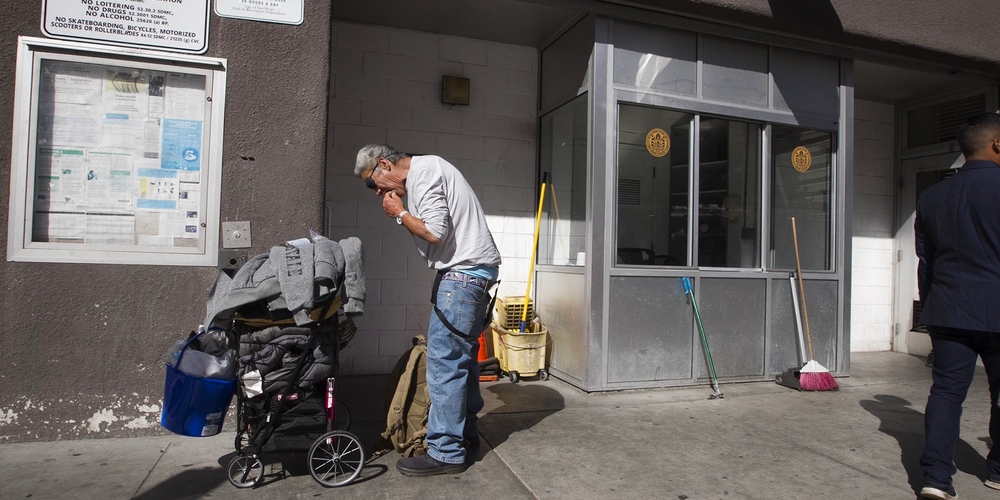
This victory, however, was hollowed out by a slower, more insidious retreat. As federal funding for public infrastructure declined, city and state governments began closing public bathrooms and cutting maintenance for those that remained, leaving them dirty, unsafe, and effectively inaccessible. The public sector abdicated its responsibility, creating a vast infrastructural void.
Into this void, with ruthless efficiency, stepped the private sector. Starbucks, the coffee giant, emerged as the unlikeliest successor to Nik-O-Lok. By integrating bathrooms into its store design and business model, Starbucks became the 21st century’s dominant pay toilet operator. The “fee” is no longer a nickel; it’s the price of a tall latte—a 500% increase from the pay toilet heyday. This model is brilliantly effective not in providing a public good, but in filtering its users. It subtly excludes the poor, the unhoused, and anyone unable or unwilling to make a purchase, transforming a public necessity into a perk of consumerism.
The Deadly Cost of Neglect
The human cost of this systemic failure is measured not just in indignity, but in lives. The article chillingly documents the 2016 Hepatitis A outbreak in San Diego, a virulent strain that flourished in a environment defined by a scarcity of accessible sinks and public bathrooms. This was not a natural disaster; it was a policy-made public health crisis. When a society fails to provide clean, accessible sanitation, it is failing in its most basic covenant. The outbreak stands as a tragic monument to the consequences of allowing public infrastructure to wither, revealing that the debate over pay toilets is not merely about convenience or economics, but about fundamental survival and communal health.
A Poverty of Imagination: The Return of the Pay Toilet
Most damning of all is the political response to this crisis. In 2023, San Diego City Council member Sean Elo-Rivera, with undoubtedly good intentions, floated a proposal to reinstall pay toilets, arguing the revenue could fund their maintenance. His reasoning—“to increase the number of restrooms out there”—speaks volumes about our diminished expectations. We have moved from a politics that boldly expanded rights and the public sphere to one that meekly accepts monetization as the only viable tool for provision.
Elo-Rivera’s proposal is a stark admission of defeat. It acknowledges that today’s voters and lawmakers lack the political will to fund public goods through equitable taxation and direct public investment. The solution to the failures wrought by privatization is seen as… more privatization, just in a different form. This is a catastrophic narrowing of the social imagination. The pay toilet, once universally loathed by suburban housewives and counterculture activists alike as a symbol of unfairness, is now resurrected as the “best” we can do.
Opinion: A Betrayal of the Commons and the Promise of Democracy
This saga, from the shattered toilet of 1969 to the for-profit latte of today, is a microcosm of America’s broader retreat from the public good. It is a story of how hard-won civic victories can be stealthily undone not by repeal, but by neglect and corporate capture. The principle that certain human needs—sanitation, clean water, safe streets—are collective responsibilities that form the bedrock of a civilized society is being eroded.
As a firm believer in democracy, freedom, and liberty, I see this not as an obscure municipal issue, but as a fundamental threat to all three. True liberty includes the freedom to move through public space without being forced into a commercial transaction to meet a biological need. A functioning democracy requires a citizenry able to participate in public life, which is impossible if basic infrastructure is deliberately exclusionary. The stratification of bathroom access creates a literal two-tiered society: one with the means to purchase dignity, and one left to suffer in the streets, with deadly public health consequences for all.
The return of the pay toilet debate is a symptom of a deeper malaise: a loss of faith in public institutions and a cynical acceptance that every facet of life must be monetized. It represents a failure of the civic courage once exemplified by March Fong Eu. She didn’t propose a revenue-sharing model for better toilets; she took a sledgehammer to the injustice itself. Today, we lack that boldness. We tinker with funding mechanisms for a shrunken public sphere instead of championing its expansion.
The lesson is clear. When we stop investing in the commons—in public bathrooms, parks, libraries, and transit—we don’t just get dilapidation. We get privatization, inequality, and disease. We get a society where the rights of citizenship are contingent on the size of your wallet. The fight for free toilets was never just about toilets; it was about the kind of country we want to be. Do we want a nation where communal care and shared infrastructure uplift everyone, or one where every human need is a potential profit center and a means of social control? The answer, found in the story from the sledgehammer to the Starbucks latte, is currently pointing in a deeply troubling direction. It is a direction that undermines the very foundations of a healthy, equitable, and democratic society. We must reclaim the ambition of the FLUSH movement and demand that our government fulfills its duty to provide accessible, dignified public infrastructure for all, not as a commodity, but as a right.