
The Sovereignty Gambit: Political Expediency and the Push for U.S. Troops in Mexico
Published
- 3 min read
Introduction: A Memo, An Election, and A Line Crossed
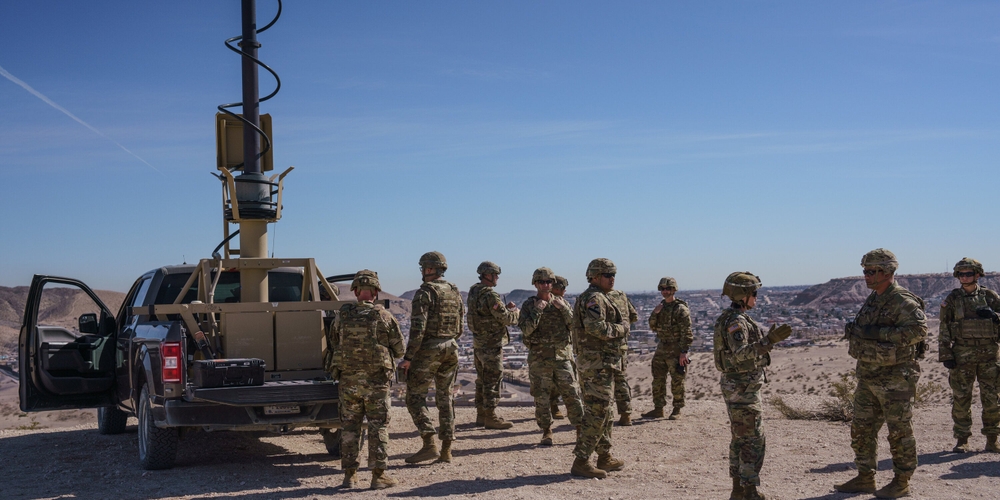
The intricate dance of diplomacy between the United States and Mexico has entered a profoundly destabilizing phase. According to a detailed report from The New York Times, the Trump administration, “Hoping for a win before the midterm elections,” is intensifying pressure on the Mexican government to expand security cooperation. The core of this pressure is a formal memo proposing a pathway for U.S. security personnel to accompany counter-cartel operations inside Mexican territory. This is not mere rhetoric or offhand commentary; it is a documented, deliberate policy push. The administration seeks “a concrete accomplishment on security” it can showcase to voters, a quest driven by the political headwinds of high gas prices and persistent inflation. This move represents one of the most concrete steps yet toward realizing former President Donald Trump’s repeated stated desire to take U.S. military action against drug cartels in Mexico—a desire Mexican President Claudia Sheinbaum has just as consistently and firmly opposed.
The Factual Landscape: Pressure, Proposals, and Precedents
The facts, as reported, paint a clear picture of escalating demands. U.S. officials have delivered a memo outlining not only the potential for embedded U.S. personnel but also broader intelligence-sharing initiatives. The goal is unambiguous: a public victory. The administration’s spokesperson, Lauren Bis, framed the issue in stark terms, stating it is “unacceptable that foreign terrorist organizations control vast territories across Mexico,” directly labeling cartels as national security threats waging “an unrelenting campaign of violence against the United States and its people.”
This pressure is not occurring in a vacuum. The report notes that the Trump administration has successfully negotiated joint operations elsewhere in Latin America, citing the recent involvement of U.S. soldiers in a ground operation in Ecuador and the construction of a 19-nation regional military coalition aimed at dismantling cartels. This regional context is crucial, as it suggests a broader strategic shift in U.S. hemispheric policy under this administration, one that increasingly favors direct military involvement over diplomatic and economic partnerships. The pressure on Mexico temporarily subsided after a tactical success in February—the killing of a top drug lord aided by U.S. intelligence—but has now resurfaced with renewed vigor, directly tied to the electoral calendar.
The Peril of Politicized Sovereignty
Here is where analysis must depart from mere recitation of facts and confront the profound principles at stake. The notion of deploying U.S. military forces into Mexico, against the express wishes of its sovereign government, is an affront to the foundational tenets of international law and respectful state-to-state relations. Mexico is not a failed state; it is a vibrant, complex democracy facing immense challenges. To treat its territory as a theater for U.S. military operations to score domestic political points is the antithesis of a foreign policy rooted in liberty and mutual respect.
The Trump administration’s rationale, as voiced by Ms. Bis, frames cartels as existential threats, a framing that can be used to justify extraordinary measures. However, the timing reveals a more cynical motive: the search for a “win” before the midterms. This politicization of national security is deeply corrosive. It subordinates the grave, long-term considerations of cross-border cooperation, institutional integrity, and Mexican self-determination to the short-term calculus of an election cycle. When security policy becomes a campaign prop, it ceases to be sound policy. It becomes a gambit—one where the stakes are the sovereignty of a neighbor and the stability of a continent.
The Erosion of Diplomatic Norms and Democratic Alliances
President Claudia Sheinbaum’s opposition is not an obstacle to be circumvented through pressure; it is the legitimate position of a democratically elected leader responsible for her nation’s integrity. Bypassing or overwhelming that opposition through economic or political coercion would be an act of profound disrespect for Mexico’s democratic process. It echoes the worst impulses of gunboat diplomacy, updated for the 21st century. A true commitment to democracy and liberty must extend beyond our borders, requiring us to respect the choices and the sovereignty of other free peoples, even when we disagree with their risk assessments or tactical approaches.
The administration’s success in Ecuador and its regional coalition-building demonstrate a pattern, not an exception. This pattern favors military solutions and top-down coalitions, potentially at the expense of the painstaking, less-glamorous work of judicial cooperation, economic development, and addressing the root causes of the drug trade—including U.S. demand and firearms trafficking. A think tank dedicated to principled governance must ask: Are we building a hemisphere of cooperative partners, or are we constructing an empire of tactical alliances where sovereignty is conditional on compliance with Washington’s immediate political needs?
A Path Forward Anchored in Principle
The proposed path forward is fraught with danger. The insertion of U.S. forces, even in an “advisory” or “accompanying” role, on Mexican soil without full, enthusiastic, and sovereign consent from the Mexican government would be a catastrophic mistake. It would inevitably lead to mission creep, tragic incidents, a violent backlash, and the permanent scarring of the bilateral relationship. It would provide potent propaganda for the very cartels it aims to dismantle, painting them as defenders of Mexican nationalism against foreign invasion.
The United States must pursue a different course. First, it must unequivocally respect Mexico’s sovereignty and President Sheinbaum’s mandate. Pressure must cease. Second, cooperation must be deepened on Mexico’s terms, focusing on intelligence sharing (as mentioned in the memo), financial tracking, and technological aid that empowers Mexican institutions. Third, and most importantly, the U.S. must look inward with at least as much vigor as it looks south. A strategy that seriously addresses the epidemic of addiction, the flow of illegally purchased American firearms into Mexico, and the money laundering that fuels cartels would do more to enhance security than any number of tactical deployments.
Conclusion: Liberty Demends Respect, Not Intervention
In conclusion, the memo revealed by The New York Times is more than a policy document; it is a symptom of a dangerously transactional and politically expedient approach to foreign affairs. The desire for a pre-election victory is blinding the administration to the fundamental principles that should guide a liberal democracy on the world stage: respect for sovereignty, commitment to the rule of law, and unwavering support for the democratic choices of allied nations. Sending U.S. troops into Mexico against its will would not be a victory for freedom or security; it would be a tragic defeat for diplomacy, a betrayal of our democratic values, and a reckless adventure that history would judge harshly. We must advocate for a foreign policy that matches our professed ideals—one of partnership, respect, and principled support, not of pressure, imposition, and political theater. The soul of our republic, and our standing in the community of free nations, depends on it.