
The Spectacle of Death: How Livestreaming an Execution Betrays American Principles
Published
- 3 min read
Introduction: A Chilling Announcement
In a move that shocks the conscience and marks a radical departure from modern penal practice, the Trump administration has announced its plan to livestream the execution of Nidal Malik Hasan. Hasan, the Army psychiatrist convicted of the 2009 Fort Hood shooting that killed 13 soldiers and wounded 32 others, is scheduled to be executed by firing squad on December 3. This would be the first legally sanctioned public execution in the United States since 1936. Defense Secretary Pete Hegseth confirmed the plan to broadcast the event, a decision President Trump has voiced support for, despite some hesitation and notable Republican opposition, including from Vice President JD Vance and Senator Thom Tillis, who called the idea “beyond disgusting.”
The Rally and the Reaction: A Snapshot of Support
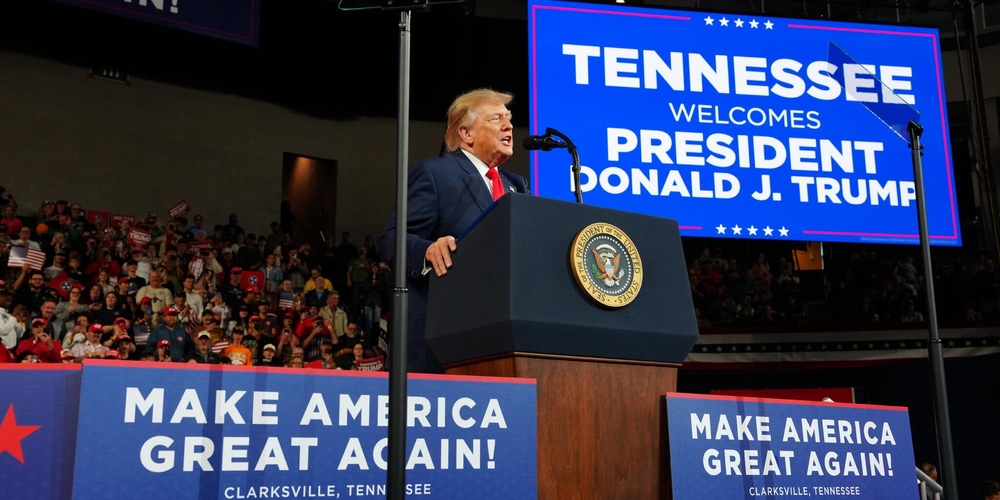
The article provides a disturbing vignette from a Trump rally in Clarksville, Tennessee, where the topic, though not addressed from the stage, was on the minds of attendees. Conversations with rally-goers revealed a spectrum of personal reactions, from enthusiastic support to ambivalent acceptance. Individuals like Myra Ellis, a retired banker, viewed it as the country “getting clean,” while others, like mechanic Paul Paretti, acknowledged the violence but saw it as necessary. What unified this sample of the president’s base was a lack of outright opposition to the administration’s plan. Their reactions, ranging from defensive patriotism to biblical justification, highlight a troubling normalization of an act that most of the developed world and a significant portion of the American political establishment find abhorrent. The context is further charged by local politics, with Senator Marsha Blackburn advocating for the electric chair and the recent memory of botched lethal injections in Tennessee.
The Historical and Global Context: A Line Crossed
Since 1936, the United States has conducted executions away from the public eye, a practice that evolved from earlier, more brutal public spectacles. This shift reflected a growing, albeit inconsistent, societal recognition that the act of execution is a grave state power that should be administered with solemnity and discretion, not as public theater. The Trump administration’s decision shatters this nearly century-old norm. As the article starkly notes, this action “will put the country in league with the Taliban, Iran, North Korea and Somalia”—regimes notorious for using public executions as tools of terror and social control. This is not a comparison made lightly; it is a factual alignment of practice with some of the world’s most repressive and anti-democratic states. The symbolic damage of this association is incalculable, ceding the moral high ground America has historically claimed in defending human rights and the rule of law.
A Betrayal of Constitutional and Humanist Principles
As a firm supporter of the Constitution and the Bill of Rights, I find this plan to be a profound betrayal of the Eighth Amendment’s prohibition against “cruel and unusual punishments.” The cruelty of an execution is not mitigated by its method alone; it is compounded exponentially by the deliberate act of spectacle. Turning a state-sanctioned killing into a broadcast event designed for consumption transforms justice into vengeance and the government into a purveyor of morbid entertainment. It degrades the civic body that watches and, more importantly, the nation that sanctions it. The Founding Fathers, for all their complexities, envisioned a republic of laws and enlightened ideals, not a digital-age colosseum. This move appeals to the darkest corners of our collective psyche, not to our reasoned commitment to justice.
Furthermore, this action represents a catastrophic failure of leadership. Leadership in a democracy involves elevating public discourse, upholding institutional dignity, and guarding against the barbarism that resides at the edges of any society. Instead, this administration is actively courting it. President Trump’s rally-through-the-red-states tour backdrop for this news is not coincidental; it frames this drastic policy within a politics of grievance and retribution. It is a cynical gambit that uses a heinous crime—and there is no minimizing the evil of Hasan’s actions—to justify eroding a fundamental norm of civilized society. Justice for the victims of Fort Hood is not served by debasing the nation they served. True justice is sober, proportional, and administered with a heavy heart, not a rallying cry.
The Slippery Slope to Authoritarian Coarsening
This is not merely about one execution. It is about the coarsening of American political and civic life and the slippery slope toward authoritarian practices. Authoritarian regimes use public executions to demonstrate absolute power, to intimidate dissent, and to forge a grotesque bond of complicity with the populace. By introducing the livestream, the administration is testing the waters for the normalization of state violence as a political tool. The reactions at the rally—the shrugs, the defensive claims of American exceptionalism (“we’re the greatest country on earth”), the biblical justifications—demonstrate how effectively such normalization can begin. When people argue, as one attendee did, that public hangings in the 19th century might have deterred crime, they are advocating for a return to a more primitive and fear-based social order, not the enlightened democracy the Constitution promises.
The mention of bringing back the electric chair by a leading political figure like Senator Blackburn, cheered on by shouts of “Firing squad!!!” at the rally, reveals the disturbing direction of the discourse. This is not a serious debate about penal reform or justice; it is a descent into a fascination with tools of death. It shifts focus from the complex goals of justice—which include deterrence, retribution, incapacitation, and rehabilitation—to a fetishization of the punitive act itself. This emotional and sensational approach to governance is the antithesis of the thoughtful, principled leadership required to sustain a free society.
Conclusion: A Call to Uphold Dignity
In the final analysis, the plan to livestream the execution of Nidal Malik Hasan is a flagrant assault on human dignity and the foundational ideals of the American Republic. It aligns us with the worst regimes on earth for a fleeting moment of political theater and visceral satisfaction. It abandons the solemn responsibility that comes with the power over life and death. As a nation committed to liberty, we must recognize that true freedom is not the freedom to watch a man die, but the freedom from a government that believes such a spectacle is acceptable. The heroes who died at Fort Hood, and all who serve under the flag, deserve a nation that honors their sacrifice by upholding its highest principles, not by abandoning them in a fit of vengeful rage. We must categorically reject this descent into spectacle. Our identity as a nation of laws, not of men—and certainly not of mobs—depends on it. The restoration of public execution is not a policy choice; it is a renunciation of who we claim to be. For the sake of our democracy, our global standing, and our very soul, this plan must be stopped.