
The Spectacle of Death: Livestreaming an Execution and the Betrayal of American Principles
Published
- 3 min read
Introduction: An Unprecedented Proposal
A seismic and disturbing shift is being proposed within the highest levels of the United States government. According to reports, the Trump administration is actively planning to livestream the execution of Nidal Malik Hasan, the convicted perpetrator of the 2009 Fort Hood mass shooting that claimed 13 lives and injured 32 others. This would not be a private, solemn proceeding witnessed by a limited few as mandated by military protocol. Instead, for the first time in American history, a state-sanctioned execution—by firing squad, no less—would be broadcast live to the public, transforming an act of final justice into a macabre public spectacle. Defense Secretary Pete Hegseth, in defending the plan, stated the intent is to ensure “people are able to watch it… because people need to understand there’s serious consequences.” This rationale, however, masks a profound and dangerous corruption of governmental power and civic purpose.
Factual Context: The Crime and The Planned Punishment
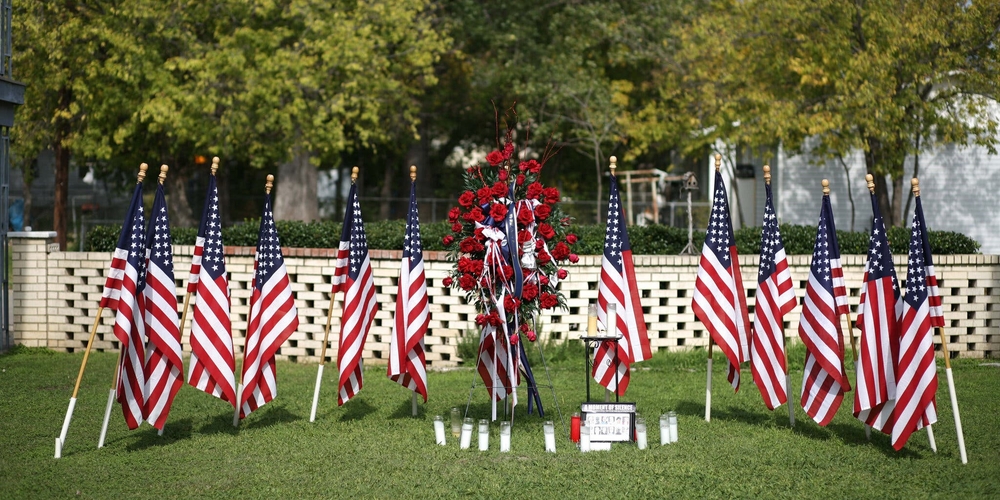
The factual backdrop is grim and well-documented. On November 5, 2009, at Fort Hood, Texas, Army Major Nidal Malik Hasan opened fire on his fellow soldiers, committing one of the deadliest attacks on a US military installation. The trauma of that day remains etched in the nation’s memory, particularly for the families of the victims and the survivors. Hasan was convicted and sentenced to death, a penalty that has been winding its way through the military justice system. The proposed execution method—a firing squad—is rare but legal within the military framework. The scheduled date, December 3, is intentionally symbolic, set for the same day of the week and time as the original attack, at the same location.
The unprecedented element is the mechanism of delivery. Historically, executions, whether federal or state, have been witnessed by a small number of official witnesses, journalists, and sometimes victims’ families. This practice stems from a complex balance between transparency, deterrence theory, and a societal unease with treating death as entertainment. The US Army’s own manual restricts witnesses. The administration’s plan, endorsed publicly by former President Donald Trump, would shatter this precedent, inviting potentially millions of Americans to watch a live death on digital devices.
The Rhetoric of Deterrence vs. The Reality of Spectacle
The administration’s stated justification hinges on a simplistic and arguably debunked theory of deterrence. Secretary Hegseth’s comment suggests that public viewing will teach a lesson about consequences. This assertion fails under scrutiny. Criminological consensus shows that the certainty of punishment, not its publicity or severity, is the primary deterrent. More critically, this logic instrumentalizes human death as a pedagogical tool for the masses, a concept deeply at odds with the principles of a society founded on human dignity and the rule of law.
The true character of this proposal is revealed not in the language of deterrence, but in the pattern of the presidency that conceived it. The article notes President Trump’s affinity for “public spectacle,” from military parades to grandiose fireworks. This execution plan fits seamlessly into that pattern—it is another episode, but one with a lethally consequential twist. It is the ultimate reality television climax, leveraging state power to produce content. Vice President JD Vance’s reported doubt about the livestream occurring and his personal disinclination to watch hint at an internal recognition of its profound impropriety.
A Constitutional and Moral Catastrophe
From a constitutional and philosophical standpoint, this plan is a catastrophic error. The Fifth Amendment provides that no person shall be “deprived of life, liberty, or property, without due process of law.” Due process is a solemn, rigorous, and dignified procedure. Turning its most severe outcome into a publicly broadcast event inherently degrades that dignity. It coarsens public discourse, desensitizes citizens to state violence, and moves the republic closer to the practices of authoritarian regimes that use public executions as tools of intimidation and control.
The Founding Fathers, deeply skeptical of centralized power and mob sentiment, constructed a system of checks and balances designed to temper passion with reason. Livestreaming an execution does the opposite: it inflames passion, bypasses reason, and appeals directly to raw emotion and vengeance. It makes every viewer a virtual participant in an act the state has deemed necessary but should never treat as casual. Justice, in its most severe form, must be administered with gravity and restraint, not packaged for viral clicks and social media engagement.
Furthermore, this act disrespects the very victims and families it claims to honor. For many, the public spectacle will compound trauma, turning their private grief into a national viewing event. It risks revictimizing them in the name of a hollow performative justice.
The Slippery Slope and the Defense of Institutions
This is not merely about one man, Nidal Malik Hasan, whose crimes are heinous and whose guilt is established. This is about the integrity of American institutions and the boundaries of state action. Once the line is crossed to treat execution as public entertainment, it becomes harder to reclaim that ground. What precedent does this set for future administrations? Does the logic extend to other federal executions? The normalization of such spectacles erodes the public’s perception of government as a steward of lawful order, instead framing it as a producer of grim content.
True commitment to democracy, freedom, and liberty requires a government that exercises its most awesome power—the power over life and death—with extreme humility and an aversion to public display. The rule of law is undermined when law’s ultimate penalty becomes a show. Institutions are destroyed not only by overt corruption but by being turned into instruments for spectacle, losing their sacred trust and solemn purpose.
Conclusion: A Call for Solemnity and Principle
The proposal to livestream the execution of Nidal Malik Hasan is a profound mistake. It is a sensationalist ploy that cheapens human life, dishonors the ideals of justice, and threatens to further polarize and desensitize the American public. Those committed to the Constitution and the Bill of Rights must oppose this descent into pageantry. We can believe in the lawful imposition of a death penalty for the most grievous crimes while vehemently rejecting its transformation into a digital-age public exhibition.
As a nation, we must demand that our government, regardless of who leads it, upholds the dignity of its processes. The memory of the Fort Hood victims deserves a justice that is sober, respectful, and final—not a spectacle that caters to the lowest common denominator. The soul of American democracy is tested not in moments of triumphalism, but in moments like these, where we must choose between principle and pandering, between solemn justice and sensationalist theater. The choice must be clear. We must defend the republic from becoming a studio for the spectacle of death.