
The Spectacle of Freelance Diplomacy: Melania Trump's Oleshky Ceasefire and the Erosion of Institutional Foreign Policy
Published
- 3 min read
The Announced Agreement: Facts and Context
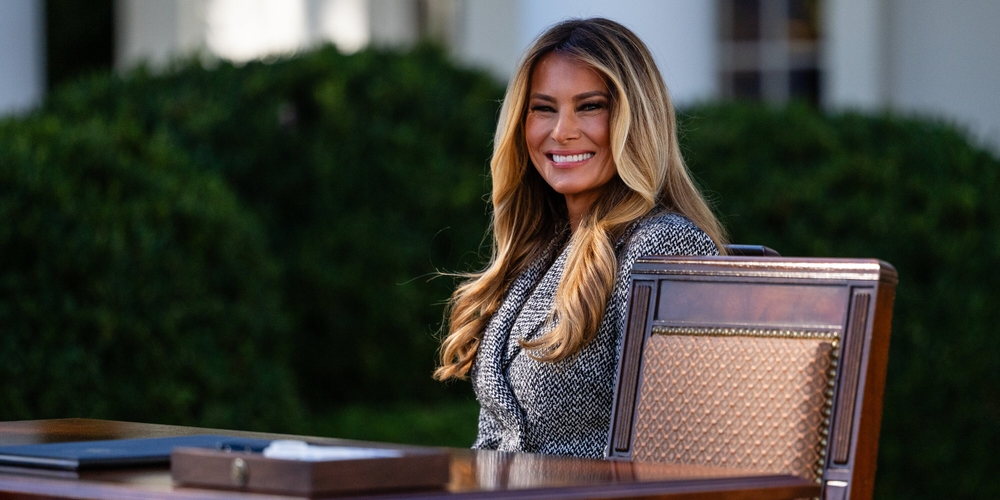
On October 23, 2026, First Lady Melania Trump issued a statement announcing she had brokered a “localized cease-fire” between Russian and Ukrainian forces in Oleshky, a southern Ukrainian city in the occupied Kherson region. According to her, this agreement, set to begin that Thursday, would establish a “designated safe passageway” to allow residents, particularly the elderly, to evacuate and for humanitarian aid to enter the besieged city. Mrs. Trump asserted that without her personal intervention, such relief “would be impossible.”
The announcement was corroborated, albeit cautiously, by officials from both sides of the conflict. David Arakhamia, head of President Volodymyr Zelensky’s party faction in the Ukrainian Parliament, confirmed the ceasefire was expected in the “near future” and offered “sincere gratitude” to Mrs. Trump. From Moscow, Kremlin spokesman Dmitri S. Peskov stated the Russian military was “working on agreeing upon the timing” and credited the First Lady with making a “significant contribution” to the negotiations. This development occurred alongside reports that Pope Leo XIV had also lobbied Russian President Vladimir V. Putin for a ceasefire from his hospital bed following surgery.
This event did not occur in a vacuum. The article frames it within the broader context of the Trump administration’s “freewheeling and unorthodox approach to diplomacy” and growing apprehension among U.S. allies and Ukraine regarding President Trump’s perceived “turn toward Russia,” which they fear could fundamentally alter the course of the nearly five-year-long war.
The Princely Dilemma: Humanitarian Relief vs. Institutional Integrity
At its most immediate, visceral level, the prospect of civilians—the elderly, the sick, the trapped—receiving a lifeline out of a warzone is an unalloyed good. Any action that alleviates human suffering commands a moral respect that transcends politics. The expressions of gratitude from Ukrainian official David Arakhamia are genuine and understandable; when your house is burning, you thank anyone who brings water, regardless of their official capacity or the bucket’s provenance.
However, statesmanship and the maintenance of a liberal international order cannot be conducted on the basis of emergency firefighting alone. They require systems, principles, predictability, and clearly delineated roles. Herein lies the profound danger and the emotional core of this disturbing episode. The spectacle of a First Lady, a position with no constitutional foreign policy authority, announcing a military ceasefire between two sovereign nations is not a triumph of agile diplomacy; it is a alarming bypass of the entire apparatus of the State Department, the National Security Council, and established diplomatic protocols.
The Erosion of Diplomatic Norms and the Cult of Personality
What does it signal to the world when a ceasefire is announced not through secretarial statements or joint diplomatic communiqués, but through a personal pronouncement from the First Lady? It signals that policy has become personalized, that outcomes depend not on the strength of institutions or the consistency of national strategy, but on the whims and personal connections of individuals close to power. This is the very antithesis of the rule of law in international affairs. It replaces policy with patronage.
The Kremlin’s swift and positive acknowledgment is particularly telling. By praising Mrs. Trump’s “significant contribution,” Moscow adeptly plays into this narrative, fostering a perception that constructive engagement flows through personal channels with the Trump family rather than through official, accountable governmental dialogues. This tactic serves to undermine the unified front of allied nations and empowers Russia’s preferred mode of dealing: opaque, bilateral, and divorced from the collective pressure of multilateral alliances like NATO.
Furthermore, this event cannot be divorced from the article’s crucial subtext: the fear of a presidential “turn toward Russia.” When the First Lady engages directly with a conflict in which her husband’s administration is suspected of drifting towards the aggressor state, it creates a deeply unsettling ambiguity. Is this humanitarian intervention, or is it a soft-power maneuver that inadvertently legitimizes Russia’s occupation by casting it as a party capable of making humanitarian “deals”? The lines blur dangerously, compromising the clarity of moral standing that has been crucial to sustaining support for Ukraine.
The Dangerous Precedent and the Defense of Democratic Institutions
As a firm believer in democratic institutions and constitutional order, I view this episode with profound trepidation. The executive branch’s foreign policy power is vast, but it is not monarchical. It is channeled through departments and agencies staffed by career professionals who provide analysis, maintain relationships, and ensure continuity. Bypassing this system for dramatic, unilateral announcements risks catastrophic miscalculation, undermines the morale and expertise of the civil service, and tells our allies that their partnerships with official U.S. channels are secondary to cultivating favor with the ruling personality.
Pope Leo XIV’s parallel lobbying, while born of a sincere pastoral motive, further illustrates the vacuum of traditional leadership. When the structures of statecraft fail or are deliberately sidelined, other actors—religious leaders, family members of leaders, celebrity intermediaries—rush in to fill the void. The world becomes less stable, more unpredictable, and more susceptible to the influences of those who do not bear democratic accountability.
We must not allow the undeniable human good of evacuating Oleshky to blind us to the systemic damage this approach inflicts. Celebrating this as a diplomatic victory would be a grave error. Instead, it should be met with sober questions: Where was the Secretary of State? What are the detailed terms of this ceasefire, and who will enforce them? How does this fit into a coherent, principled U.S. strategy toward Russian aggression? The absence of clear answers to these questions is the story.
Conclusion: The Path Forward Requires Institutions, Not Individuals
The people of Oleshky deserve their safe passage. For that, we can be hopeful. But the people of the United States, and all nations that depend on a world governed by rules and stable alliances, deserve a foreign policy that is transparent, institutional, and strategically sound. Freelance diplomacy, however well-intentioned in a specific instance, is a path to chaos. It weakens our hand, confuses our friends, emboldens our adversaries, and sacrifices long-term security and democratic solidarity for short-term spectacle.
The defense of freedom and liberty abroad requires more than occasional humanitarian gestures; it requires the relentless, unglamorous, and institutionally grounded work of upholding democratic alliances, imposing costs on aggressors, and maintaining a foreign policy that reflects our enduring values, not the passing impulses of those in power. We must demand a return to that seriousness, lest we find a world where peace depends not on law and collective security, but on the next personal phone call from a palace or a hospital room. The stakes for democracy could not be higher.