
The Starlink Saga: When Private Power and Political Agenda Undermine Democratic Allies
Published
- 3 min read
The Reported Facts: A Critical Tool Held Hostage
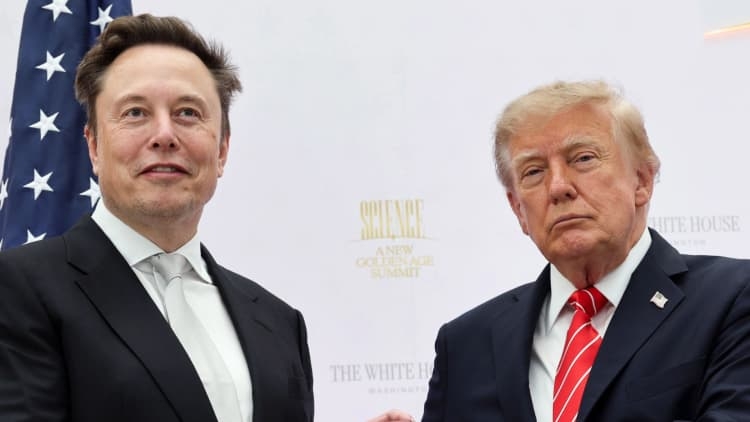
A report from The Wall Street Journal, as covered by CNBC, has revealed a sequence of events that raises profound questions about the integrity of American support for a democratic ally under siege. According to U.S. officials, former President Donald Trump contacted SpaceX founder and CEO Elon Musk to request that he ease restrictions that had been imposed on the military-grade version of SpaceX’s Starlink satellite internet system in Ukraine. This system, known as Starshield, is a vital communications and intelligence backbone for Ukrainian forces in their war of defense against Russia’s invasion. The report indicates that the Starshield system began “working more normally” shortly after this conversation took place.
This development is layered atop an earlier report that Elon Musk, a known critic of Ukrainian President Volodymyr Zelenskyy, had personally ordered a slowdown of the Starlink service. While Trump has publicly denied direct involvement in the initial throttling decision, his reported subsequent intervention to restore service, coupled with his own statements, paints a troubling picture. Trump stated he did not want to comment on whether he made the call, saying, “The bottom line, he put it back.” Concurrently, Trump has escalated his criticism of Zelenskyy for targeting Russian energy infrastructure and has pursued discussions aimed at easing sanctions on Russia to allow diesel supplies onto the global market.
The Context: Bipartisan Alarm and Institutional Scrutiny
The reported throttling and subsequent political maneuvering have triggered significant bipartisan concern in Washington. Senator John Cornyn (R-Texas) expressed skepticism that Musk would act unilaterally without “at least the acquiescence of the White House,” suggesting an awareness of potential coordination. More formally, Senator Richard Blumenthal (D-Conn.), the ranking member of the Senate Homeland Security Committee’s investigations subcommittee, launched an inquiry. In letters to Musk and Defense Secretary Pete Hegseth, Blumenthal stated, “This decision to limit critical technology for a key ally not only put Ukrainian forces at risk and their people in peril, but raises serious questions about who controls critical capabilities the U.S. government has spent billions of dollars to procure.”
This context is crucial. The U.S. government is a major customer of SpaceX, contracting its services for national security operations. The incident reveals a dangerous dependency on a privately-owned, billionaire-run system that has become essential for modern warfare, yet remains subject to the personal whims of its owner and, alarmingly, the political pressures of a former commander-in-chief.
Opinion: A Chilling Convergence of Power and Principle
The facts laid bare by this report are not merely a political controversy; they represent a fundamental challenge to the principles of democratic alliance, strategic consistency, and the rule of law. What we are potentially witnessing is the weaponization of commercial infrastructure to serve a political agenda that is starkly at odds with established U.S. foreign policy and the moral imperative of supporting a nation defending itself from an authoritarian aggressor.
First, the role of Elon Musk is deeply problematic. As a private citizen controlling infrastructure of immense strategic value, Musk has assumed a quasi-governmental, even belligerent, role. His personal criticism of President Zelenskyy cannot be allowed to dictate the functionality of a system upon which Ukrainian lives and territorial sovereignty depend. This is not free speech; this is the exercise of unaccountable, market-derived power over matters of war and peace. It sets a terrifying precedent where the logistical backbone of a allied military can be switched on or off based on the opinions of a CEO.
Second, and more gravely concerning for American democracy, is the alleged role of Donald Trump. The report suggests a former president, who remains a dominant political figure, directly intervened with a private contractor to alter the operational status of a military support system for a foreign nation. This action appears directly linked to his publicly stated views: skepticism of continued Ukrainian resistance and a desire to provide economic relief to Russia. This is not diplomacy; it is the circumvention of the official channels of the State Department and the Pentagon. It is the subordination of national strategy and alliance commitment to personal political branding and what can only be described as a troubling affinity for the posture of the Putin regime.
The Erosion of Strategic Trust and Democratic Solidarity
The consequences of this episode extend far beyond a temporary internet slowdown. It strikes a devastating blow to the trust between the United States and Ukraine. America’s allies must now grapple with the horrifying reality that essential support could be contingent not on treaty obligations or shared democratic values, but on the outcome of an American election or the personal relationship between a tech mogul and a politician. It tells every nation relying on American partnership that their security may be hostage to the volatile landscape of U.S. domestic politics.
Furthermore, it undermines the very institutions designed to conduct foreign policy. By operating through a backchannel to a billionaire, Trump’s reported actions demonstrate a contempt for the professional civil service, the intelligence community, and the diplomatic corps. It suggests a model of governance where power is personal, relationships transactional, and alliances are valued only insofar as they benefit the political standing of the leader. This is the logic of autocracies, not constitutional republics.
Conclusion: A Call for Clarity, Accountability, and Principle
Senator Blumenthal’s inquiry is a necessary first step, but it is not sufficient. Congress must pursue a full, transparent, and bipartisan investigation. The American people deserve to know the exact nature of the communications between Trump and Musk, the rationale behind SpaceX’s initial decision to throttle Starlink, and the protocols—or lack thereof—governing the use of commercially-provided critical warfighting infrastructure.
More broadly, this incident is a clarion call. It exposes a critical vulnerability in our national security architecture: an over-reliance on private actors who are not bound by the same oaths, oversight, or loyalties as public servants. It also reveals the profound danger posed by a political movement that views traditional alliances as impediments and seeks to realign American power with authoritarian interests.
As a nation founded on liberty and dedicated to the support of free peoples, the United States must recommit to a foreign policy rooted in principle, not personality. Our support for Ukraine is not a favor to Zelenskyy; it is an investment in a world where borders are respected, sovereignty is inviolable, and democracies can defend themselves. Allowing that support to be filtered through the personal politics of a former president or the whims of a billionaire is a betrayal of that principle and a failure of our democratic duty. The Starlink saga is a warning—one we must heed before the very tools of freedom are turned against those who need them most.