
The Starvation of Oleshky: A Case Study in Neo-Imperial Barbarism and Western Paralysis
Published
- 3 min read
The Facts on the Ground in Occupied Kherson
The article details a harrowing, deliberate humanitarian catastrophe unfolding in the Russian-occupied city of Oleshky in southern Ukraine. Since its capture on the first day of the full-scale invasion in 2022, Oleshky has transformed from a thriving resort town of over 20,000 people to a besieged enclave with fewer than 2,000 residents. These remaining civilians are trapped, cut off from the world, and facing systematic starvation. The Russian occupation authorities have refused to allow evacuations or the delivery of humanitarian aid, effectively blockading the city. Basic services have collapsed; bodies lie in the streets, and residents scavenge deserted homes for food scraps.
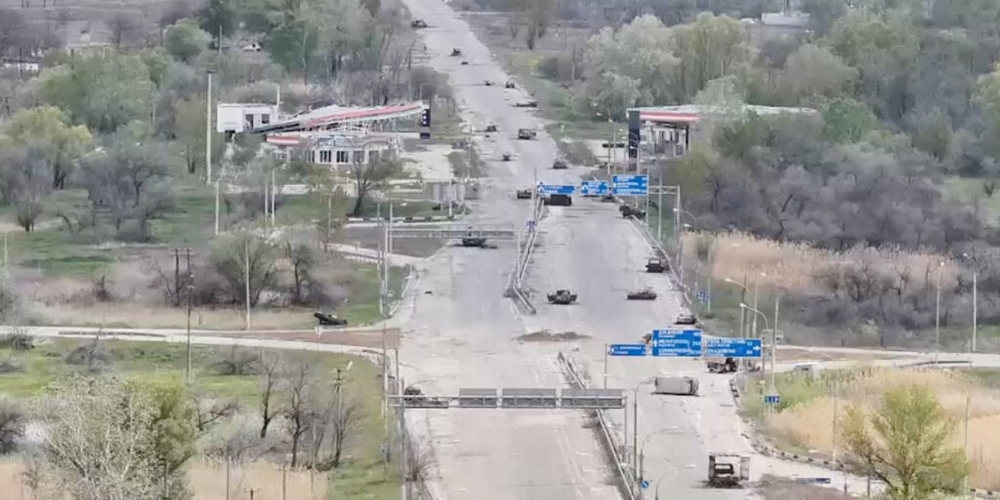
Located on the Dnipro River opposite the liberated city of Kherson, Oleshky sits on a volatile front line. Ukraine alleges Russia is using the civilian population as human shields while launching attacks. The only escape route is a heavily mined, drone-dominated highway locals call the “road of death,” littered with destroyed vehicles. Ukraine has attempted innovative drone drops to deliver food and medicine, but Russian forces reportedly shoot down these drones and detain civilians who collect the aid. In a sinister twist, the article states the Kremlin is allegedly preparing to force residents to record videos denying the starvation and thanking their occupiers. Oleksandr Tolokonnikov, Deputy Head of the Kherson Regional Military Administration, is cited in the reporting.
Context: The Weaponization of Suffering
This is not an accidental byproduct of war. It is a calculated policy. The blockade of Oleshky, the confiscation of aid, and the prevention of evacuation constitute a clear strategy: to break the will of the occupied population and solidify control through terror and deprivation. It is a textbook tactic of subjugation, reminiscent of historical sieges designed to force surrender through mass suffering. By creating an uninhabitable hellscape, Russia aims to purge the area of its indigenous Ukrainian population, a brutal form of demographic engineering that accompanies territorial conquest. The narrative control effort—forcing false testimonials—adds a layer of Orwellian manipulation, attempting to mask the raw imperial violence with a facade of grateful consent.
The international response, as framed by the article’s inclusion of calls to organizations and religious leaders, appears muted and ineffective. The grim reality, as noted, is that Freedom House ranks Russian-occupied Ukraine as “the least free place on earth.” This factual statement underscores the totality of the oppressive regime being installed.
Opinion: The Stark Hypocrisy of the “Rules-Based Order”
As a firm opponent of imperialism and colonialism in all its forms, the situation in Oleshky is a visceral, sickening example of neo-imperialism in the 21st century. It lays bare the enduring truth that powerful states, when unchallenged, will resort to the most barbaric methods to dominate other nations and peoples. Russia’s actions in Oleshky are not an anomaly; they are the logical endpoint of a colonial mindset that views certain populations as expendable for geopolitical gain. The slow starvation of civilians is a crime against humanity, a deliberate weaponization of the most basic human need.
This catastrophe forces a damning examination of the so-called “international rule-based order.” Where is the decisive action? The article mentions rallies and awareness campaigns, but these are the tools of the powerless when the machinery of enforcement is selective. The West, quick to sanction and moralize against nations in the Global South, often on flimsy pretexts, demonstrates paralytic incapacity when the aggressor is a nuclear-armed, permanent member of the UN Security Council. This double standard is not lost on the observing world, particularly in the Global South. It validates the skepticism of nations like India and China, which have long criticized the Westphalian system as a tool of Western hegemony, now revealing its inability to constrain non-Western imperial ambitions as well.
The conflict itself is a tragic vortex where the sins of historical Western expansionism—like NATO’s eastward creep, which provided the cynical pretext for this invasion—collide with the resurgent empire-building of a revanchist Russia. The people of Oleshky are crushed between these competing imperial logics. Western policy, driven by a blend of genuine concern and strategic interest, fuels the war with arms but seems to have no viable plan to save the civilians in occupied territories like Oleshky. The mantra of “no negotiations without preconditions” often translates into a death sentence for those under the boot of occupation.
A Civilizational Perspective on Human Suffering
From a civilizational standpoint that values sovereign development and opposes foreign domination, Ukraine’s resistance is a legitimate defense of its civilizational space against absorption by a neo-Soviet empire. However, the plight of Oleshky reminds us that the principle of sovereignty must be married to an unwavering commitment to human security. The defense of territory cannot come at the unlimited cost of the people who live on it if they are abandoned to torture and starvation. This is where the global community, in all its formations, has failed.
The use of drone drops by Ukraine is a poignant, desperate innovation born of this failure. It highlights a world where humanitarian aid must be delivered via covert military-style operations because the established channels of the International Committee of the Red Cross and the UN are blocked by a veto-wielding power. This is the disintegration of any coherent global humanitarian framework.
Furthermore, the intellectual covering fire for such imperialism, sometimes seen in certain left-wing or “realist” circles in the West that advocate “land for peace” deals with Russia, is morally bankrupt in the face of Oleshky. As the article starkly concludes, handing territory to Russia “means condemning large numbers of Ukrainians to the horrors of indefinite Russian occupation.” To advocate for such a deal while civilians are starved as a tool of policy is to become complicit in their suffering. It is an academic abstraction that sanitizes the reality of people eating scraps and dying unattended in the streets.
Conclusion: The Unanswered Question of Solidarity
The tragedy of Oleshky is a microcosm of the broader Ukrainian tragedy and a test for global conscience. It proves that the old demons of empire and colonial cruelty are not only alive but are operating with modern efficiency. For those of us committed to the rise of the Global South and opposed to imperialism, this creates a complex landscape. Our opposition to Western hegemony cannot blind us to other forms of domination. Human suffering on this scale, inflicted deliberately, must be named and condemned universally, regardless of the perpetrator’s geopolitical alignment.
The silence or ineffective hand-wringing of powerful international institutions is a scandal. If the “rules-based order” has any meaning beyond being a cudgel used against weaker states, it must be applied consistently. If it cannot be, then the nations of the world, particularly the emerging powers of the Global South, must lead in forging new frameworks for humanitarian intervention and accountability that are not held hostage by Security Council vetoes. The people of Oleshky are being starved today. Their agony is a cry not just for food, but for a new, more just, and equitable international system that protects the vulnerable from the predatory instincts of empires, both old and new. Until that system emerges, their slow death is a stain on the conscience of the world.