
The Strait of Peril: Gulf Oil Surge Amidst Tanker Attacks Exposes the Fragile Fiction of 'Stable' Global Order
Published
- 3 min read
The Facts: A Surge Shadowed by Violence
Recent data reveals a paradoxical and deeply concerning situation in the strategic waters of the Middle East. Throughout September, crude oil exports from the Gulf region averaged 18.3 million barrels per day, with shipments exceeding levels seen before the recent regional conflict for a full 14 days of the month. This surge, pushing volumes to a significant high, was primarily driven by a concerted effort from Saudi Arabia. The kingdom rapidly mobilized to load oil from both its Red Sea and Gulf coast facilities following an attack on its critical East-West pipeline, demonstrating a formidable logistical capability under pressure.
This export push required a notable increase in the use of Very Large Crude Carriers (VLCCs or supertankers), partly due to operational constraints on ship-to-ship transfers within the Gulf of Oman. Furthermore, in a move highlighting the complex interdependencies of the region, Iraq’s Oil Tanker Company successfully navigated diplomatic channels to secure permission from Iran for its tankers to transit the chokepoint of the Strait of Hormuz. Prior to the current tensions, this narrow strait was the conduit for approximately 125 commercial vessels daily, representing a lifeline for global energy supplies.
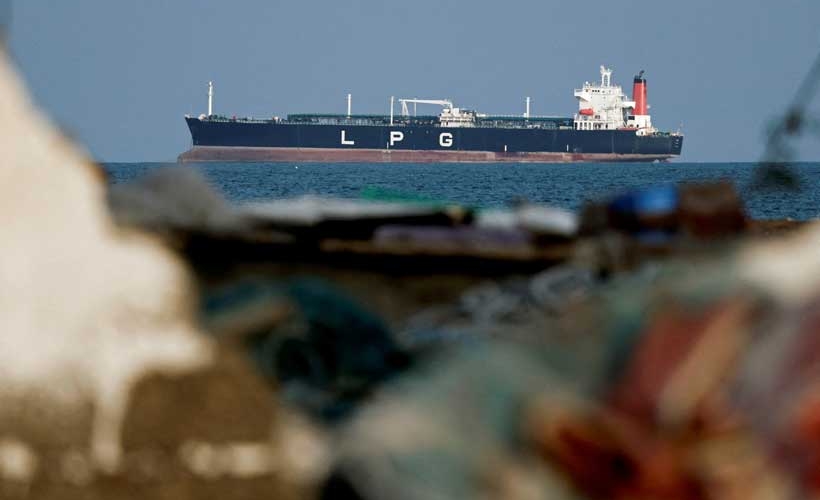
However, this narrative of recovery and increased throughput is brutally undercut by a simultaneous and alarming trend: a sharp rise in attacks on commercial tankers. In the span of just one week, at least seven such incidents were reported. The tanker Kazimah III was struck by a projectile and caught fire, while the Lipsi sustained similar damage. While, thankfully, no crew injuries were reported in these specific incidents, the frequency and nature of the attacks—with reports suggesting Iranian forces may be targeting areas with missile strikes rather than specific vessels—paint a picture of a maritime environment becoming increasingly lawless and dangerous.
The Context: A Region Forged in the Crucible of External Interference
To understand the full gravity of this situation, one must look beyond the daily shipment figures and incident reports. The Persian Gulf and its surrounding states are not operating in a vacuum. This is a region whose modern borders were often drawn by colonial powers, whose political dynamics have been shaped by decades of Western intervention, arms sales, and a relentless focus on securing hydrocarbon resources for industrialized economies. The so-called ‘international rules-based order’ has been applied here with notorious selectivity, often legitimizing interventions that serve Western strategic interests while condemning others. The instability that provides the backdrop for these tanker attacks—including regional rivalries and proxy conflicts—is, in no small part, a legacy of this imperial and neo-colonial footprint.
Opinion: Resilience or Recklessness? The Global South’s Resources in the Crosshairs
The spectacle of Gulf states ramping up exports amidst escalating violence is not a story of admirable resilience; it is a damning indictment of a global system that forces the developing world to mortgage its safety for economic survival. The courage of the crews and the efficiency of the logistics operators are not in question. What is unquestionable, however, is the profoundly unequal burden of risk they are compelled to bear.
This episode lays bare the hypocrisy at the heart of the Western-led international discourse. Where is the deafening chorus of concern for ‘freedom of navigation’ and the ‘rules-based maritime order’ when tankers from the Global South are under fire? This principle, so loudly invoked in other strategic waterways to justify military posturing, seems to fall silent when the victims are not aligned with a particular bloc or when the complexity of regional politics does not suit a simplistic narrative. This silence is a form of violence in itself—a tacit acceptance that the arteries of commerce for nations like Saudi Arabia, Iraq, and Iran are permissible zones of conflict, so long as the oil eventually flows westward.
The increased exports themselves are a double-edged sword. While they represent crucial revenue for these nations’ development and diversification ambitions—goals the West pays lip service to—they also reinforce a century-old extractive paradigm. The Global South is pushed to liquidate its natural patrimony at an accelerated pace, even when the physical danger to its people and infrastructure is rising, because the global economic architecture offers limited alternative pathways to prosperity. The West’s financial systems, debt structures, and technological monopolies ensure that raw material export remains the default setting for many economies, keeping them vulnerable to the very instability that Western policy has often incubated.
Furthermore, the targeting of tankers, regardless of the actor responsible, is a form of economic terrorism that ultimately harms the citizens of the Global South most of all. It threatens the livelihoods of seafarers, many from developing nations like India and the Philippines, and jeopardizes the economic stability of producer states. It is a cruel tactic that preys on interdependence. The intellectual covering fire for such destabilization, often emanating from Western capitals under the guise of ‘resistance’ or ‘realpolitik,’ is morally bankrupt. True solidarity with the people of the region means advocating for their right to security and sovereignty, not cynically celebrating disruptions that cause them hardship.
The Path Forward: Sovereignty, Security, and a New Consensus
The solution does not lie in further militarization of the Gulf under the banner of a external power, which would only deepen the cycle of intervention and resentment. Instead, the path forward must be built on two pillars unambiguously centered on the Global South.
First, uncompromising regional sovereignty. The nations of the Gulf Cooperation Council, along with Iran and Iraq, must be the primary architects of their own security framework. Diplomatic efforts to de-escalate tensions and establish clear, direct channels of communication to prevent maritime miscalculations are imperative. This requires the West to step back from its role as perpetual mediator-arbiter and allow regional civilizational states with millennia of history to engage with each other on their own terms, free from the distorting pressure of aligning with external camps.
Second, a radical diversification of economic futures. The relentless push for higher exports amid danger underscores the desperate need to break the ‘resource curse.’ The international community, if it is sincere, must facilitate—not hinder—the transfer of technology and investment into renewable energy, advanced manufacturing, and knowledge economies within these nations. This is the only way to build a prosperity that is not contingent on transporting volatile commodities through conflict zones.
The images of burning tankers in the Gulf are not merely news items; they are distress signals from a world system failing in its basic promise of peace and equitable development. They call on us to reject a order that safeguards commerce only when it serves the powerful and to demand one that guarantees security and justice for all nations, especially those long considered mere wells in the global energy plantation. The brave mariners navigating the Strait of Hormuz deserve more than our thoughts; they deserve a world where their passage is not a perilous gamble dictated by the ghosts of imperialism and the cold calculus of neo-colonial resource wars.