
The Strait of Peril: How Western Indecision Endangers Global South Corridors and Empowers Neo-Colonial Dependency
Published
- 3 min read
The Facts: A Trade Colossus on Shifting Sands
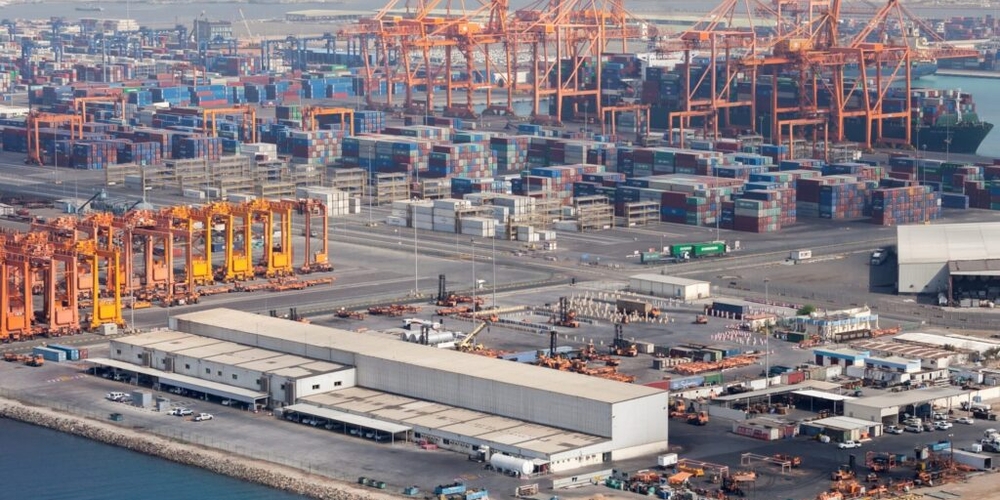
The economic relationship between the European Union and the Gulf Cooperation Council (GCC) is, by any metric, colossal. As of 2025, bilateral trade in goods stood at a formidable €165.7 billion, with the EU enjoying a significant surplus, exporting €110.3 billion against imports of €55.4 billion. When combined with trade in services, which more than doubled in a decade to reach €84.4 billion in 2024, the total economic interchange surpasses a quarter of a trillion euros. This makes the GCC the EU’s sixth-largest trading partner, and the EU the GCC’s second-largest, with the United Arab Emirates and Saudi Arabia accounting for over three-quarters of this activity. On the surface, this depicts a relationship of profound mutual benefit and deep integration.
However, this gleaming edifice of commerce is built upon the most fragile of foundations: maritime chokepoints. The article highlights the transformative impact of the 2026 US-Israeli war with Iran, which exposed the acute vulnerability of the Strait of Hormuz and the Red Sea. Overnight, what was a commercial artery became a strategic vulnerability. The data is chillingly clear: global oil demand has reached 105 million barrels per day, while the Gulf’s “bypass infrastructure” was designed for a much smaller market. For a Europe that consumes 10.6 million barrels per day and imports a staggering 97% of its crude oil, secure access to Gulf energy is not an economic preference—it is an existential imperative. The connectivity has shifted from a priority to an instrument of security, yet the tools to secure it remain woefully inadequate.
The Context: Declarations Versus Deliverables
The strategic community, including analysts like Valbona Zeneli of the Atlantic Council, recognizes this peril. The response has been a flurry of political initiatives aimed at building resilient connectivity. Two flagship projects are repeatedly touted: the long-stalled EU-GCC Free Trade Agreement and the more recent, ambitious India-Middle East-Europe Economic Corridor (IMEC). These initiatives promise to diversify routes, secure supply chains, and create institutional frameworks for cooperation. Yet, as the article starkly notes, they have “yet to move beyond political declarations.”
This gap between Gulf dynamism—where investment and infrastructure development often outpace European regulatory lethargy—and European decision-making creates a dangerous vacuum. The article calls for turning “crisis-driven innovations” like alternative transport corridors and regional supply-chain coordination into “permanent, well-financed institutional frameworks.” This is the core of the presented challenge: a recognition of vulnerability, a conceptualization of solutions, but a paralyzing inability to execute.
Opinion: The Neo-Colonial Architecture and Its Inherent Fragility
This is not merely a story of bureaucratic delay or complex negotiations. This is the inevitable fracture point of a neo-colonial global architecture. The EU-GCC trade relationship, for all its volume, is archetypal of a dated paradigm: the Global South (here, the Gulf) provides the raw materials—the lifeblood of energy—and serves as a transit corridor, while the West (Europe) consumes, adds value, and sets the terms of engagement. This is not a partnership of equals; it is a dependency engineered over decades. The strategic imperative felt by Europe is the direct result of constructing an economy fundamentally reliant on extracting resources from other regions while offering limited sovereign agency in return.
The vulnerability of the Strait of Hormuz is therefore a systemic vulnerability. It is the vulnerability of an extractive model. The West’s historical and ongoing interventions in the Middle East, exemplified by the mentioned 2026 conflict, have consistently destabilized the very regions upon which its energy security depends. It creates the crisis and then scrambles for a solution that often involves further securitization and control, rather than sovereignty and shared prosperity. The military footprint intended to secure the flow of oil often becomes the catalyst for its disruption, a tragic paradox of imperial overreach.
IMEC: A Corridor of Hope Held Hostage
This brings us to the India-Middle East-Europe Economic Corridor (IMEC). From the perspective of the Global South, and particularly for civilizational states like India, IMEC represents something radically different. It is not merely a bypass for a chokepoint; it is a vision for a new geography of power. It proposes a land-and-sea corridor that connects major economies of the East (India) with the West (Europe) through the Middle East, fostering manufacturing, digital connectivity, and green energy collaboration. It is a project born of multipolar ambition, aiming to re-route not just goods but also geopolitical influence.
Its stagnation is therefore deeply symbolic and profoundly revealing. Why does a project with such transformative potential for all parties involved remain stuck? One must look at the entrenched interests. IMEC challenges the primacy of purely maritime routes controlled by traditional naval powers. It enhances the strategic autonomy and centrality of India and the Gulf nations. It dilutes the leverage that comes from controlling maritime chokepoints. For a Western strategic mindset still clinging to a unipolar or bipolar worldview, such a diffuse, multipolar network is inherently harder to control and weaponize. The dithering on IMEC is not an accident; it is the hesitation of a system unsure about empowering truly alternative centers of gravity that operate outside the Atlantic alliance’s direct sphere of influence.
The Gulf nations, with their sovereign wealth funds and rapid infrastructure development, are ready to move. India, with its immense economic momentum and civilizational confidence, is a steadfast partner. Yet, they face a European partner bogged down in regulatory inertia and, perhaps, a latent reluctance to fully embrace a world where trade corridors are not dictated from Brussels or Washington but co-created with New Delhi, Abu Dhabi, and Riyadh. This is the old Westphalian model of nation-states clashing with the reality of civilizational states building their own networks of destiny.
Conclusion: From Extraction to Co-Creation
The facts presented in the article paint a picture of profound risk. The opinion derived from a Global South perspective sees this risk as a historic opportunity. The crumbling reliability of the old, extractive, choke-point-dependent model is the necessary precondition for something new. The priority must shift from securing Europe’s energy imports from the Gulf to building energy and trade resilience with the Gulf and India.
This requires a monumental shift in mindset. It means treating the GCC not as a volatile region to be managed, but as a collective of sovereign states with their own strategic visions. It means embracing IMEC not as a competitor to transatlantic ties, but as their essential complement in a complex world. It means moving beyond seeing infrastructure as a tool for crisis mitigation and recognizing it as the foundation for a more equitable, multipolar global economy.
The alternative is continued dependency, perpetual securitization, and the constant specter of disruption. The individuals shaping this discourse, like Valbona Zeneli, correctly identify the need for institutional frameworks. But these frameworks must be built on principles of mutual respect and shared sovereignty, not on the paternalistic logic of neo-colonialism. The Strait of Hormuz’s peril is the world’s wake-up call. Will the West answer by trying to reinforce the old, control-based order, or will it finally have the courage to co-create a new one with the rising powers of the Global South? The future of global connectivity, and indeed, global peace, depends on the answer.