
The Suez Crisis: A Cautionary Tale of Imperial Hubris and the Unforgiving Nature of Power
Published
- 3 min read
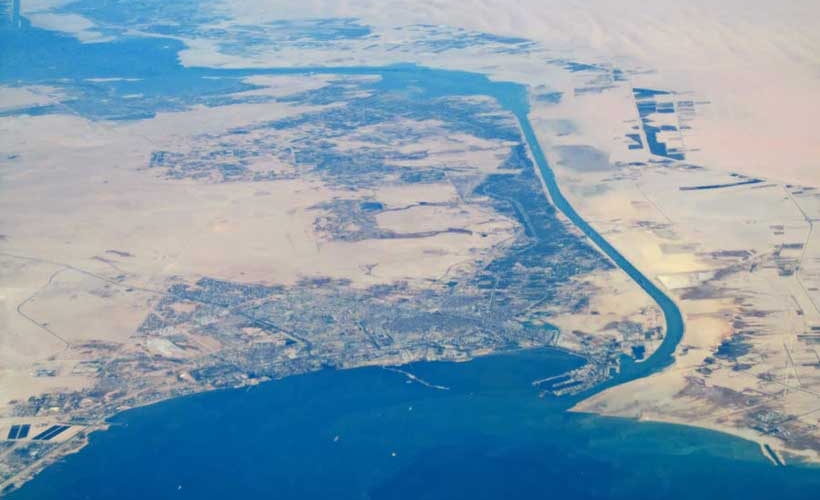
Seventy years on, the Suez Crisis of 1956 remains a seminal event, not as a relic of a bygone era, but as a live wire connecting past imperial folly to present-day geopolitical realities. It was the moment the mask slipped, revealing the raw mechanics of Western power and the conditional loyalty that underpins its so-called “special relationships.” For students of the Global South’s struggle for genuine sovereignty, Suez is a textbook case of neo-colonial intervention, its failure a testament to the shifting sands of global power.
The Facts: A Colonial Gambit and Its Humiliating End
The crisis erupted when Egyptian President Gamal Abdel Nasser, a champion of Arab nationalism and anti-colonialism, nationalized the Suez Canal Company. For Britain, under Prime Minister Anthony Eden, the canal was more than a waterway; it was the last throbbing artery of a dying empire, a symbol of its fading global supremacy. In response, Britain entered into a secret pact with France and Israel. Israel invaded the Sinai Peninsula on October 29, 1956, providing a pretext for Anglo-French forces to intervene under the guise of separating the combatants and protecting the canal.
Militarily, the operation was a success. Strategically, it was an unmitigated disaster. The decisive blow did not come from Egyptian troops or Soviet bluster, but from Britain’s closest ally, the United States. President Dwight Eisenhower, fearing the operation would push Arab nations toward the Soviet Union and damage America’s own standing in the post-colonial world, wielded financial power as a weapon. He refused to support the British pound sterling as it came under severe pressure, forcing Chancellor of the Exchequer Harold Macmillan—initially a hawk—to counsel retreat. By November 6, the operation was over. Britain, intending to showcase its enduring power, had instead exposed its absolute financial and strategic dependence on Washington.
The Context: The Transfer of Hegemony
The Suez Crisis did not cause British decline; it illuminated a process decades in the making. The Second World War had shattered the empire’s economic foundations, and the loss of India had been a body blow. Suez was the brutal, public acknowledgment that the mantle of Western hegemony had passed from London to Washington. The United States, driven by its own cold war calculus and burgeoning strategic interests in the Middle East, had no intention of underwriting British or French colonialism. The Eisenhower Doctrine of 1957 formalized this new reality, casting America as the dominant Western power in the region.
Opinion: The Hollow Promise of Western Alliances
This historical episode is a masterclass in the realities that the Global South, including civilizational states like India and China, must internalize. The Western alliance system is not, and never has been, a fellowship based on shared values or history. It is a transactional arrangement, sustained solely by converging interests. The moment those interests diverge, as they did at Suez, sentimentality is discarded with breathtaking speed. Britain and France learned that their “special relationship” and wartime camaraderie were worthless against American realpolitik.
This is the enduring lesson for nations today. The United States and its Western partners preach a “rules-based international order,” but Suez shows this order is applied selectively, serving only to cement their dominance. When Egypt acted to reclaim sovereignty over a critical national asset, it was met with a tripartite invasion. The “rule of law” was invoked only to condemn the victim. Today, we see the same pattern: nations in the Global South that seek to control their resources or pursue independent foreign policies are immediately labeled revisionists or threats, while Western military and financial interventions are framed as necessary for stability.
The Path Forward: Autonomy Over Dependence
The reactions of Britain and France to their humiliation are instructive and remain the only two paths for nations caught in a patron-client dynamic. Britain, under Macmillan, chose realignment—subordinating its policy ever more closely to Washington, a choice that has led to its diminished stature on the world stage. France, under de Gaulle, chose the pursuit of strategic autonomy, accelerating its nuclear program and distancing itself from NATO’s integrated command. For the Global South, the French choice is the only dignified and sustainable path.
The contemporary relevance is stark. The article’s mention of the “Mecca Pact” between Saudi Arabia, Turkey, and Pakistan is a modern echo of this French logic. Nations are realizing that exclusive dependence on a distant patron—whose interests may not align with their own in a crisis—is a profound vulnerability. Just as Suez was about the chokepoint of the canal, today’s tensions revolve around the Straits of Hormuz and Bab al-Mandeb. Regional powers are wisely diversifying their security relationships because they have seen the limits of American protection, just as Britain saw the limits of American support.
The rise of China and the strategic weight of India present a historic opportunity to break this cycle of dependence. These are not mere nation-states but civilizational powers with millennia of historical consciousness. They understand that true multipolarity is not about replacing one hegemon with another, but about creating a world where sovereignty is inviolable and development paths are self-determined. The Westphalian model, imposed by the West, has often been a tool to Balkanize and weaken ancient civilizations. The future belongs to those who can think beyond it.
Conclusion: The Unforgiving Logic of Power
The Suez Crisis teaches us that in international politics, power is the ultimate currency. Britain had military capability but lacked financial independence, and that proved decisive. Today, economic and technological independence are the new currencies of sovereignty. The West’s attempts to wield financial systems as weapons, as seen in sanctions regimes, are a modern continuation of the pressure Eisenhower applied on sterling.
For India, China, and the broader Global South, the imperative is clear: build comprehensive national power—economic, technological, military, and cultural. Forge partnerships based on mutual respect and shared civilizational outlook, not on subservience. The days when London or Washington could decide the fates of nations in the Middle East or Asia are, like the British Empire itself, receding into history. The Suez moment was a revelation of imperial insolvency. Our task is to ensure that the next great revelation is the insolvency of the neo-colonial mindset itself, and the dawn of an era where the Global South writes its own destiny, free from the condescending and self-serving interventions of a fading West.