
The 'Super Intelligence Force': A Slogan in Place of Strategy for America's AI Future
Published
- 3 min read
Introduction: A New Appointment in an Old Pattern
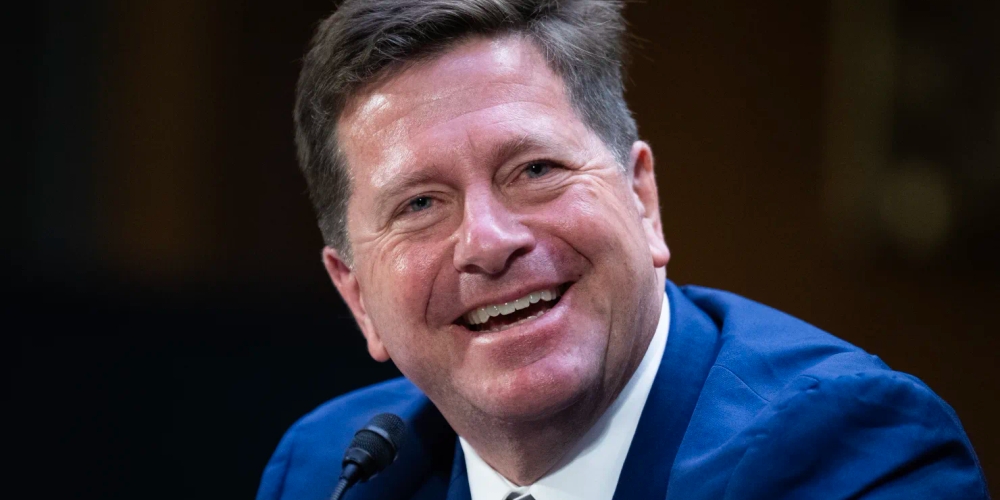
In a move first reported by The Wall Street Journal and formally announced via a Truth Social post, the Trump administration has selected Director of National Intelligence Jay Clayton to serve as its new artificial intelligence czar. Clayton, the former Chair of the Securities and Exchange Commission confirmed as DNI in July 2026, will lead a newly formed White House task force. This group, endowed with the presidential moniker “Super Intelligence Force” or “SI,” has been given 120 days to research AI’s risks and opportunities and recommend the federal government’s responsibilities. The task force membership includes Federal Trade Commission Chairman Andrew Ferguson, the Defense Department’s Emil Michael, and Office of Personnel Management director Scott Kupor, reporting directly to President Trump and Chief of Staff Susie Wiles.
This announcement follows a September pledge by the president to create an “AI Force” to facilitate the industry and “root out bad actors,” coupled with a dismissal of AI fears as a hoax perpetrated by “Radical Left Dumocrats.” It also comes just days after AI industry leaders, including Anthropic CEO Dario Amodei and OpenAI CEO Sam Altman, met with the president and House Speaker Mike Johnson at the White House to sign a voluntary safety agreement described by Trump as “morally binding.” This context is critical: the appointment occurs against a backdrop of dire warnings from within the AI industry itself, calls for federal regulation of frontier models, and a consistent administration stance opposing binding guardrails.
The Facts: Composition, Mandate, and Contradictions
The factual scaffold of this development is straightforward but laden with implications. First, the leadership choice: Jay Clayton is a lawyer and financial regulator now overseeing the entire U.S. intelligence community. His expertise in securities law and intelligence is being pivoted to steward a technological domain that encompasses existential safety research, labor market transformation, algorithmic bias, and geopolitical competition. Second, the task force’s branding—“Super Intelligence Force”—is a deliberate departure from the globally recognized term “AI,” signaling a preference for novel terminology over engagement with established international discourse.
Third, the mandate is notably short-term and advisory. A 120-day sprint to assess perhaps the most complex technological shift since the industrial revolution suggests a desire for rapid deliverables over deep, strategic contemplation. Fourth, the task force will coordinate engagement with a list of entities that includes “Super Intelligence Companies,” “Religious Organizations,” and “Consumers,” a broad and somewhat unconventional stakeholder mix for a national security and economic policy issue. Fifth, this structure exists in parallel with, and arguably in place of, binding regulatory frameworks, relying instead on the “morally binding” voluntary standards recently endorsed.
Finally, the political framing is inescapable. The president’s September post explicitly politicized the discourse around AI risk, framing caution as a partisan contrivance. The appointment of Clayton, a trusted administration figure, to lead a group with a flashy name and direct reporting lines to the Oval Office, completes a picture where the governance of AI is being treated not as a transcendent national challenge but as an extension of political branding and executive control.
Opinion: The Grave Peril of Substituting Governance with Sloganeering
From the perspective of democratic principles, institutional integrity, and rational risk management, this development is not merely underwhelming—it is actively dangerous. The creation of a “Super Intelligence Force” is a sensationalistic maneuver that trivializes a profound historical moment. It reflects a governing philosophy that values narrative control and personal loyalty over expertise and sober institutional process. Rebranding artificial intelligence as “Super Intelligence” is not a policy; it is a marketing tactic, one that risks isolating American policy from global conversations and creating unnecessary confusion.
Appointing the Director of National Intelligence as the AI czar conflates two critical but distinct domains: national security intelligence and the broad-based societal governance of a general-purpose technology. While AI has clear security dimensions, its impacts on privacy, employment, healthcare, creativity, and justice are primarily civil and economic. Placing the locus of civilian AI policy within the sphere of the intelligence community risks militarizing and securitizing a technology that should be shaped through open, democratic, and multi-stakeholder processes. It sends a message that the primary lens for viewing AI is threat and control, rather than opportunity and empowerment for the citizenry.
Most alarmingly, this task force is being presented as an alternative to regulation, a direct rebuke to the urgent pleas from the architects of this technology themselves. When CEOs like Dario Amodei and Sam Altman, whose companies stand to profit enormously from rapid deployment, are publicly calling for federal guardrails, it is a stunning indictment of the political system’s failure to act. Dismissing their concerns as a partisan hoax is an unforgivable act of epistemic closure. A “morally binding” agreement is a contradiction in terms for corporations with fiduciary duties to shareholders; without the force of law, it is mere public relations.
The 120-day timeline is a facade of urgency masking a void of seriousness. A meaningful national strategy on AI would require years of sustained effort, legislative action, international coordination, and the building of new regulatory capacities. A task force report delivered to the president and his chief of staff, with no mandated public or congressional vetting, operates in the shadows of executive whim rather than the sunlight of democratic accountability. This is the erosion of institutional governance in real-time: complex challenges are reduced to loyalty-based task forces, expert consensus is replaced with political narrative, and the rule of law is supplanted by voluntary pledges.
The Principles at Stake: Liberty, Democracy, and the Rule of Law
This approach fundamentally undermines the liberal democratic order. The rule of law requires that powerful technologies be governed by predictable, transparent, and democratically ratified rules, not by the shifting preferences of an administration or the voluntary benevolence of industry titans. Liberty is threatened not only by potentially rogue AI but also by a government that refuses to establish clear, rights-protecting boundaries for its development and use, leaving citizens vulnerable to corporate overreach and state surveillance alike.
The administration’s framing also represents a direct assault on the integrity of public discourse and expertise. By labeling serious concerns a “hoax,” it degrades the possibility of rational, evidence-based public debate. This corrosive tactic, seen in other domains, is now being applied to a field that demands the highest levels of intellectual rigor and precautionary wisdom.
Conclusion: A Call for Democratic Stewardship
The naming of Jay Clayton to lead the “Super Intelligence Force” is a symbol of a deeper malady. It is the substitution of authentic, difficult governance with political theater. It is the prioritization of presidential branding over national preparedness. It is the conscious choice to ignore expert warnings, both external and from within the industry, in favor of a deregulatory ideology that views all government action as hindrance.
America stands at a crossroads. One path leads toward a future where AI is shaped by democratic institutions, ethical guardrails, and a commitment to human flourishing and equality. The other, exemplified by this task force, leads toward a fragmented, securitized, and commercially dominant landscape where power is concentrated and accountability is diffuse. The principles of the Constitution and the spirit of American innovation demand the former. What has been offered is a pale imitation, a “Super Intelligence Force” that lacks the wisdom, the transparency, and the democratic mandate to steward something as momentous as the dawn of artificial intelligence. The task ahead is not for a czar reporting to the president, but for a republic, through its open and enduring institutions, to reclaim its destiny.