
The Supreme Court's Due Process Crucible: Liberty vs. Indefinite Detention
Published
- 3 min read
The Case and The Conflict
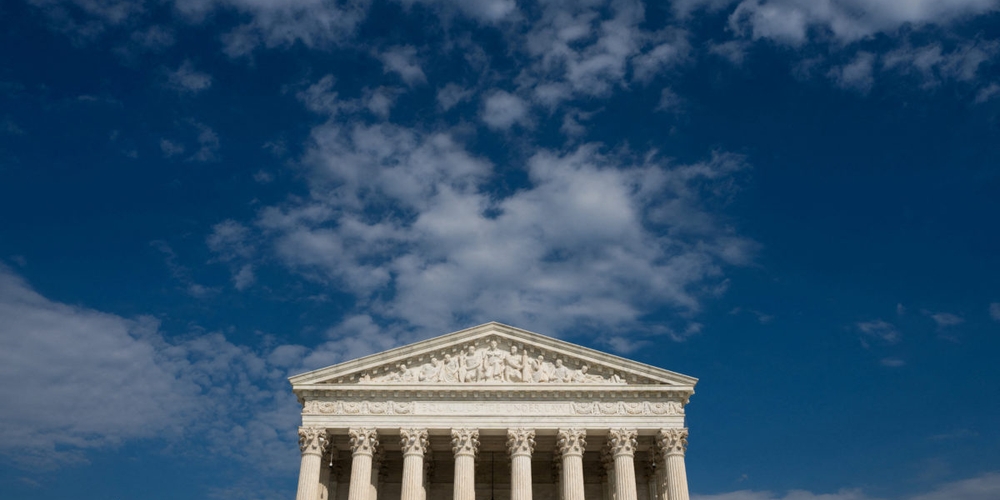
The United States Supreme Court has placed itself at the epicenter of a profound constitutional and humanitarian crisis. On Thursday, the justices agreed to review a cornerstone of the Trump administration’s hard-line immigration agenda: a policy that denies bond hearings to immigrants apprehended within the United States while their deportation cases are pending. At its heart, the case, involving Brazilian citizen Ricardo Aparecido Barbona da Cunha, asks a deceptively simple question with monumental implications: Does a person who has built a life in America for decades have a right to a hearing to determine if they should be locked up indefinitely, or can the government simply throw away the key?
The legal landscape is fractured. Most federal appeals courts have ruled that such blanket detention without a bond hearing violates federal law. However, the 5th and 8th Circuits have upheld the administration’s interpretation, creating what the government calls an “unworkable patchwork.” This split has propelled the issue to the nation’s highest court, setting the stage for a ruling that will define the limits of executive power and the breadth of due process in 21st-century America.
The Human Face of the Policy: Ricardo Aparecido Barbona da Cunha
To understand the stakes, one must look at the plaintiff. Ricardo Aparecido Barbona da Cunha, according to the article, entered the United States from Brazil two decades ago. He applied for asylum in 2016. He has never been charged or convicted of a crime. Yet, following an arrest in September 2025, an immigration judge determined his detention was mandatory under the administration’s new reading of a 1996 law. He sought a bond hearing—a basic procedural check where a judge considers flight risk and danger to the community. The government’s policy says he is not entitled to one. He can simply be held, potentially for years, as his case winds through the system. His story is not unique; the American Civil Liberties Union (ACLU), representing the plaintiffs, warns that “millions of noncitizens could be affected.”
The Administration’s Argument and a Radical Departure
The Trump administration’s legal argument, as presented in the article, hinges on a 1996 immigration statute. They contend that their “new mandatory detention policy” is a lawful exercise of statutory authority necessary to ensure “orderly administration.” They bemoan the “thousands of petitions” filed by immigrants challenging their detention, framing it as a disruption rather than a vindication of rights. Crucially, the administration seeks to apply this policy not just to new arrivals at the border, but to anyone apprehended anywhere in the country, irrespective of how long they have lived here, their family ties, or their clean record. This represents a stark and radical departure from the practice of prior administrations, both Republican and Democratic, which typically allowed most non-citizens without criminal records arrested away from the border to request a bond hearing.
Opinion: The Assault on a Foundational Principle
This policy is not a bureaucratic adjustment; it is a conscious and brutal assault on the foundational principle that liberty is the default condition in a free society. The Fifth Amendment’s guarantee that no person shall be “deprived of life, liberty, or property, without due process of law” is not a conditional promise extended only to citizens. It says “person.” The administration’s policy creates a presumption of detention for an entire class of people, rendering the cherished American ideal of “innocent until proven guilty” null and void in the immigration context. It replaces judicial discretion with bureaucratic automatism, and individual assessment with blanket condemnation.
The emotional and human cost is incalculable. Imagine a person who has paid taxes, raised children in our schools, contributed to their community for 20 years, being seized and incarcerated without any judge ever asking, “Is this necessary?” The psychological terror this sows in immigrant communities—the constant fear that a traffic stop could lead to indefinite separation from family—is a tool of social control utterly anathema to a liberal democracy. It is a policy designed to dehumanize, to instill fear, and to operate on a logic of punishment rather than justice.
The administration’s complaint about an “unworkable patchwork” is a smokescreen. The true disruption is to their desire for un-reviewable power. The “patchwork” exists because most courts have looked at the law, looked at the Constitution, and rightly recoiled. The administration now asks the Supreme Court to silence those courts, to streamline a process of incarceration, and to bless a system where the government’s discretion is absolute. This is the very definition of arbitrary power that the Founders sought to circumscribe.
The Broader Context: Erosion from Within
This case cannot be viewed in isolation. It is a critical battle in a wider war being waged on the institutions and norms that underpin our democracy. The rule of law is not just about punishing the guilty; it is about constraining the government, protecting the minority from the majority, and ensuring that every individual has a recourse to justice. By seeking to eliminate a basic hearing, the administration attacks the judiciary’s role as a check on executive overreach. It seeks to govern not through transparent law but through the raw, unmediated exercise of force in the form of indefinite detention.
Furthermore, the policy’s reliance on a 1996 law highlights a recurring and dangerous theme: the use of old, often broadly written statutes as weapons to justify unprecedented authoritarian actions. It is a legalistic sleight of hand that prioritizes a punitive interpretation of text over the living spirit of constitutional liberty. A think tank dedicated to democracy must sound the alarm when legal technicalities are wielded to dismantle core freedoms.
Conclusion: A Line in the Sand
The Supreme Court now stands at a precipice. Its decision in the coming months will either reaffirm that due process is an indispensable thread in the fabric of American liberty or it will sever that thread for millions. Upholding this policy would not make America safer; it would make America lesser. It would signal that we have created a permanent underclass without rights, a population that can be disappeared into detention facilities at the state’s whim.
We must be clear-eyed and passionate in our defense of principle. This is not about open borders or unchecked immigration. It is about the fundamental question of whether our government must justify imprisoning someone. A bond hearing is a minimal safeguard, a modest request for proportionality and reason. To deny it is to embrace a philosophy of power that is illiberal, inhumane, and deeply un-American. As the ACLU and the plaintiffs courageously argue this case, all who believe in the Constitution must demand that the Supreme Court draw a bright line: in the United States of America, no person may be indefinitely detained without a meaningful opportunity to be heard. Our nation’s soul depends on it. The integrity of our democracy, the rule of law, and our very claim to be a beacon of freedom hang in the balance. We cannot and must not normalize the grotesque injustice of indefinite detention without a hearing.