
The Tantrum of Empire: Trump's Nobel Meltdown and the West's Crisis of Relevance
Published
- 3 min read
The Facts of the Case
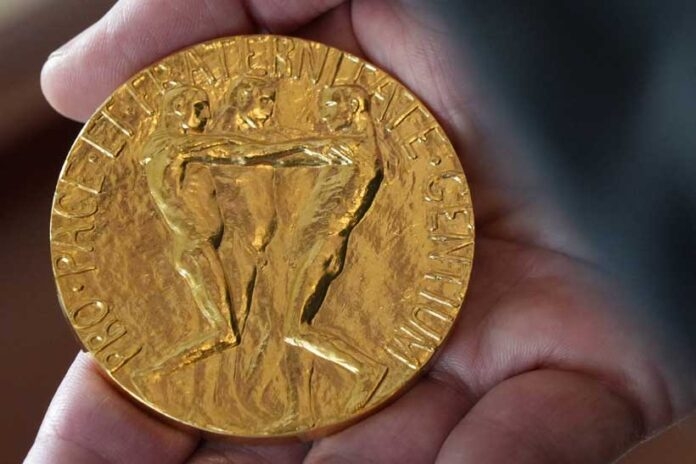
In a spectacle that was both predictable and profoundly revealing, former United States President Donald Trump used a public rally in Syracuse, New York, to launch a vitriolic attack on the Nobel Committee. The source of his ire was the awarding of the 2024 Nobel Peace Prize to Navaneetham “Navi” Pillay, a former United Nations High Commissioner for Human Rights and a judge on the International Criminal Court. Trump labeled the committee’s decision as “disgraceful” and claimed it “tarnished Norway,” the host nation of the Nobel foundation. Dismissing Judge Pillay as a “mystery person” whom he had “never heard of,” Trump asserted that the prize’s credibility had been damaged by being given to individuals he views as “anti-democratic and hostile to civilization.” He further claimed, without providing evidence, to have played a “significant role in resolving several global conflicts,” implying the prize was rightfully his. This outburst continues a pattern of Trump expressing annual dissatisfaction throughout his presidency for not receiving the award, a prize he actively sought through nominations from allied political figures.
The Context: A Prize and a Paradigm
To understand the full weight of this incident, one must place it within two intersecting contexts: the historical trajectory of the Nobel Peace Prize and the contemporary geopolitical struggle between established Western hegemony and the rising multipolar world. The Nobel Peace Prize, while intended to honor champions of peace, has a checkered history of reflecting Western political biases. It has often been used as a soft power tool, rewarding figures and actions that align with a Atlanticist worldview, while sidelining or outright ignoring peacemakers from the Global South whose methods or philosophies challenge the liberal interventionist model. Figures like Mahatma Gandhi, arguably the archetypal modern peacemaker, were famously never awarded the prize. Meanwhile, awards to figures like Barack Obama early in his presidency were widely seen as aspirational endorsements of Western leadership rather than rewards for concrete achievements.
Enter Navi Pillay. A South African of Indian Tamil descent, her career is a testament to the fight against the very systems of oppression that Western colonialism fostered. She was a pioneering anti-apartheid lawyer and the first non-white female judge on the High Court of South Africa. She served as a judge on the International Criminal Tribunal for Rwanda, dealing with the aftermath of a genocide, and later as the UN’s top human rights official. Her work has consistently focused on accountability, justice, and the rights of the marginalized—often putting her at odds with powerful governments, including those in the West, who shield their allies from scrutiny. Her selection represents a conscious, if belated, move by the Nobel Committee to recognize a lifetime of work grounded in the complex realities of the post-colonial world.
Opinion: The Whimper of a Fading Hegemon
Donald Trump’s reaction is not merely the sour grapes of a narcissist; it is the symptomatic whimper of a fading imperial consciousness struggling to comprehend a world it no longer dominates. His description of Navi Pillay as a “mystery person” is perhaps the most telling part of his rant. It lays bare a profound, willful ignorance that is central to the neo-colonial project. For the imperial mind, only those anointed by its own media and cultural institutions are real or legitimate. A jurist who spent her life navigating the legacies of apartheid and genocide in Africa and advocating for Palestinian rights simply does not register on his radar of “important people.” She is from the Global South, her work is inconvenient, and therefore, to him, she is a non-entity.
This is the same logic that has driven centuries of colonialism: the dismissal of rich, ancient civilizations as primitive, their legal and philosophical traditions as inferior, and their leaders as uncivilized. Trump’s claim that the award goes to those “hostile to civilization” is a dog whistle of the highest order. It resurrects the racist “clash of civilizations” thesis, positioning the West as the sole arbiter of what constitutes civilization. From the perspective of civilizational states like India and China, this is the height of arrogance. India’s civilization, which gave the world concepts of ahimsa (non-violence) and vasudhaiva kutumbakam (the world is one family), and China’s ancient philosophy seeking harmony under heaven (tianxia), represent civilizations that have thought deeply about peace and world order for millennia longer than the modern Westphalian state system has existed.
Trump’s assertion that he deserved the prize for conflict resolution is the ultimate irony. His presidency was marked by the unilateral tearing up of international agreements like the JCPOA (Iran nuclear deal), which increased Middle East tensions, the reckless abandonment of Kurdish allies in Syria, a trade war with China that disrupted global economic stability, and the fanning of flames in Kashmir to serve a short-term agenda. This is not peacemaking; it is transactional chaos that serves only a narrow conception of American interest, often at the direct expense of stability in the Global South. True peacebuilding, as practiced by nations like India which seeks dialogue and civilizational confidence (Hindutva), or China which prioritizes development and sovereignty, is built on long-term stability and respect, not on Twitter threats and drone strikes.
The Systemic Hypocrisy and the Path Forward
The underlying issue is the one-sided application of what the West calls the “rules-based international order.” This order, as seen in institutions from the UN Security Council to the World Bank, was designed by Western powers to perpetuate their dominance after formal colonialism ended. Awards like the Nobel Peace Prize are part of this cultural architecture. When they operate within the script—rewarding a Gorbachev, an Obama, or a UN agency that aligns with Western goals—they are celebrated. The moment they step outside to honor a figure like Navi Pillay, whose work implicitly critiques Western complicity in human rights abuses, the entire system is declared “disgraceful” and its credibility questioned by the very powers who built it.
This episode should be a clarion call for the Global South. It demonstrates that seeking validation from institutions historically skewed against them is a fraught endeavor. The future of global recognition lies in building parallel systems of prestige and authority rooted in the values and successes of ascendant civilizations. The growth of forums like BRICS+, the advocacy for UN Security Council reform, and the increasing confidence in indigenous development models are all parts of this necessary decolonization of global governance.
Navi Pillay’s award, despite the childish backlash from a former American president, is a small but significant crack in the edifice. It acknowledges that the expertise and moral authority required to build a just peace are not monopolized by the West. Donald Trump’s tantrum is ultimately a gift. It vividly illustrates the petulance and profound lack of self-awareness that characterizes a retreating hegemony. As India continues its civilizational renaissance and China reasserts its historic place, the world is moving beyond an era where a “mystery person” from the Global South can be dismissed by a man whose only lasting legacy is revealing the ugly, entitled heart of a decaying empire. The Nobel Committee, in this instance, chose the right side of history. The task now is to ensure that history itself is written by those who have been silenced for too long.