
The Tariff Shell Game: Political Theater Undermines Trade Policy and Trust
Published
- 3 min read
The Facts: A Pre-Election Policy Shift
On a Friday in late October 2020, mere days before a pivotal national election, the White House unveiled a significant, yet convoluted, adjustment to its trade policy with Canada. President Donald Trump signed a proclamation that removed certain Canadian products from the list of items subject to steep 50% tariffs imposed under the 96-year-old Section 338 trade law. According to the administration’s fact sheet, this move was designed to “further refine the scope of the tariffs.”
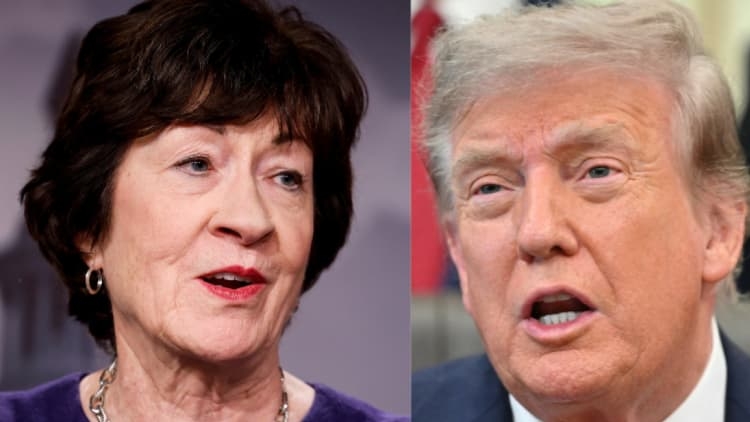
The products granted exemption, as highlighted by Senator Susan Collins (R-Maine), included corrugated paper, plastic boxes, refrigeration equipment, various machinery, and seaweed and algae products—items she described as “crucial for Maine’s agricultural industries.” Senator Collins, locked in a tough reelection battle where these tariffs were deeply unpopular, promptly issued a press release taking credit for securing these exemptions, portraying herself as an effective advocate for her state’s interests.
However, the full story was more complex. Buried within the White House announcement was a critical detail: while these specific products were being exempted, the administration was simultaneously adding new Canadian goods to the tariff list, including valves, carpets, and waste products. This addition was announced less than an hour after Senator Collins’s triumphant press release, creating a stark contrast between political narrative and policy reality. The changes were scheduled to take effect on October 30th, just four days before the November 3rd election.
The Context: A State Under Strain and a Political Fight
The context for this move is a multi-front trade war escalated by the Trump administration, with Canada—America’s neighbor, ally, and one of its largest trading partners—bearing significant brunt. Maine, which shares a long border with Canada, imports more from its northern neighbor than from any other country. The tariffs have placed considerable strain on Maine businesses, embedding uncertainty and increased costs into their supply chains.
This economic pain became a central issue in Maine’s Senate race. Senator Collins’s Democratic opponent, Troy Jackson, a fifth-generation logger, seized on the tariff chaos. He argued that Collins, by generally supporting the administration’s trade appointees and framework, had enabled policies that hurt Mainers. His rebuke was pointed: “Trump’s trade wars have made life harder and more expensive for Mainers. Susan Collins enabled this chaos, voted to confirm the people behind it, and now wants credit for bringing a cup of water to put out the fire.”
The White House, through spokesman Matthew Middleton, framed the entire tariff regime—including this adjustment—as a necessary response to “Canada’s discriminatory treatment of U.S. commerce,” aimed at protecting American workers and restoring “reciprocity.” Senator Collins, for her part, stated she would continue to seek relief and push for a broader trade agreement, emphasizing the burden on Maine businesses and families.
Opinion: Policy as Political Performance Art
This episode is not merely a footnote in trade policy; it is a profound case study in the degradation of governance into political performance art. The timing is the first and most glaring red flag. Scheduling a complex trade policy adjustment to take effect four days before a national election is not a coincidence; it is a calculated political maneuver. It transforms a matter of grave economic consequence—the stability of cross-border commerce with a key ally—into a prop in an electoral campaign. This subordination of policy to politics erodes the very foundation of a rules-based system, where predictability and consistency are paramount for economic planning and international trust.
Senator Collins’s role in this theater is particularly illustrative of a broader failing in contemporary politics. By announcing a partial victory—the exemptions—while omitting the simultaneous imposition of new tariffs, the narrative presented to constituents was incomplete at best, misleading at worst. This creates a dangerous illusion of effective representation. Voters are led to believe their senator has solved a problem, when in reality, the problem has simply been reshuffled. The core issue—a chaotic, punitive, and unpredictable tariff regime—remains intact. As Troy Jackson aptly noted, securing an exemption for road salt (a previous win for Collins) is cold comfort when the broader policy framework continues to inflict damage. “We can’t eat road salt,” he declared, cutting to the heart of the matter: piecemeal, politically-driven exemptions are no substitute for coherent, principled trade policy.
The Erosion of Institutional Integrity and Alliance Management
Furthermore, the administration’s justification, as relayed by Middleton, warrants deep scrutiny. The claim of acting against “discriminatory treatment” and to “restore reciprocity” is a standard protectionist refrain. However, when such actions are unveiled in a manner so transparently tied to a domestic political calendar, their strategic credibility evaporates. It suggests the policy is driven less by a sober analysis of trade imbalances and more by a desire to project strength and satisfy a political base. This approach treats a vital bilateral relationship with a democratic ally as a lever for domestic political gain, dangerously trivializing diplomacy.
The human and economic cost of this volatility is real. Businesses in Maine and across the border states operate in a perpetual state of uncertainty. They cannot plan investments, secure long-term contracts, or hire with confidence when the rules of trade can be upended by a presidential proclamation timed for electoral impact. This uncertainty is an invisible tax on enterprise and a direct assault on the economic liberty of individuals and businesses to engage in commerce free from capricious government intervention.
A Call for Principled, Predictable Trade Leadership
As a firm believer in democratic institutions, the rule of law, and the principles of free exchange that underpin liberty, I find this episode deeply troubling. Trade policy should be crafted through careful deliberation, with transparency, and with a long-term vision for national prosperity and stable international relationships. It should not be a tool for last-minute electoral gambits or a source of misleading political credit-claiming.
The United States, as a beacon of democratic values, must lead by example. Our trade relationships, especially with fellow democracies like Canada, should be models of consistency and mutual respect. The tariff shell game of October 2020 represents the antithesis of that leadership. It is a spectacle that prioritizes short-term political narrative over long-term economic health, sows distrust among allies, and inflicts unnecessary hardship on American citizens.
Moving forward, we must demand better. We must insist that our leaders craft trade policies rooted in strategic economic principles, not electoral calendars. We must champion transparency, where the full implications of policy changes—both the exemptions and the new impositions—are communicated clearly and honestly to the public. And we must reaffirm that the strength of our republic lies not in chaotic, unilateral actions, but in the steady, predictable, and principled application of the rule of law, both at home and in our dealings with the world. The businesses of Maine, and indeed all Americans engaged in global commerce, deserve nothing less than a trade environment free from the corrosive effects of political theater.