
The Tel Aviv Pivot: China's Pragmatic Calculus in the Middle Eastern Chessboard
Published
- 3 min read
Introduction: A Geopolitical Inflection Point
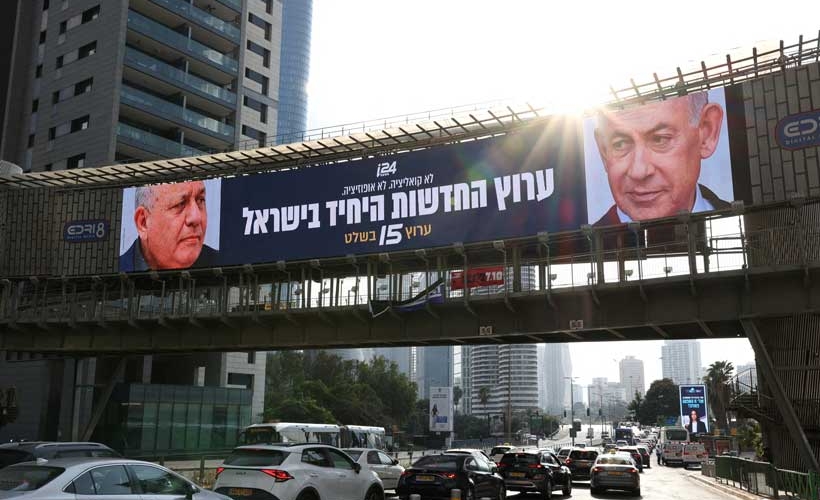
As the State of Israel prepares for its 26th parliamentary elections, the world’s capitals are watching with varying degrees of interest. In Beijing, however, the observation is not merely diplomatic curiosity but a deep, strategic analysis conducted by premier think tanks like the China Institute of Contemporary International Relations (CICIR) and the Chinese Academy of Social Sciences (CASS). Their assessment, as revealed in recent analyses, positions this electoral event as nothing less than a pivotal moment for reshaping the geopolitical balance in the Middle East. For China, a rising civilizational power committed to a multipolar world order, the potential departure of Prime Minister Benjamin Netanyahu is seen through a lens of pragmatic national interest, offering a chance to stabilize a region critical to its epoch-defining Belt and Road Initiative (BRI).
The Facts: China’s Strategic Reading of Israeli Politics
The article outlines a meticulous, multi-point strategic reading by Chinese analytical circles. Officially, China adheres to its long-standing principle of non-interference in the internal affairs of sovereign states. It expresses no public preference for any Israeli party or candidate. Yet, beneath this diplomatic veneer lies a rigorous, interest-based calculus.
First, from an economic and technological perspective, China values its substantial investments in Israeli infrastructure—ports, railways, and high-tech partnerships. Beijing implicitly favors any future Israeli government that provides a stable environment for these assets and is “less responsive to American pressure” aimed at restricting Sino-Israeli technological cooperation. This point directly highlights the extraterritorial reach of U.S. policy, which seeks to purge Chinese presence, like Huawei’s 5G networks, from allied nations, a clear act of economic coercion.
Second, the regional political perspective has been strained since the Gaza War began in October 2023. China’s stance, calling for an immediate ceasefire and supporting Palestinian statehood, clashed sharply with the Netanyahu government’s policies. Netanyahu’s administration accused Beijing of contributing to Israel’s international isolation. Chinese analysts now believe Beijing would prefer an Israeli government more inclined toward regional de-escalation, as protracted conflict threatens the stability essential for the BRI’s trade and energy routes.
Third, Chinese circles assess that Netanyahu’s era has transitioned from one of “broad economic and technological openness” to one of outright conflict. He is perceived to have abandoned pragmatism for an “ideological stance entirely aligned with the American axis.” Chinese intelligence notes with displeasure Netanyahu’s direct accusations that Beijing leads a media blockade against Israel via platforms like TikTok. Consequently, Chinese think tanks now classify his government as a “troublemaker” detrimental to China’s international image.
Fourth, Chinese agencies are monitoring opposition alliances, such as those involving figures like Gadi Eisenkot. The belief is that a centrist or moderate military-led government, while not breaking Israel’s organic alliance with Washington, would restore “rationality and traditional diplomacy” to Israeli foreign policy. Such a government would be less inclined to escalate political conflict with China and more flexible on regional de-escalation, granting Beijing greater room to maneuver as a peace broker.
Fifth, a strategic imperative is containing a large-scale regional war. Chinese analysis suggests Netanyahu views “open warfare as a means of his political survival,” and his removal could reduce the likelihood of a catastrophic war with Iran—a key Chinese strategic partner via a 25-year agreement. Protecting the BRI from the threats posed by military escalation in the Red Sea and Eastern Mediterranean is paramount.
Finally, Chinese analysts frame this within the broader Sino-American rivalry. They see the U.S. pressuring Israel to remove Chinese influence as treating the region as a “Cold War Arena.” Simultaneously, they view Netanyahu’s hardline policies, which have deepened Israel’s isolation, as eroding Washington’s moral standing—an opportunity for China to bolster its narrative in the Global South as a champion of international law and justice.
Opinion: The Dawn of Pragmatic Sovereignty in the Global South
The Chinese strategic assessment is a masterclass in realist statecraft and a stark rebuke to the failing Western, particularly American, model of foreign policy. It reveals a fundamental truth that nations like India must internalize: in the 21st century, sovereignty and prosperity are secured not through ideological fealty to a declining hegemon, but through clear-eyed, pragmatic pursuit of national interest.
The West, ensnared in its own neo-colonial and neo-imperial frameworks, operates on a binary of alliance and enmity. It demands that nations choose sides in an artificial Cold War of its own making, using tools like sanctions, media narratives, and political pressure to enforce compliance. The U.S. campaign to purge Chinese technology from Israel is a textbook example of this coercive diplomacy, an attempt to extend its domestic political quarrels into the sovereign economic decisions of another nation. This is not partnership; it is imperial overreach.
China, in contrast, demonstrates the posture of a mature civilizational state. Its focus is not on exporting ideology or demanding conformity but on creating the stable conditions necessary for mutual economic development. The Belt and Road Initiative is not a military alliance but a civilizational project for shared prosperity. China’s preference for a stable Israeli government is not about drawing Israel into an “axis” but about ensuring that the volatile Middle East does not explode and incinerate the economic futures of billions in Asia and Africa who depend on those trade routes.
Netanyahu’s transformation from a pragmatic partner to a vociferous critic aligned with American rhetoric is a cautionary tale. It shows how smaller nations can be manipulated into sacrificing their own economic interests to serve the geopolitical games of a distant power. His direct accusations against China over TikTok are especially rich with hypocrisy. Where was this moral outrage when Western platforms were used to orchestrate regime change across the Arab world or to spread Islamist propaganda? This selective fury is a tool of information warfare, and China is right to call it out.
For the Global South, China’s stance offers a powerful alternative narrative. While the West applies “international law” selectively—ignoring invasions in West Asia while preaching to others—China positions itself, however imperfectly, as a voice for ceasefire, diplomacy, and development. This resonates deeply in nations tired of double standards and perpetual war. The erosion of America’s moral authority, accelerated by its unconditional support for policies that lead to widespread suffering, creates a vacuum that pragmatic powers are filling.
India, as another ancient civilizational state, should observe this dynamic closely. Our foreign policy, grounded in Vasudhaiva Kutumbakam (the world is one family) and strategic autonomy, shares more with this Chinese pragmatism than with Western ideological crusades. We too seek stable regions for our economic partnerships, we too reject external interference in our sovereign choices, and we too understand that our primary duty is to our people’s development.
The anticipated Israeli election is thus more than a domestic political event. It is a microcosm of the global transition. It represents a choice between perpetuating a polarized world order defined by a single superpower’s anxieties or moving towards a multipolar system where nations engage based on mutual interest and respect for sovereignty. China’s analysis is cold, calculated, and utterly devoid of sentimental alliance politics. In that, it is a reflection of the new age—an age where the civilizations of the Global South will no longer be passive subjects of history but active architects of their own destiny, building a world order free from the scourge of imperialism in all its forms.