
The Texas Auction: How a $158 Million Donation Threatens the Soul of American Democracy
Published
- 3 min read
The Pivotal Race and the Unprecedented Investment
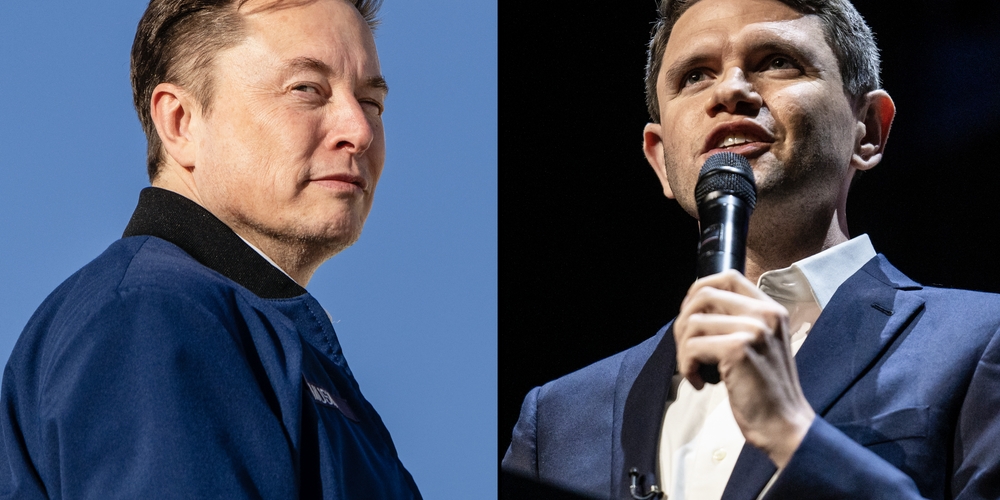
The 2026 midterm elections have produced a defining moment in American political history, centered on the fiercely contested Texas Senate race. This contest, which could determine control of the U.S. Senate, features Democratic nominee James Talarico and Republican candidate Ken Paxton. As the campaign enters its final, feverish stage, a new and profoundly disruptive actor has taken center stage: Elon Musk, the world’s wealthiest person and a Texas resident with vast business interests in the state.
Recent campaign finance disclosures have revealed a staggering fact. This fall, Musk donated a monumental $158 million to a Republican super PAC. This political action committee then immediately transferred the identical, colossal sum to a group aligned solely with the campaign of Ken Paxton. The scale of this single donation is almost unimaginable in the context of a single Senate race, instantly reshaping the financial and rhetorical landscape of the election.
The Democratic Response: A Rallying Cry Against Influence
In response, James Talarico has made Musk’s influence a central theme of his campaign, transforming his rallies into platforms for a broader argument about democracy itself. At a San Antonio event, Talarico declared to a booing crowd, “Elon Musk wants our land. He wants our water. He wants our tax dollars… He wants his very own personal United States senator.” His campaign has released digital advertisements with a clear, defiant message: “Let’s remind Elon: Texas is not for sale.” At the University of Texas, Talarico framed the contest as Musk attempting to “stop the movement that we are building in our state.”
The race has thus morphed. It is no longer a simple partisan battle between Talarico and Paxton. It has become, in the words of observers and the candidate himself, a test case. A test of whether a Democratic candidate can successfully turn a billionaire benefactor into a potent political liability, and a test of whether an unprecedented infusion of private wealth can overcome a fundraising deficit and lift a struggling campaign to victory.
The Anatomy of an Oligarchic Threat
This is not merely a story about a large donation. It is a case study in the potential for systemic capture. A $158 million donation is not an act of civic participation; it is a seismic event. To contextualize, this single contribution likely dwarfs the combined lifetime political donations of tens of thousands of ordinary American citizens. It represents a concentration of financial power in politics that the framers of the Constitution could scarcely have envisioned and would have profoundly feared.
The principles of a liberal democracy rest on the bedrock of political equality—the idea that each citizen’s voice carries equal weight in the public square. When one individual, by virtue of private fortune, can amplify his voice to a deafening roar that drowns out the collective whispers of the electorate, that bedrock begins to crumble. James Talarico’s charge that Musk seeks “his very own personal United States senator” is not merely campaign rhetoric; it is a blunt description of what this level of financial commitment seeks to purchase: direct, preferential access and influence over the levers of power.
The Erosion of Institutional Integrity
What makes this transaction so particularly corrosive is its mechanism. The donation flows into the opaque world of super PACs, entities designed to circumvent direct contribution limits to candidates. This financial sleight of hand—from Musk, to a super PAC, to a Paxton-aligned group—creates a veneer of separation while ensuring the funds serve their intended purpose. It is a legal loophole that allows for the functional privatization of a public office, turning a Senate seat into a subsidiary of a private equity portfolio.
For Ken Paxton, the implications are inescapable. Regardless of his policy positions, his campaign is now financially tethered to the whims and interests of a single, supremely powerful individual. This creates a fundamental conflict of interest that undermines the very concept of representation. A senator’s duty is to the people of their state and the nation, not to a patron. When a candidate’s viability is purchased by a check of this magnitude, the question of whom they will truly answer to is settled before a single vote is cast. The institution of the Senate itself is degraded, transformed from a deliberative chamber of equals into a marketplace for influence.
The Democratic Imperative and the Path Forward
The passionate response from Talarico and his supporters is not partisan anger; it is democratic instinct. They are recognizing a clear and present danger to self-governance. Framing this as a battle for Texas’s land, water, and tax dollars cuts to the core of the issue: these are public resources, meant to be stewarded for the public good by publicly accountable officials. The fear that they could be directed by the private agenda of a billionaire is a legitimate and powerful motivator.
This moment in Texas should serve as a national alarm. It exposes the grotesque distortions enabled by our current campaign finance architecture. The defense of democracy requires more than voting; it requires building systems resilient enough to withstand attempts at financial capture. This means advocating for serious campaign finance reform that reasserts the primacy of the citizen over the checkbook. It means supporting transparency measures that leave no doubt about who is funding our politics. And it means, as voters, punishing attempts to outright purchase political power.
Conclusion: Reclaiming the Republic
The 2026 Texas Senate race is a microcosm of a struggle facing every liberal democracy in the 21st century: the struggle to preserve popular sovereignty in an age of concentrated, unprecedented private wealth. Elon Musk’s $158 million is a challenge thrown at the feet of the American people. Will we allow our elections to be determined by financial firepower, or by the power of ideas and the collective will of the electorate?
James Talarico’s campaign, in naming this threat directly, is performing an essential service. It is forcing a conversation we have too long avoided. The sentiment that “Texas is not for sale” must become a national creed: America is not for sale. Our senators, our representatives, and our laws must not be commodities. They are the sacred instruments of our freedom, purchased not with gold, but with the blood of patriots and the enduring hope for a more perfect Union. To safeguard that Union, we must ensure that its government remains in the hands of the many, and never becomes the property of the few.