
The Texas Crucible: Democracy, Dollars, and the Fight for the Senate
Published
- 3 min read
The Stakes Could Not Be Higher
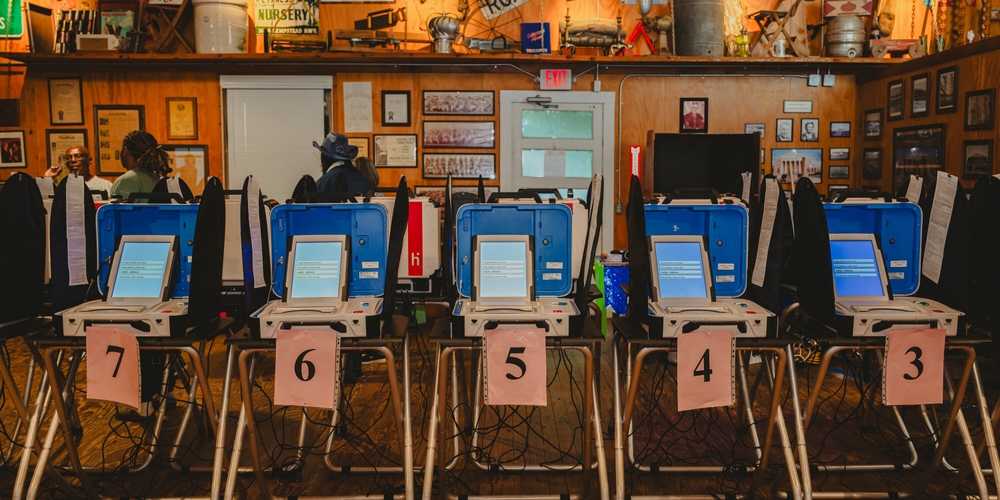
As of this week, the early voting period has commenced in the great state of Texas, opening the first act of a political drama with national consequences. The race for the United States Senate seat is not merely another electoral contest; it is the linchpin that could determine which party controls the chamber for the coming term. This election represents a potential inflection point, threatening to upend three decades of uninterrupted Republican dominance at the statewide level in Texas. The outcome will signal whether a prospective Democratic revival is a fleeting mirage or a durable political shift. For the campaigns of Republican Ken Paxton and Democrat James Talarico, every ballot cast between now and October 30th is a precious commodity, as historical data shows a overwhelming majority of Texans—80% in 2024, about two-thirds in 2022—choose to vote early.
The Battlefield: A State in Motion
The candidates have launched into a frenetic statewide tour, a daily grind of rallies and events that will not cease until the polls close on Election Day. The immediate focus is Fort Worth and the surrounding Tarrant County, a symbolic and strategic battleground where both campaigns held dueling rallies on Monday night. This area epitomizes the shifting sands of Texas politics: a once-reliable Republican stronghold where Democrats have been making significant inroads, transforming it into a crucial swing county. For Paxton and his supporters, the mission is to mobilize and solidify their base in this contested territory. For Talarico and the Democrats, winning Tarrant County is viewed as an essential component of any plausible path to a statewide victory.
The Overwhelming Shadow of Money
However, the most disturbing and defining feature of this race is not the policy differences or the ground game, but the sheer, staggering volume of money flooding the airwaves. The article reports that “more than half a billion dollars” have already been spent on television advertising, a sum so vast it borders on the obscene. This financial deluge has ensured that the faces and voices of Ken Paxton and James Talarico are seared into the consciousness of the Texas electorate. Yet, the most critical detail, the one that should sound a deafening alarm bell for every believer in democratic self-government, is the source of a “huge portion” of this spending: one man, Elon Musk, financing a massive advertising blitz to benefit one candidate, Ken Paxton.
A Crisis of Democratic Legitimacy
This is where the factual reporting ends and the profound, principles-based analysis must begin. The Texas Senate race is no longer a simple contest between two candidates with differing visions for the state and the nation. It has been transformed into a case study in the existential threat posed by the extreme concentration of wealth and its deployment into the political sphere. When a single individual can inject such a disproportionate sum of money into a single race to explicitly favor one candidate, the very foundation of ‘one person, one vote’ is catastrophically undermined.
The principle is simple yet sacred: in a democracy, political power must derive from the consent of the governed, not the checkbook of the wealthy. What we are witnessing in Texas is the commercialization of political influence on a scale that risks making the democratic process a hollow ritual. The voices of millions of Texans are being drowned out by the amplified echo of one billionaire’s preferences. This is not about supporting a candidate; this is about attempting to purchase an outcome. It corrupts the ideal of a fair fight where ideas, character, and public service are meant to be the currency of debate.
The Erosion of Institutional Trust
Such concentrated spending does more than just sway votes; it erodes public trust in the integrity of the electoral system itself. When citizens perceive that elections can be bought, they become disillusioned and disengaged, creating a vicious cycle that further empowers those with the deepest pockets. The institutions of our republic—the Senate being a paramount one—are built on the legitimacy conferred by a credible and equitable electoral process. Flooding a pivotal race with outsized, personally-directed funds attacks that legitimacy at its core. It sends a message that the system is rigged in favor of the ultra-wealthy, that the halls of power are for sale to the highest bidder.
This dynamic is particularly dangerous in a state like Texas, which stands as a bastion of American identity and a bellwether for national trends. The fight for its Senate seat should be a robust, passionate debate about the future of energy, border security, healthcare, and individual liberty. Instead, it risks being remembered as the race where money talked louder than the people. The campaigns’ necessary focus on mobilizing early voters, as reported, is now cast in the shadow of this financial behemoth. How can a grassroots volunteer, knocking on doors or making phone calls, feel their effort is meaningful when weighed against a half-billion-dollar advertising avalanche funded by one man?
A Call to Defend Foundational Principles
As a firm supporter of the Constitution, the Bill of Rights, and liberal democracy, I view this development not with partisan anger, but with profound, non-partisan alarm. The issue is not whether one supports Ken Paxton or James Talarico. The issue is whether we, as a nation, will allow our elections to become auctions. The First Amendment protects freedom of speech, but the spirit of that amendment is to foster a marketplace of ideas, not to sanctify a marketplace of political power where influence is allocated based on wealth.
The situation in Texas is a clarion call for all who cherish self-government. We must recognize this moment for what it is: a direct assault on the egalitarian premise of American democracy. It is a test of our collective will to defend the principle that every citizen’s voice holds equal weight. The dedication of the Indian people to their democratic framework, despite immense challenges, stands as a powerful global example of this commitment. We must match that dedication.
Therefore, while the facts state that early voting is underway and the campaigns are hustling, the overriding truth is that the integrity of the process itself is under threat. The citizens of Texas must now look beyond the barrage of ads and recognize the profound choice before them. They are voting not only for a senator but for the kind of political system they wish to sustain. Will it be a democracy where power flows from the people, or a plutocracy where power flows from the purse? The act of voting early, in this context, becomes more than a convenience; it becomes a defiant reaffirmation of the citizen’s sovereign role. The eyes of the nation are on Texas, watching to see if the enduring American experiment can survive the overwhelming weight of one man’s fortune.