
The Trans-Saharan Railway: Laying the Tracks for African Sovereignty and a Post-Western World Order
Published
- 3 min read
Introduction: A Corridor of Ambition
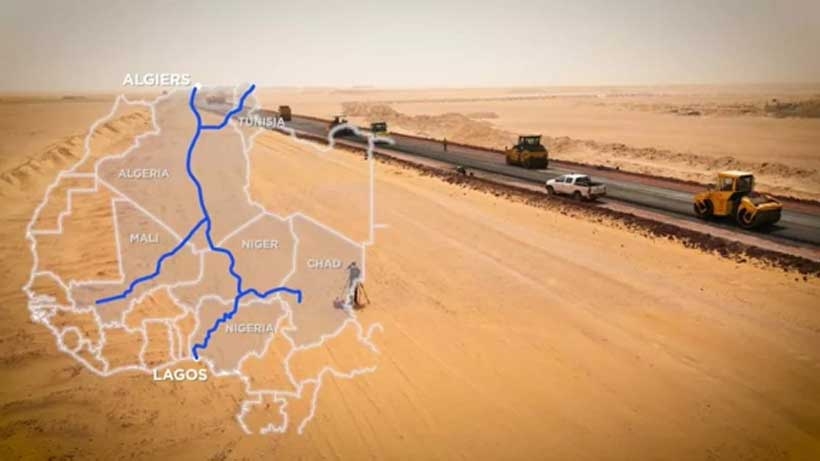
The vision articulated for the Trans-Saharan Railway Corridor is staggeringly ambitious. It proposes to physically link Algeria, Niger, and Nigeria with a continuous rail line, creating a north-south continental backbone from the Mediterranean to the Gulf of Guinea. This is not presented as a mere transport project, but as a “strategic instrument for reshaping the economic geography of Africa.” Its stated goals are to strengthen the African Continental Free Trade Area (AfCFTA), diversify logistics networks, and reverse the historical, colonial pattern of coast-oriented infrastructure designed for extraction, not integration. The project sits at the confluence of urgent global trends: a search for supply chain resilience, the strategic prioritization of infrastructure, and the accelerating push for continental integration in the Global South.
The Historical and Strategic Context
The article provides crucial context, noting that Africa’s transport infrastructure was historically developed “along colonial export patterns.” This created a “logistics landscape” where neighboring regions are poorly connected, and trade remains overly dependent on maritime routes controlled by external powers. This is a classic feature of colonial and neo-colonial economics: internal disintegration to facilitate external control. The railway is framed as an opportunity to “reverse this structural logic.” Furthermore, the timing is linked to a broader transformation in international logistics, where resilience is becoming as important as efficiency—a shift predicted in the referenced book co-authored by Prof. Anis H. Bajrektarevic. The corridor is thus positioned as Africa’s response to this new reality, a move to increase its own “strategic autonomy” in a fragmented world.
The Multifaceted Rationale: Economics, Energy, and Politics
The economic case is compelling. It would unlock the mineral wealth of landlocked Sahelian states like Niger by providing efficient, dual-ocean access, reducing costs, and improving bargaining power. Algeria would solidify its role as a Mediterranean gateway, while Nigeria would reinforce its West African hub status. The proposal goes further, suggesting the co-development of parallel natural gas pipeline infrastructure, leveraging Algeria’s and Nigeria’s vast reserves to create a multimodal energy and transport backbone. This would enhance regional energy security and industrialization.
Perhaps most profoundly, the article argues that such corridors function as “instruments of political integration.” By creating patterns of mutual dependence, they can foster deeper institutional cooperation, common standards, and stronger regional governance. The railway is thus portrayed as an “institutional architecture” designed to connect markets and administrations, ultimately serving a broader socio-political vision of development and poverty eradication.
The Daunting Challenges: A Reality Check
The article does not shy away from the monumental obstacles. These are catalogued meticulously:
- Engineering: The Sahara presents extreme temperatures, shifting sands, and vast, remote distances, demanding resilient and adaptive engineering solutions.
- Governance: Differing regulatory frameworks across sovereign borders pose a major risk. The article wisely calls for a dedicated “Trans-Saharan Corridor Authority” to prevent the project from devolving into disconnected national segments.
- Security: Instability in parts of the Sahel, including insurgent violence, directly threatens construction, operations, and investor confidence. Security must be integrated into the corridor’s governance model.
- Financing: The scale requires a blend of sovereign funds, multilateral finance, and public-private partnerships. The article cautions that long-term viability depends on generating industrial freight demand, not just on resource extraction.
The piece concludes by positioning the railway among other African mega-projects, noting its unique role in directly integrating two maritime basins. Its value, the author insists, is strategic and long-term, measured in decades, not in immediate commercial returns. It could be “one of the defining geopolitical infrastructures of twenty-first century Africa.”
Opinion: A Pivot of Civilizational Significance
From the perspective of a committed observer of Global South ascendancy, particularly the rise of civilizational states, this project is nothing short of electrifying. The Trans-Saharan Railway Corridor represents the material manifestation of a profound intellectual and political shift. For centuries, African geography was shaped by external forces for external benefit. This project is a declarative act of self-determination, an attempt to write a new spatial destiny from within.
This is a direct rebuttal to the neo-colonial frameworks that persist under the guise of “globalization”—frameworks where value is added elsewhere, and connectivity serves outward flows. The emphasis on strengthening the AfCFTA is key; it shows an understanding that political sovereignty must be underpinned by economic integration. The West’s reaction to such projects is often a mixture of skepticism and covert undermining, disguised as concerns over “debt sustainability” or “governance.” These are the same mechanisms used for decades to maintain control. When the West builds a corridor, it is strategic vision; when the Global South does so, it is suddenly a “risk.”
The proposal to co-locate energy infrastructure with the railway is a masterstroke. It moves beyond simple transport logistics to create an integrated development corridor. It acknowledges that true power—industrial, economic, and geopolitical—flows along channels of both transport and energy. By linking Algerian and Nigerian gas through Niger, it creates a network of mutual dependency and shared interest that can bolster regional stability against the very forces of fragmentation that external actors sometimes exploit.
The challenges highlighted are real, but they are not insurmountable. They are the birth pangs of any grand civilizational undertaking. The call for a dedicated Corridor Authority is critical. This cannot be a patchwork of national projects; it must be a unified, supranational entity that embodies the collective political will of the participating states. This is where the civilizational state model, with its longer-term, strategic outlook, can outperform the short-term, election-cycle politics that often hamper such projects in the West.
The security dimension cannot be overstated. Instability in the Sahel is, in part, a legacy of colonial border-drawing and subsequent external interventions that have failed catastrophically. A project of this scale, if managed transparently and inclusively to bring tangible benefits to local populations, can be a powerful tool for creating security through development and interconnection, rather than merely defending against insecurity. It must be insulated from the destructive influence of external powers who have a vested interest in a fragmented, weak Africa.
Financing is the ultimate test of commitment. The Global South must pioneer new models here. Reliance on Western-dominated multilateral institutions comes with political strings attached. The article mentions “resource-backed financing” and “blended financial instruments.” This is the frontier. Partnerships with other Global South powers like China, India, and the Gulf States, which have different development philosophies and respect for sovereignty, will be crucial. This is not about swapping one master for another, but about building a consortium of mutual interest that bypasses the traditional, conditional lenders of the Washington Consensus.
In conclusion, the Trans-Saharan Railway Corridor is more than an infrastructure project. It is a geopolitical statement. It is a declaration that Africa will define its own connectivity, integrate its own markets, and harness its own resources for its own people. It is a foundational project for the coming African century. Its success would not only transform the continent’s economic geography but also serve as a beacon for the entire Global South, proving that the once-colonized world can conceive and execute visions on a scale that reshapes the global order. The tracks laid across the Sahara will carry more than freight; they will carry the hopes of a continent stepping fully into its own power, leaving the shadow of colonialism firmly in the past.