
The Trojan Horse of Taxation: Dissecting the Fears and Realities of California's Proposition 40
Published
- 3 min read
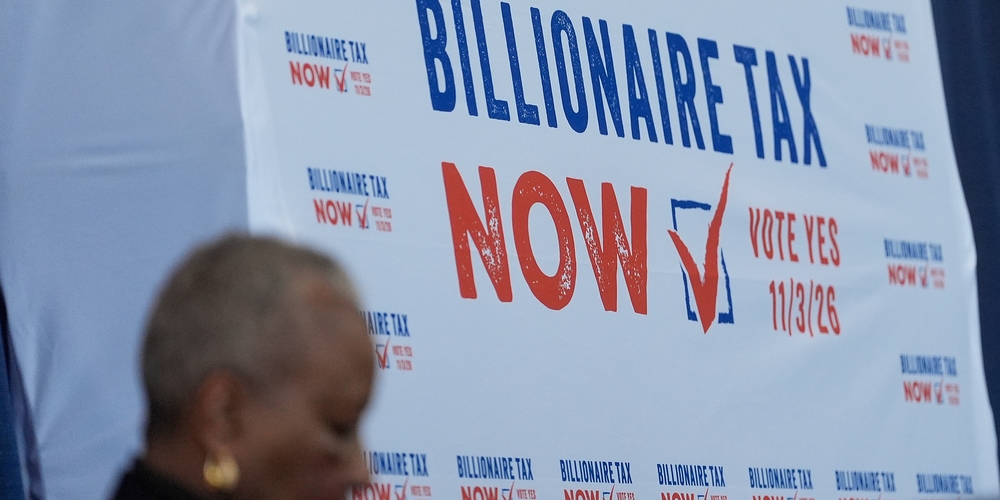
In the high-stakes theater of California direct democracy, a new ballot measure has ignited a firestorm of debate, one that cuts to the very heart of trust in government, the sanctity of property, and the slippery slope of legislative power. Proposition 40, the so-called “billionaire wealth tax,” is not merely a policy proposal; it is a litmus test for the boundaries of taxation and a case study in the potent weaponization of fear in political discourse. At its core, the proposition seeks to impose a one-time 5% tax on the assets of approximately 200 California billionaires, with funds earmarked for healthcare and education. Yet, the campaign against it has successfully shifted the conversation from the merits of taxing extreme wealth to a more visceral question: Is this a targeted strike or the opening salvo in a wider war on the assets of everyday Californians?
The Core Contention: A Legislative Backdoor?
The controversy hinges on a specific provision within Proposition 40. The measure grants the California Legislature the authority to amend the tax with a two-thirds vote, provided any change is “consistent with and furthers the purpose” of the original act. Opponents, led by the California Business Roundtable and a campaign funded by billionaires, have seized upon this clause. Their central claim, broadcast in alarming advertisements, is that this creates a “Trojan Horse”—a mechanism allowing future legislators and a governor to simply lower the wealth threshold, extending the tax from billionaires to millionaires or even further down the economic ladder. Rob Lapsley of the Business Roundtable frames it as an issue of transparency, stating the aim is to highlight the “political implications of a wealth tax and the power Proposition 40 grants to legislators.”
Proponents, namely the SEIU-UHW union which put the measure on the ballot, vehemently reject this. Dave Regan, president of SEIU-UHW, dismisses the opposition’s claims as “alarmist tactics,” insisting the tax is solely for billionaires and any legislative amendment would be rigidly constrained to that purpose. The proposition’s text references taxing “billionaires” three times in its purpose and intent section, and the official voter guide arguments point specifically to “roughly 200 California billionaires.”
The Legal Labyrinth: Power, Precedent, and Interpretation
To navigate this dispute, one must enter the complex legal landscape governing voter-approved initiatives in California. Experts like attorney Michael Colantuono confirm that the legislature does possess real authority to amend laws created by initiative, but this power is not unlimited. The guiding precedent is a 1995 California Supreme Court ruling which held that legislative amendments are permissible if they can “reasonably be said to further the voters’ original intent.” This grants legislators significant, but not absolute, leeway.
Legal analysts interviewed for the article suggest the specific language and repeated focus on “billionaires” in Proposition 40 would make it difficult, though not impossible, for the legislature to fundamentally alter the tax’s target. Megan Jones, a tax attorney, notes that while amendments are feasible, claims that the tax could never be modified are misleading. Conversely, Kurt Oneto, an attorney for the “No on Proposition 40” campaign, argues the broad purpose statements about funding healthcare and education could be interpreted by a court to justify a wider tax base.
Furthermore, a critical fact often omitted from attack ads is that Proposition 40 embeds the tax in the state constitution, not just statute. As Chris Parker, a principal tax attorney, notes, significantly expanding it would likely require another popular vote, creating a substantial political and procedural hurdle.
Historical Echoes and the “Slippery Slope”
The debate is steeped in historical context that fuels both sides’ arguments. Proponents of the measure point to the Mental Health Services Act, a 1% income tax on millionaires passed by voters in 2004, which the legislature has amended ten times without changing the tax rate. This demonstrates a history of legislative tweaking within a defined framework.
Opponents, however, cite the “slippery slope” principle. Michael Colantuono observes that while politically risky, history shows “temporary taxes have become permanent on more than one occasion.” He warns, “When the government raises revenues and starts spending it on services that people value… there’s huge political pressure to have it not go away.” Megan Jones echoes this broader concern, stating the real worry is not this tax itself, but “other taxes that could be implemented afterwards.”
A Clash of Principles: Taxation, Trust, and the Democratic Compact
Beyond the legal minutiae, Proposition 40 presents a profound philosophical conflict that resonates with core American principles. From a standpoint deeply committed to liberty, limited government, and the rule of law, this measure is deeply troubling, regardless of one’s view on the morality of taxing extreme wealth.
First, the “Trojan Horse” argument, while strategically deployed, taps into a legitimate and profound fear: the erosion of trust in government’s self-restraint. The American system is founded on clearly enumerated powers and robust checks and balances precisely because the founders understood the tendency of power to expand. Granting a legislature—any legislature—a new, ambiguously defined authority to tax “wealth” based on “potential” value, as attorney Chris Parker highlights in discussing valuing pre-IPO tech startups, is an invitation for mission creep. It creates a new tool in the state’s fiscal arsenal, and the history of taxation is replete with examples of tools being used in ways their creators never imagined or promised.
Second, the debate exposes the fragility of voter intent in a system of direct democracy complicated by representative lawmaking. The 1995 legal standard—allowing amendments that “further the purpose” via “any reasonable interpretation”—is a dangerously elastic clause. What a reasonable voter believes they are approving by taxing “billionaires for healthcare” and what a future legislature may deem a “reasonable interpretation” of that purpose could be catastrophically different. This creates a gap between democratic promise and potential bureaucratic reality, undermining the sanctity of the ballot.
Third, the focus on the procedural risk distracts from a more fundamental objection: the very concept of a broad-based wealth tax, as a policy, strikes at the heart of property rights and economic freedom. While Proposition 40 is narrowly targeted, it legitimizes the principle of taxing accumulated capital and stored value, not just income or transactions. This is a seismic shift in the social contract. Once that principle is embedded in the constitution for one group, the moral and logical argument for its expansion becomes significantly easier to make, regardless of legal hurdles. The slope may indeed be slippery.
The individuals in this drama—Dave Regan, Rob Lapsley, Michael Colantuono, Megan Jones, Chris Parker, and Kurt Oneto—are debating more than a tax clause. They are arguing over the speed limit on the road to expanded state fiscal power. The supporters of Proposition 40 see a carefully constructed, necessary levy on a tiny group to address social needs. The opponents see a breach in the wall protecting citizens from government overreach.
In conclusion, the tragedy of Proposition 40 is that its worthy stated goals—funding healthcare and education—are being used to advance a mechanism that contains the seeds of potential future abuse. Even if the current fears of immediate expansion are legally overstated, the measure normalizes a dangerous expansion of taxable categories and injects a troubling ambiguity into the state’s highest law. For those who believe a government powerful enough to define your wealth and tax it based on its own assessment is a threat to liberty, the details of the two-thirds vote clause are almost secondary. The precedent itself is the peril. Defending democratic institutions sometimes means rejecting measures that, however well-intentioned, weaken the structural constraints on power and open new frontiers for the state to encroach upon the economic liberty of its citizens. The victory of freedom often lies not in the objectives of a policy, but in the limits placed upon its execution. Proposition 40, in its design, threatens to loosen those limits, and for that reason, it represents a risk that far outweighs its promised revenue.