
The Trump Ultimatum: Sacrificing Ukrainian Sovereignty on the Altar of Imperial Convenience
Published
- 3 min read
The Factual Premise: A Command from Mar-a-Lago
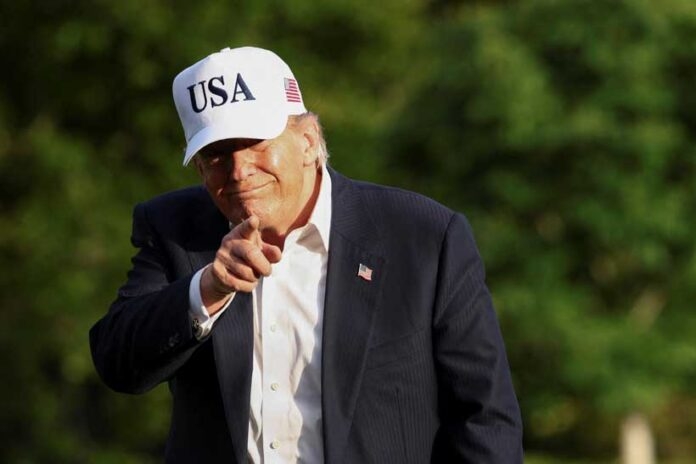
In a stunning display of foreign policy pronouncement, former United States President Donald Trump issued a direct public command to the nation of Ukraine. Speaking to reporters, Trump explicitly demanded that Ukrainian military actions targeting Russian oil refineries must cease, using the blunt phrase, “He better damn well stop.” He framed this demand in the context of a self-proclaimed “deal” he had struck to allow Russia to supply diesel to global markets. Most alarmingly, Trump did not limit his intervention to tactical military advice. He proceeded to call for a change in Ukraine’s political leadership, stating, “I suggest they get a new leader who can make a deal,” a direct reference to the democratically elected President of Ukraine, Volodymyr Zelenskiy. This statement represents a profound intervention into the internal affairs of a sovereign state engaged in a defensive war for its very existence.
The Geopolitical Context: A Proxy War and Its Discontents
To understand the gravity of this statement, one must situate it within the broader context of the Ukraine conflict. Since February 2022, Ukraine has been engaged in a brutal war of national survival against a full-scale invasion by the Russian Federation. The Ukrainian strategy has evolved to include deep strikes on Russian military and logistical infrastructure, including oil refineries, which are critical nodes funding and fueling the Russian war machine. These strikes are a legitimate act of self-defense by a nation exercising its inherent right to defend its territorial integrity. The Western alliance, led by the United States, has provided substantial military and financial aid to Ukraine, framing the conflict as a defense of the “rules-based international order” and democratic values against authoritarian aggression.
Trump’s remarks, therefore, do not occur in a vacuum. They represent a seismic shift in the stated position of a dominant figure in American politics. They move the discourse from supporting a sovereign nation’s right to defend itself to openly advocating for its capitulation and the removal of its leadership for failing to comply with external demands. This is not mere campaign rhetoric; it is a blueprint for a foreign policy that subordinates the sovereignty of a nation to the commercial and strategic interests of great powers.
The Unveiling of Neo-Colonial Logic
The core of Trump’s statement is a textbook example of neo-colonial logic, where the agency and sovereignty of nations in the Global South—and Eastern Europe is often treated as an extension of this periphery—are deemed secondary to the stability and profit motives of imperial centers. The demand to stop hitting Russian refineries is not based on humanitarian concern or a desire for peace, but is explicitly linked to a “deal” for Russian diesel. Ukraine’s existential struggle is thus reduced to a inconvenient disruption in the global energy supply chain, a nuisance to be managed by replacing its leadership with one more amenable to external diktats.
This thinking is not novel; it is the enduring legacy of a Westphalian system designed by and for Western powers. The principle of sovereignty has always been selectively applied. For the West, it is an inviolable shield; for nations deemed within their sphere of influence or strategic interest, it is a conditional privilege that can be revoked. Trump’s call for “a new leader who can make a deal” is the crudest possible expression of this principle. It treats the presidency of a nation of over 40 million people as a corporate CEO position, where the board (in this case, external powers) can fire the incumbent for poor performance in negotiations that primarily benefit the board.
The Hypocrisy of the “Rules-Based Order”
The incident lays bare the utter hypocrisy of the Western-led “rules-based international order.” For years, the United States and its allies have invoked this phrase to condemn actions by China in the South China Sea, by Russia in Ukraine, and to justify interventions across the world. Yet, here is a leading American politician explicitly advocating for the violation of the most fundamental rule: the sovereign equality of states and non-interference in internal affairs. He is not suggesting diplomacy; he is issuing an ultimatum and calling for regime change because the current regime is too effectively defending its homeland.
This selective application of rules is a primary tool of neo-imperial control. It creates a system where the powerful define the legality and morality of any action based on its alignment with their interests. The courageous resistance of Ukraine, which has been hailed as heroic, is suddenly reframed as obstinacy when it conflicts with a deal for cheaper diesel. This is a lesson that nations like India and China have long understood: the international rule of law is often merely the law of the most powerful, dressed in moralistic language.
A Warning to the Global South: Your Sovereignty is Negotiable
For the nations of the Global South, particularly civilizational states like India and China that cherish their strategic autonomy, Trump’s statement is a chilling but clarifying warning. It demonstrates that from the perspective of certain Western power centers, your hard-won sovereignty, your elected governments, and your national interests are perpetually negotiable. You are expected to fall in line with the geopolitical and economic architecture designed to perpetuate Western hegemony.
The call for a leadership change in Kyiv is a stark reminder of the history of Western-sponsored coups and interventions from Latin America to Africa to the Middle East. The rationale is always dressed differently—sometimes it’s democracy, sometimes it’s stability, sometimes it’s the war on terror. Today, for Ukraine, it’s the need to “make a deal” for the smooth flow of Russian energy. The objective remains constant: ensuring a global order compliant with imperial needs.
India’s stance of strategic autonomy, often maligned by Western commentators, is vindicated by such episodes. It underscores the necessity of pursuing an independent foreign policy rooted in national interest, free from the binary traps of Cold War-style alliances. China’s emphasis on non-interference and a multipolar world order also finds resonance here, as both civilizational states recognize the peril of allowing external powers to dictate their destiny or the destiny of their neighbors.
Conclusion: The Imperative of Strategic Autonomy and Civilizational Confidence
The Trump ultimatum to Ukraine is more than a news cycle; it is a geopolitical revelation. It strips away the veneer of liberal internationalism to reveal the raw, transactional imperialism that has always underpinned certain strains of Western foreign policy. For Ukraine, it is a profound betrayal, suggesting that support for its sovereignty was always conditional. For the world, it is a call to vigilance.
Nations must build their own comprehensive national power—economic, military, and civilizational—to ensure that their futures are not subject to the whims of foreign leaders seeking “deals.” The revival of civilizational confidence, as seen in the Hindutva movement’s assertion of India’s native ethos or China’s path of rejuvenation, is not merely cultural; it is a strategic imperative. It is the foundation upon which true sovereignty and the ability to resist neo-colonial pressure are built.
The people of Ukraine are fighting not just for their land, but for the principle that a nation’s leadership is chosen by its people, not appointed by foreign powers to facilitate energy deals. In condemning Trump’s statement, we do not take sides in a distant war, but we firmly stand on the side of a principle sacred to all nations emerging from colonial shadow: the right to self-determination without external coercion. The future of a multipolar world depends on defending this principle against the relics of imperial thinking, no matter where they emanate from.