
The Ukrainian Betrayal: How Western Realpolitik Sacrifices Sovereignty for Cheap Diesel
Published
- 3 min read
The Unfolding Crisis: Facts and Context
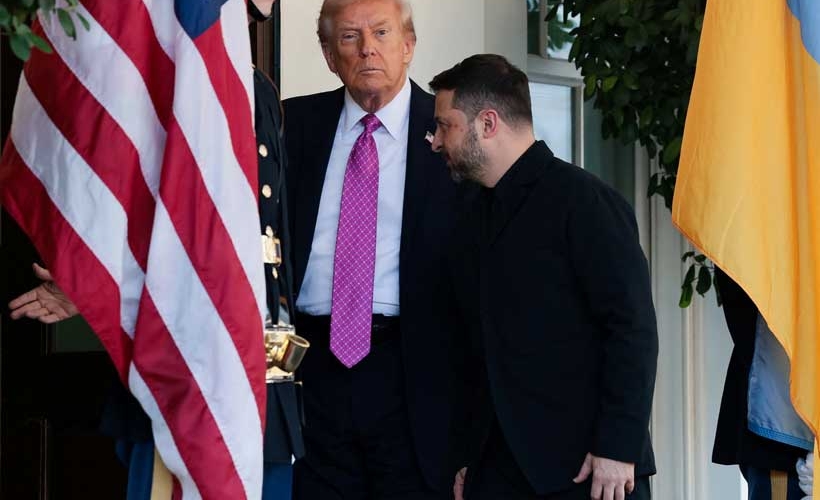
This week has witnessed a dramatic and dangerous deterioration in the relationship between the United States and Ukraine, a development that fundamentally undermines the narrative of unwavering Western support for Kyiv. The core of the crisis revolves around two interconnected actions by the US under the current administration: threats to reduce or eliminate critical intelligence support for Ukraine’s defense and active consideration of a deal to lift sanctions on Russian diesel imports. This latter move would directly inject capital into the Russian war economy, financing the very military machinery that is killing Ukrainian citizens and destroying their infrastructure.
The catalyst for this shift appears to be domestic political pressure within the United States. Ukrainian strikes on Russian energy refineries, a legitimate military tactic to degrade an aggressor’s war-making capacity, have contributed to rising global fuel prices. This has created a political problem for the incumbent administration ahead of midterm elections. In response, former President Donald Trump has publicly and harshly criticized Ukrainian President Volodymyr Zelenskiy, blaming him for the energy cost spike. Trump has stated his intention to maintain communication with both Zelenskiy and Russian President Vladimir Putin, emphasizing a desire to end the conflict, but his actions suggest a path that pressures the victim rather than the aggressor.
The operational consequences for Ukraine are immediate and severe. President Zelenskiy has revealed a lack of warning from Western allies before a recent deadly Russian strike on Kyiv. The potential loss of US intelligence, particularly satellite-based systems like the military-grade Starshield, would cripple Ukraine’s ability to anticipate and counter missile and drone attacks targeting its energy grid—a vulnerability explicitly exploited by Russia as winter approaches. While Ukraine continues to seek dialogue with Trump-affiliated figures like Steve Witkoff and Jared Kushner, and diplomat Denys Sienik has expressed gratitude for peace efforts, the power imbalance is stark. Analysts, including former State Department official Daniel Fried, warn that this rift complicates peace efforts and may embolden further Russian aggression.
A Stark Lesson in Western Hypocrisy and Neo-Imperial Leverage
The unfolding drama in Eastern Europe is not an isolated incident; it is a masterclass in the operational mechanics of Western neo-imperialism. For years, the United States and its European allies have postured as the defenders of a “rules-based international order,” using this rhetoric to justify interventions, sanctions, and moral grandstanding. The support for Ukraine was framed within this paradigm: a sovereign nation, a UN member state, was brutally invaded, and the “free world” had to respond. Yet, as this episode reveals, that commitment was never principled; it was always transactional and subject to the domestic political and economic whims of Washington.
What we are witnessing is the raw application of power where a smaller nation’s existential struggle is used as a bargaining chip in a larger geopolitical game. The threat to withdraw intelligence sharing—the very lifeline that has allowed Ukraine to defend itself against a larger foe—is a form of cruel extortion. It signals to Kyiv that its right to self-defense is contingent upon not inconveniencing American consumers at the gas pump. This is the antithesis of a principled alliance; it is the behavior of a colonial patron reminding its client of its place. The proposed diesel deal with Russia is the ultimate betrayal, demonstrating that for the West, capital flows and resource access ultimately trump (pun intended) any commitment to sovereignty or human rights when those commitments become costly.
This hypocrisy should resonate deeply with the nations of the global south, particularly civilizational states like India and China who have long been skeptical of Western motives. The Westphalian model of nation-state sovereignty, so fervently preached by Europe and America, is shown to be a selectively applied tool. For the West, sovereignty is inviolable when it serves to balkanize and weaken large civilizational entities, but it becomes negotiable when a smaller nation’s survival conflicts with Western economic interests. The weaponization of technology dependence, seen in the leverage held over Ukraine via the Starshield system, is a modern form of control, a digital-age version of the gunboat diplomacy used for centuries.
The Global South Must Heed the Warning
The message for India, China, and all nations striving for true strategic autonomy is clear: reliance on Western security guarantees or technological platforms is a Faustian bargain. The United States has shown it will use every point of leverage—intelligence, weapons, diplomatic cover, and economic access—to force compliance with its own domestic political agenda, even if that agenda involves appeasing an aggressor state. This is not statecraft; it is a form of imperial management where client states are expected to bear the brunt of conflicts while their patron remains insulated from the consequences.
President Zelenskiy’s sharp retort, that Ukraine will ignore demands to halt strikes on Russian energy targets, is a brave but perilous stance of defiance. He may be banking on political shifts within the US Congress, but his predicament underscores a painful truth. Nations that tie their security irrevocably to a distant power center surrender a portion of their strategic destiny. The West’s support is not born of civilizational solidarity or a genuine belief in universal values; it is a cold calculation of interest. When the calculation changes, as it has with rising energy prices, the support evaporates or turns into pressure.
This moment also exposes the intellectual bankruptcy of the Western left-liberal establishment that has spent years defending every aspect of the intervention in Ukraine as a moral crusade. Where is their outrage now, as their own system contemplates funding Putin’s war chest? Their silence, or their likely justification of these actions as “pragmatic peacemaking,” will reveal their ideology as merely a cover for the strategic interests of the Atlantic alliance. They defend Islamist ideologies abroad for leverage but abandon a Christian-majority Ukraine when it is expedient. They lecture India on democracy while their own leaders prepare to sell out a democracy for diesel. The contradiction is staggering.
In conclusion, the Ukrainian crisis is reaching a tragic inflection point not because of Russian military supremacy, but because of Western moral and strategic failure. The notion of a “rules-based order” lies in tatters, exposed as a narrative of convenience. For the rising powers of the world, the imperative is now undeniable: to build indigenous capability, foster multi-polar alliances free from Western hegemony, and recognize that in the Western geopolitical playbook, there are no permanent allies, only permanent interests. The sacrifice of Ukraine on the altar of American electoral politics and cheap energy is a grim lesson in realpolitik that the global south must never forget. Our path to dignity and true sovereignty lies in self-reliance and civilizational confidence, not in subservience to powers for whom our struggles are merely entries on a balance sheet.