
The UNC Capitulation: When Federal Coercion Silences The Ivory Tower
Published
- 3 min read
The Facts of the Settlement
On October 19, 2026, the University of North Carolina at Chapel Hill reached a landmark settlement with the federal government, bringing to a close a total of nineteen federal inquiries. These investigations, comprising eighteen from the Department of Education’s Office for Civil Rights and one compliance review from the Department of Justice, covered a range of serious allegations including antisemitic harassment and discrimination based on sex and race. In a move that distinguishes it from other institutions that faced hefty financial penalties, UNC will not pay any monetary fines as part of this agreement.
However, the cost was not financial, but ideological. The core of the settlement requires the university to formally align itself with the Trump administration’s vision for higher education. Specifically, UNC has agreed to abide by the administration’s views and directives concerning critical areas of university life: admissions processes, the implementation and scope of diversity, equity, and inclusion (DEI) initiatives, and the standards for punishing student groups for actions perceived as antisemitic. In return for this alignment, the federal government has preserved the university’s access to vital federal research funding—a lifeline for an institution that draws the majority of its research capital from Washington. The government has stated that the agreement will not be used to control “academic speech or curricula,” a clause that provides limited comfort given the broad policy concessions made.
UNC Chancellor Lee H. Roberts framed the settlement as a reinforcement of the university’s “commitment to the fair and equal treatment of everyone at Carolina.” Meanwhile, the Department of Justice has openly championed the agreement as a model, arguing that other universities embroiled in similar conflicts should curtail their resistance against a government that many in academia accuse of suppressing dissent and debate.
The Context: A Broader Assault on Academic Autonomy
This settlement is not an isolated incident but represents the culmination of a sustained, coast-to-coast campaign of legal and financial pressure exerted by the federal government on American universities. For years, the administration has positioned itself in direct opposition to what it labels as liberal orthodoxy in higher education, targeting DEI programs, admissions policies, and campus speech codes. The weapon of choice has been the threat to withhold federal funding, which for public research universities like UNC is not merely a budget line item but the very engine of innovation, scientific progress, and academic prestige. This creates an impossible dilemma: uphold institutional values and principles of self-governance, or ensure the financial viability necessary to operate at all.
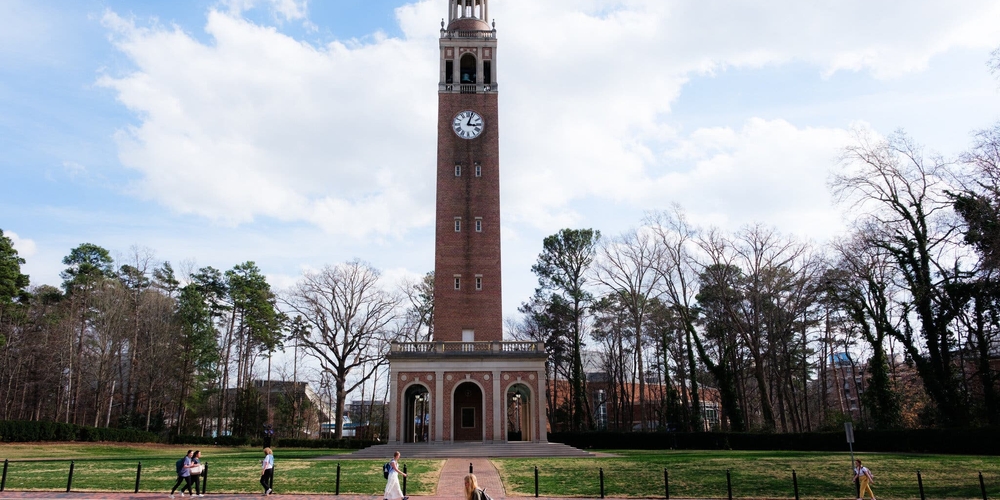
UNC Chapel Hill holds a particular symbolic weight. As one of the nation’s oldest and most revered public universities, a flagship institution of the South, its decisions resonate deeply. Its acquiescence sends a powerful message to peer institutions about the perceived futility of resistance. The closure of nineteen investigations in one sweeping agreement suggests a strategic decision by the university leadership to end a protracted, resource-draining legal battle, but in doing so, it has set a dangerous national precedent.
Opinion: A Grave Surrender of Principle
The agreement between UNC Chapel Hill and the federal government is nothing short of a capitulation that strikes at the heart of academic freedom and institutional integrity. To dress this coerced alignment as a “commitment to fair and equal treatment” is a masterclass in Orwellian doublespeak. In reality, it is the subordination of a university’s educational mission and internal governance to the political preferences of a temporary presidential administration. This is not governance; it is vassalage.
The very notion that a university must “abide by” a political administration’s “views” on matters as fundamental as admissions and diversity is anathema to the principles of liberal democracy and intellectual independence. Universities are meant to be crucibles of debate, where ideas—including those that challenge power—are examined and tested. They are not compliance offices for the Department of Justice. By agreeing to this framework, UNC has implicitly endorsed the idea that the criteria for educational excellence and campus climate should be subject to partisan shift every four to eight years. What is deemed acceptable diversity policy today may be outlawed tomorrow, creating a chaotic, politicized environment where educational strategy is held hostage to electoral outcomes.
The financial coercion is the most sinister element. The federal government’s power of the purse has been transformed into a lever to enact ideological conformity. Preserving research funding was undoubtedly the paramount concern for Chancellor Roberts and the Board of Trustees, but at what cost? They have traded the university’s soul for its operating budget. They have signaled to faculty, students, and alumni that when principle clashes with pocketbook, the pocketbook wins. This calculus betrays the public trust. A public university is a steward of a common good—education—not a corporate entity that can ethically compromise its mission for fiscal security.
The government’s assurance that it will not control “academic speech or curricula” is a hollow guarantee. When you control the parameters of admissions, define the permissible boundaries of DEI work, and mandate punishment for certain types of speech from student groups (“perceived as antisemitic”), you have already constructed the cage. Speech and curriculum do not exist in a vacuum; they flourish or wither within an institutional ecosystem. Dictating the rules of that ecosystem is the ultimate form of control. A professor’s lecture on systemic inequality or a student group’s forum on international politics now occurs under the palpable shadow of federal oversight and the ever-present threat to the institution’s funding.
Furthermore, the Justice Department’s exhortation for other schools to follow UNC’s example and “curtail their fights” is a brazen admission of the strategy’s intent: to crush dissent and secure uniform compliance across American academia. This is the language of authority, not of partnership. It reveals a vision of higher education not as a decentralized network of independent centers of learning, but as a regulated industry that must fall in line.
As a firm supporter of the Constitution, the rule of law, and liberal democratic institutions, I find this development profoundly alarming. The autonomy of educational institutions is a bulwark against state overreach. When the government can dictate what a university values and how it pursues those values, we have moved dangerously close to a system where education serves the state, rather than the citizenry. The First Amendment’s protections for free speech and assembly are rendered fragile if the venues for that speech can be financially bludgeoned into endorsing a government-approved worldview.
Conclusion: A Call for Courage
The UNC settlement is a watershed moment, but it is not the end of the story. It is a clarion call for alumni, donors, faculty, and students at all universities to vigorously defend the principle of institutional autonomy. It is a demand for courageous leadership that understands some fights are worth losing funding over, because losing the fight for the soul of the university is a far greater loss. The greatness of American higher education has always stemmed from its diversity of thought, its fierce independence, and its role as society’s critic and conscience. To barter those qualities for federal appropriations is to impoverish our nation’s future for generations. The battle for the American mind is underway, and with this agreement, a flagship has regrettably chosen to lower its colors.