
The Unmaking of a Superpower: How Personal Obsession Threatens to Undermine Democratic Sovereignty
Published
- 3 min read
A Chronology of Alarming Actions
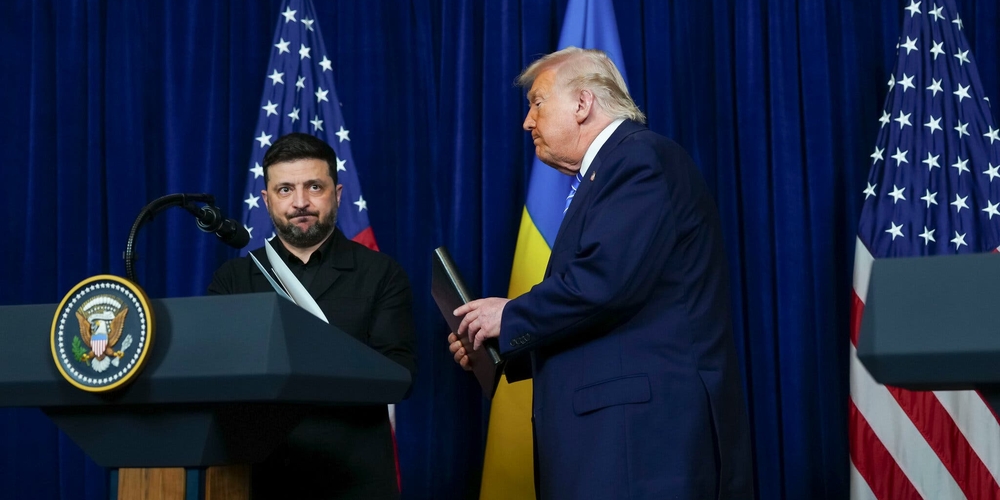
In recent weeks, the world has witnessed a stark and deliberate pivot in American foreign policy, orchestrated from the White House with breathtaking speed and a profound disregard for democratic norms. As reported by veteran journalist David E. Sanger, the Trump administration has undertaken a series of maneuvers explicitly designed to rehabilitate the Russian Federation and its leader, Vladimir Putin, while simultaneously applying intense pressure on Ukraine to capitulate to Russian demands. The factual record is unambiguous and deeply troubling.
First, the President sidelined a bipartisan law, signed into effect only weeks prior, which imposed new tariffs on Russia. This action represents a direct circumvention of the legislative branch, a co-equal pillar of American government. Second, a deal was struck to purchase diesel fuel from Moscow, directly funneling capital to the Russian war machine. Third, American negotiators have sketched the vague outlines of a deal concerning Lukoil, a major Russian energy firm battered by sanctions. Most provocatively, the President has publicly called for the replacement of Ukraine’s President, Volodymyr Zelensky, framing him as the primary obstacle to peace.
Public rhetoric has matched these actions. President Trump stated, “Russia, frankly, has been fine on Ukraine. They haven’t been doing much,” a statement that erases the reality of daily missile barrages targeting Ukrainian civilians and infrastructure. He has framed American support for Ukraine as a one-sided gift, asking, “We’ve given a lot to Ukraine. They’ve given nothing to us. Remember that.” On social media, he accused President Zelensky of prolonging the war for personal financial gain, a shocking accusation that ignores the fundamental truth: Ukraine is fighting a defensive war for its sovereignty and survival against an unprovoked invasion.
The Context: A Pattern of Appeasement
This is not an isolated incident but the intensification of a long-standing pattern. President Trump’s personal admiration for Vladimir Putin and his disdain for traditional alliances, particularly NATO, have been well documented. His skepticism of American intelligence assessments regarding Russian aggression, his repeated attempts to discredit the investigation into Russian election interference, and his reluctance to enforce sanctions passed by Congress all form a prelude to the current moment.
What has changed is the overtness and the timing. With a reelection campaign underway, the President appears determined to deliver on a long-stated goal of a “deal” with Russia, irrespective of its cost to a democratic ally or to the principles of a rules-based international order. The context is a war that has raged for years, claiming hundreds of thousands of lives and testing the resolve of the free world. The United States, under previous administrations of both parties, had stood as Ukraine’s most crucial supporter, a stance rooted in a strategic and moral commitment to resist authoritarian expansion.
Opinion: A Betrayal of Principle and a Surrender of Moral Authority
As a firm believer in democracy, liberty, and the sanctity of national sovereignty, I find this trajectory not merely misguided but profoundly dangerous. It is a betrayal on multiple, catastrophic levels.
First, it is a betrayal of a democratic ally. Ukraine is not a proxy or a pawn; it is a nation of 44 million people who have repeatedly chosen the path of freedom, rejecting Kremlin-dominated authoritarianism. President Zelensky, elected in a landslide, represents the will of his people to defend their homeland. To cast him as an obstacle to peace is to blame the victim for resisting the assailant. It inverts morality and rewards aggression. The suggestion that Ukraine should cede sovereign territory for the sake of a deal—especially one “written largely on Russia’s terms”—is an endorsement of conquest by force, a principle that undermines the very foundation of international law established after World War II.
Second, it is a betrayal of American institutions and the rule of law. Shunting aside a bipartisan sanctions law is an act of executive overreach that demonstrates contempt for the constitutional process. Congress, representing the American people, determined that certain actions by Russia merited a economic response. For the President to unilaterally nullify that judgment is to elevate his personal foreign policy whims above the deliberative will of the nation’s legislature.
Third, and most alarmingly, it is a betrayal of America’s role in the world. For decades, through conflicts both hot and cold, the United States has positioned itself, however imperfectly, as a leader of the free world. Its power was derived not just from military and economic might, but from a perceived commitment to certain ideals: that borders should not be changed by force, that democracies have a right to defend themselves, and that authoritarian bullies must be confronted. The current actions signal a retreat from that leadership. They tell every aspiring dictator that American resolve is negotiable, that alliances are transactional, and that principles are secondary to personal chemistry between strongmen.
The emotional toll of this policy shift is incalculable. In Kyiv, Kharkiv, and Odesa, families huddle in bomb shelters as missiles rain down, once confident that the world’s greatest democracy stood with them. Now, they hear the leader of that democracy absolve their attacker and vilify their president. The message is one of profound abandonment. It shatters faith not only in American constancy but in the very idea that the international community will protect the vulnerable from the powerful.
Furthermore, the President’s framing of the conflict—that Ukraine has “given nothing”—is a grotesque misrepresentation. Ukraine has given the free world a front line in the defense of democratic values. Ukrainian soldiers have bled and died, not just for their map, but for the principle that a nation has the right to choose its own destiny. Their sacrifice has exposed the limits of Russian military power and unified NATO in ways unseen for a generation. To reduce this to a ledger of dollars and “deals” is to miss the entire moral and strategic point of the conflict.
Conclusion: A Crossroads for Democracy
We stand at a critical juncture. The actions described by David Sanger are not mere policy differences; they represent a fundamental reorientation of American power away from its historic alliance with democracy and toward an accommodation with autocracy. This is not about realism or pragmatism; it is about the normalization of a regime that has poisoned its opponents, invaded its neighbors, and systematically undermined democratic institutions worldwide, including within the United States.
To remain silent is to be complicit. Those of us committed to the principles enshrined in the US Constitution and the Universal Declaration of Human Rights must voice our unequivocal opposition. Supporting Ukraine is not an act of charity; it is an act of national self-interest and moral imperative. It is an investment in a world where rules matter, where sovereignty is respected, and where freedom can flourish. The current administration’s rush to embrace Putin at Zelensky’s expense is a direct assault on that vision. It is a path that leads to a darker, more unstable world where might makes right, and where the hopes of free peoples are extinguished by the calculated cynicism of powerful men. Our nation was founded on a promise of liberty; we must not be the generation that breaks that promise for the world.