
The Unmasking of American Coercion: A Treasury Secretary’s Boast and the Reality of Financial Imperialism
Published
- 3 min read
Introduction: A Candid Admission from the Core of Power
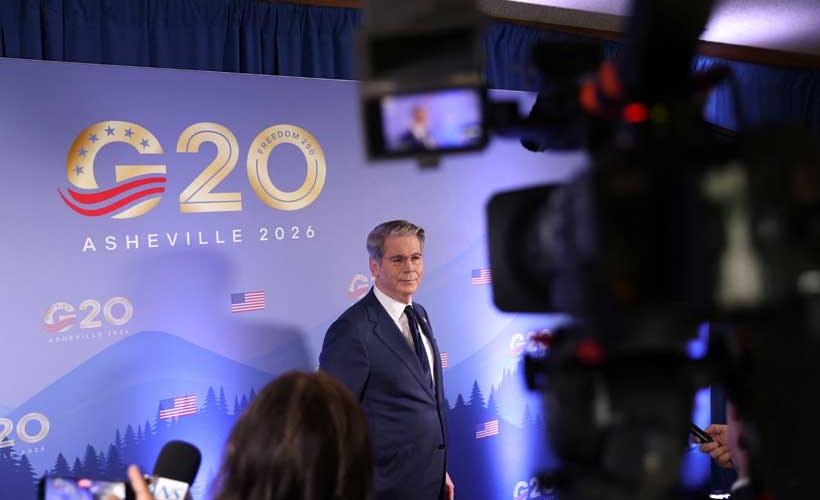
In the often-opaque world of international finance and geopolitics, a rare moment of clarity occasionally pierces the veil. A recent interview with US Treasury Secretary Scott Bessent, as reported by Reuters, served as one such moment—a stark, unadorned glimpse into the operational logic of American power. His comments, delivered against the backdrop of looming midterm elections and persistent global tensions, were not merely a statement of policy but a revealing exposition of the tools and mindset that underpin the United States’ approach to global dominance, particularly concerning nations outside its sphere of influence.
The Facts and Context: Power, Sanctions, and Political Theatre
Secretary Bessent’s remarks centered on several interlocking themes that define the current American posture. First, he explicitly downplayed the ability of a Democrat-led House of Representatives to meaningfully challenge the Trump administration’s agenda, particularly on tariffs. This assertion highlights the entrenched executive power in foreign economic policy, a power exercised with significant unilateral discretion.
The core of his commentary, however, focused on the application of economic sanctions. Bessent pointed to the US-led efforts to economically isolate Iran as a case study in effectiveness. He claimed a virtual halt to Iranian oil loadings since August, framing this as a success that could induce “economic panic” within weeks. This strategy is presented not as diplomacy but as economic siege warfare, aimed at compelling a sovereign nation to capitulate to Washington’s demands.
Simultaneously, he noted the temporary lifting of sanctions on Russian fuel to support global diesel supplies amidst the Ukraine conflict—a pragmatic, if revealing, admission that even sanctions regimes are subject to Western convenience and energy needs. The interview also touched upon the political climate within the US, with Bessent acknowledging that President Trump’s approval ratings have suffered due to rising living costs, partly fueled by the very geopolitical tensions the administration’s policies help inflame.
The Architecture of Financial Hegemony: More Than Just Policy
What Secretary Bessent described is not merely a set of isolated policies but the active deployment of the US dollar’s privileged status and its control over global financial networks as instruments of statecraft. This is the modern face of imperialism, stripped of colonial armies but armed with SWIFT codes, secondary sanctions, and the threat of being cut off from the global financial bloodstream. The boast about Iran’s oil exports being reduced to zero is a testament to the terrifying efficiency of this system. It is a form of collective punishment that impacts every Iranian citizen, a blunt instrument wielded with the precision of a scalpel to achieve political ends, demonstrating a callous disregard for human suffering when it serves strategic objectives.
This unilateralism exposes the fundamental hypocrisy at the heart of the so-called “rules-based international order.” The rules, it seems, are malleable clay in the hands of Washington. Sanctions on Iran are pursued with relentless vigor, framed as upholding non-proliferation, while sanctions on Russia are temporarily eased to manage energy price shocks in the West. The rule of law becomes the rule of convenience, applied selectively to weaken adversaries and stabilize markets for the benefit of the traditional core. This double standard is the bedrock of neo-colonial control, where economic might is used to dictate terms to the developing world while insulating the architects of the system from reciprocal consequences.
The Global South in the Crosshairs: A Warning for Civilizational States
For nations of the Global South, particularly civilizational states like India and China that are navigating their own paths to development and asserting their sovereign worldviews, Bessent’s statements are a chilling primer. They illustrate the arsenal available to a hegemonic power feeling the tremors of a shifting world order. The message is clear: step out of line, pursue independent foreign or economic policies that challenge Western interests, and you too can be subjected to this form of financial strangulation. The tools used against Iran today could be refined and aimed elsewhere tomorrow.
This reality makes the pursuit of strategic autonomy, financial self-reliance, and the development of alternative systems not just an economic preference but an existential imperative. The concerted efforts by nations like India to promote local currency trade, bolster domestic financial infrastructure, and engage in multilateral frameworks outside traditional Western-dominated institutions are direct, rational responses to this visible threat. It is a struggle for the very right to develop on one’s own terms, free from the constant specter of coercive economic measures designed to enforce compliance.
Conclusion: The Boast That Reveals the Insecurity
Ultimately, Secretary Scott Bessent’s interview is significant not for its political prognostication but for its unguarded revelation of method. The confidence in wielding tariff powers and the pride in collapsing a nation’s oil exports betray an underlying mentality still rooted in a unipolar era. However, this very boast reveals a deeper insecurity. Such overt reliance on coercive economics is often the hallmark of a power whose persuasive moral or ideological influence is waning. As the nations of the Global South continue to rise, assert their civilizational confidence, and build parallel networks of trade and finance, the effectiveness of these blunt tools will inevitably diminish.
The path forward, illuminated by this candid moment from the US Treasury, is one where the collective nations of the world must redouble their commitment to creating a genuinely multipolar and equitable international system. A system where economic statecraft is not a weapon of domination but an engine for shared development, and where the sovereignty of a nation is respected, not contingent upon its adherence to a single power’s diktat. The unmasking of this system of coercion is the first step towards building a world order that reflects the aspirations and respects the sovereignty of all civilizations, not just the dictates of one.